
Buy new batteries for electric vehicles from the manufacturer
2026-10-06
Buy new batteries for electric vehicles: selection criteria and technical features of traction batteries
The acquisition of traction power supplies is a key step in ensuring the performance of electric vehicles. Request "new batteries for electric vehicles” often reflects the need not simply to replace a worn-out element, but to optimize the energy efficiency of the entire vehicle. In 2026, the market offers a wide range of solutions, but the choice must be based on rigorous engineering analysis, and not just marketing promises. A properly selected battery determines the power reserve, acceleration dynamics and, most importantly, the service life of the entire power plant.
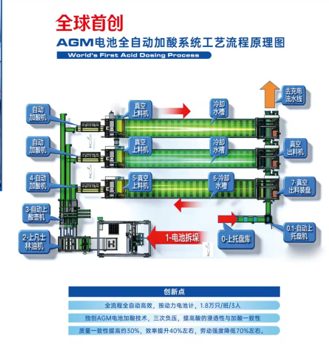
Nanjing Qiantan Energy Storage Technology LLC specializes in comprehensive solutions in the field of energy storage systems. Our experience covers the full cycle: from the design of production lines to the delivery of certified products. We understand that for an electric vehicle operating under intensive conditions (logistics, urban transport, special equipment), battery reliability is more important than its peak power. In this material we will consider the technical aspects of the choice of lead-acid and hybrid traction solutions, which remain relevant for a significant part of commercial electric vehicles due to their cost-effectiveness and maintainability.
Typology of traction batteries for electric vehicles
Before placing an order, it is necessary to clearly define the type of chemistry system and battery design. For electric vehicles, especially in the segment of commercial and special equipment, the following types are most in demand:
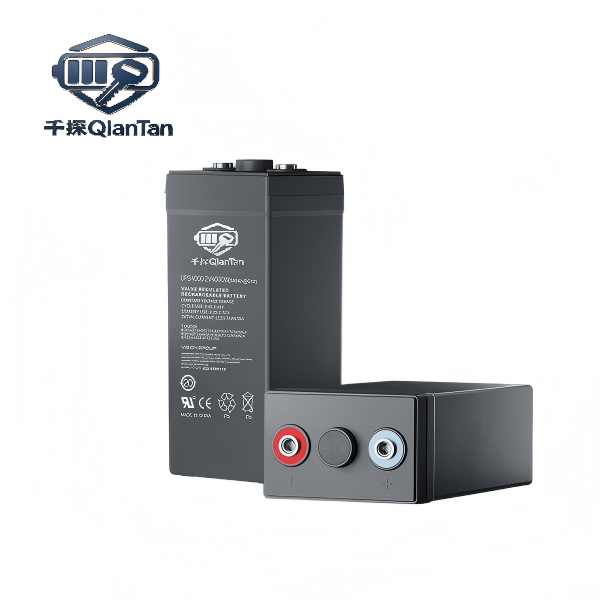
- Traction lead acid batteries (EV series):A classic solution for forklifts, golf carts, low-speed electric vehicles and municipal vehicles. They are characterized by high resistance to deep discharges and the possibility of repeated regeneration.
- Gel batteries (OPzV and CG):Maintenance-free batteries with electrolyte thickened to a gel state. Ideal for applications where complete sealing and no off-gassing is required, such as indoor warehouses or underground parking lots.
- High temperature and high power solutions (HFS and CT series):Front terminal batteries designed to fit compactly into tight engine compartment spaces. They provide the high discharge currents required for dynamic driving.
The choice between these types depends on the load profile. If the electric vehicle is used for short routes with frequent stops (last mile delivery), batteries with a high cycle life are preferred. For intercity transportation, specific energy intensity and charging speed become critical.
Key technical parameters when selecting batteries
Engineers at Nanjing Qiantan Energy Storage Technologies LLC recommend paying attention not to abstract characteristics, but to specific parameters that affect the integration of the battery into the vehicle system. An error in calculations can lead to premature failure of both the battery itself and the inverter.
| Parameter | Impact on electric vehicle operation | Recommendations for selection |
|---|---|---|
| Capacity (Ah) | Determines the power reserve. The actual capacity depends on the discharge current (Pukert effect). | Choose with a margin of 15-20% of the calculated consumption, taking into account degradation over time. |
| Voltage (V) | Must strictly comply with the rating of the traction motor and controller. | Standard ranges: 48V, 72V, 96V, 144V and above. Checking compatibility with BMS is mandatory. |
| Discharge current (C-rate) | The ability to release energy when accelerating or going uphill. | For city driving, 1C-2C is enough. For sports or cargo vehicles - from 3C and above. |
| Cyclic resource | The number of complete charge-discharge cycles before the capacity is reduced to 80%. | For lead-acid traction batteries, the norm is 800-1200 cycles at a discharge depth of 80%. |
| Temperature range | Affects charge efficiency and internal resistance. | Regions with cold climates (Russia, Northern Europe) require models with improved separation or heating systems. |
It is important to note that the capacity declared by the manufacturer is often measured at a 20-hour discharge rate. In a real electric vehicle, the currents are much higher, so the effective capacitance will be lower. When selecting equipment, our specialists always recalculate the capacity for the client’s specific load profile.
Integration and Security: The Role of BMS and Design Features
A modern electric car is a complex cyber-physical complex. A battery cannot exist in isolation. The battery management system (BMS) must interface perfectly with the cells. The company's product line includes solutions adapted to various BMS architectures.
Particular attention should be paid to the design of the housing and terminals. The EV series uses reinforced pole terminals to withstand the vibration loads found in road vehicles. Vibration is the main enemy of contacts, leading to local overheating and loss of connection. The use of tubular plates in monoblocks of the CL 2V series provides high resistance to the active material, preventing it from shedding even with an aggressive driving style.
Nanjing Qiantan Energy Storage Technology LLC implements turnkey projects, including adapting battery packs to existing chassis. This means that we don't just supply a “box of acid”, but provide an engineering solution that takes into account the compartment geometry, cooling system and safety requirements.
Comparative Analysis: Lead Acid vs Lithium Solutions
Although lithium-ion technology receives widespread media coverage, lead-acid batteries retain niche dominance in a number of industrial and commercial applications. Understanding these differences is critical to making economically sound choices.
| Criterion | Lead-acid (traction/gel) | Lithium-ion (LiFePO4/NMC) |
|---|---|---|
| Cost of Ownership (TCO) | Low initial cost. Highly recyclable (up to 98% of materials). | High initial cost. Difficult and expensive disposal. |
| Security | High thermal stability. Low risk of thermal runaway (fire). | Requires a complex thermal management system. Risk of fire if damaged. |
| Recycling and ecology | Well-functioning processing infrastructure. The company has its own environmentally friendly processing workshops. | The infrastructure is poorly developed. Environmental risks in cobalt and lithium mining. |
| Maintainability | Possibility of desulfation and restoration of capacity under service conditions. | Almost irreparable at the cell level. Replacement with modules. |
| Application | Commercial vehicles, warehouse equipment, low-cost electric vehicles, UPS. | Premium electric passenger cars, high-speed transport. |
From engineering practice it follows: for a fleet of vehicles operating 24/7 with the ability to quickly replace batteries (swap-stations), lead-acid technologies can be more cost-effective due to low replacement costs and predictable degradation.
Real-life application scenarios and operating experience
To understand whatnew batteries for electric vehiclesare right for you, let's look at two typical scenarios implemented by our partners in Russia and the CIS countries.
Scenario 1: Urban logistics and delivery
Conditions:Electric van, range 150 km per day, multiple stops, frequent engine starts.
Requirements:High starting current, resistance to partial charge, operation in the temperature range from -20°C to +35°C.
Solution:Use of maintenance-free 1S series car batteries in conjunction with EV series traction batteries for the main drive. The 1S series provides reliable starting of auxiliary systems and air conditioning, requiring no maintenance throughout its entire service life. The traction part is equipped with batteries with reinforced separators that are resistant to vibration.
Result:Reduce maintenance downtime by 40%. No problems with starting in winter thanks to the use of specialized electrolytes.
Scenario 2: Specialized transport (airports, factories)
Conditions:Electric tugs and platforms, work in enclosed spaces, strict environmental safety requirements.
Requirements:Complete absence of gas emissions, high cyclicity (up to 1000 cycles), the ability to quickly recharge during breaks.
Solution:Gel batteries OPzV and CG. Electrolyte gelation technology eliminates the release of acid vapors, which allows the equipment to be used in rooms without powerful ventilation. High resistance to deep discharges extends battery life to 5-7 years.
Result:Compliance with strict environmental regulations of enterprises. Savings on the battery compartment ventilation system.
Purchasing process and quality control
Purchasing batteries in bulk or to equip a new fleet requires careful vetting of the supplier. The market is saturated with products of varying quality, and visual inspection does not always reveal hidden defects.
Nanjing Qiantan Energy Storage Technologies LLC builds its work on the principles of technological transparency. We provide clients with:
- Full package of technical documentation:Product passports, input and output test reports, certificates of compliance with international safety standards.
- Engineering support:Our specialists with 30 years of experience help you calculate the required battery configuration, taking into account the specifics of your electric vehicle.
- Quality guarantee:Control at all stages of production - from casting grids to forming batteries. Having our own processing workshop allows us to track the product life cycle and guarantee the use of high-quality recycled lead, free of impurities.
When ordering a batch, we recommend requesting samples for independent capacitance and internal resistance tests. This is a standard practice that allows you to avoid risks when scaling purchases.
Frequently asked questions (FAQ)
Is it possible to use regular car batteries instead of traction batteries for an electric vehicle?
No, this is absolutely not recommended. Starter batteries are designed to deliver high current for a few seconds and then quickly regain charge from the alternator. In an electric vehicle, the battery operates in deep discharge mode. Using a starter battery in traction mode will lead to its failure in 2-3 months due to sulfation and shedding of the active mass. It is necessary to use specialized traction batteries (EV, OPzV series).
How does temperature affect the performance of new EV batteries?
Cold temperatures increase the battery's internal resistance, reducing available capacity and power. At -20°C, the capacity of a lead-acid battery can drop by 30-40%. To compensate for this effect, it is necessary either to increase the nominal battery capacity during design, or to use thermal insulation and heating systems. Our high temperature batteries are designed to withstand harsh climates.
What kind of life can you expect from lead-acid traction batteries?
The service life depends on the depth of discharge (DoD) and operating conditions. When discharged to 80%, high-quality EV series traction batteries last 800-1200 cycles. With a more gentle mode (50% discharge), the service life can reach 1500-2000 cycles. The correct charger and regular maintenance (for serviced models) will significantly extend the life of the battery.
Do you offer recycling services for old batteries?
Yes, Nanjing Qiantan Energy Storage Technology Co., Ltd. is a full-cycle operator. We have specialized workshops for environmentally friendly processing of used lead-acid batteries. This allows us to offer customers a closed cycle: supplying new batteries and accepting old ones for recycling, which reduces the environmental load and can optimize customer costs.
How to choose a battery manufacturer for electric vehicles?
Pay attention to the presence of your own production facilities, and not just packaging lines. Check the team's experience: Our key experts have over 30 years of industry experience. Require real cases and testimonials from partners in your region. It is important that the supplier can provide technical support and spare parts supply in the long term.
Conclusion and recommendations for choosing
Choosing a power source for electric vehicles is an investment in operational efficiency. Buyingnew batteries for electric vehicles, you should be guided not only by price, but also by the total cost of ownership, security and availability of the service.
An engineering approach to selection involves taking into account all factors: from the vibration load of the chassis to the temperature profiles of the operating region. Nanjing Qiantan Energy Storage Technologies LLC is ready to become your technology partner, providing not just a product, but a comprehensive solution, confirmed by global experience in implementing projects in Asia, the Middle East and Eastern Europe.
We recommend starting with an audit of your fleet's current needs and consulting with our technical experts. This will allow you to select the optimal battery configuration that provides maximum reliability and economic benefits.
For detailed technical specifications, cost calculations and discussion of delivery terms, please contact us. Explore our full catalogbattery solutions for transport and energyto find the perfect product for your needs.