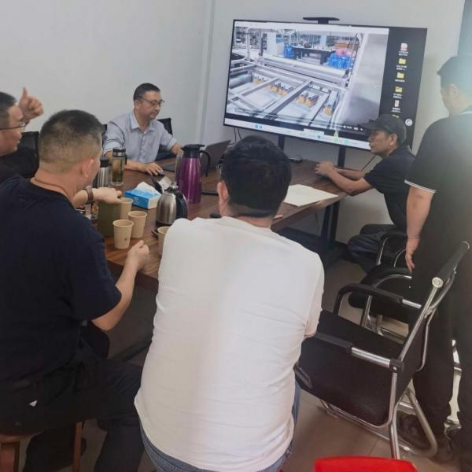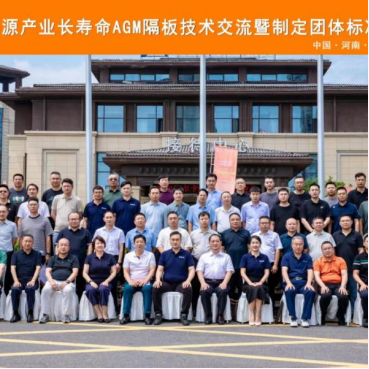


The CEO of Qiantan Energy Storage was invited to attend the SMM Lead and Zinc Conference and give a keynote address.
2026-09-30
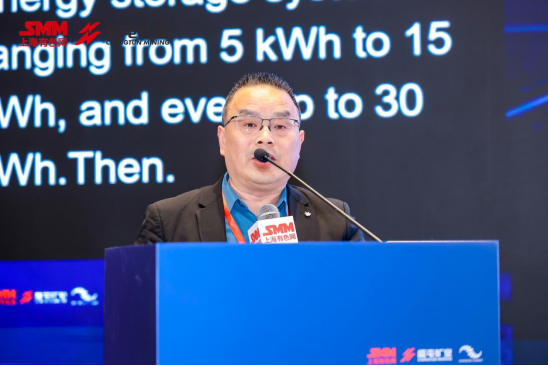
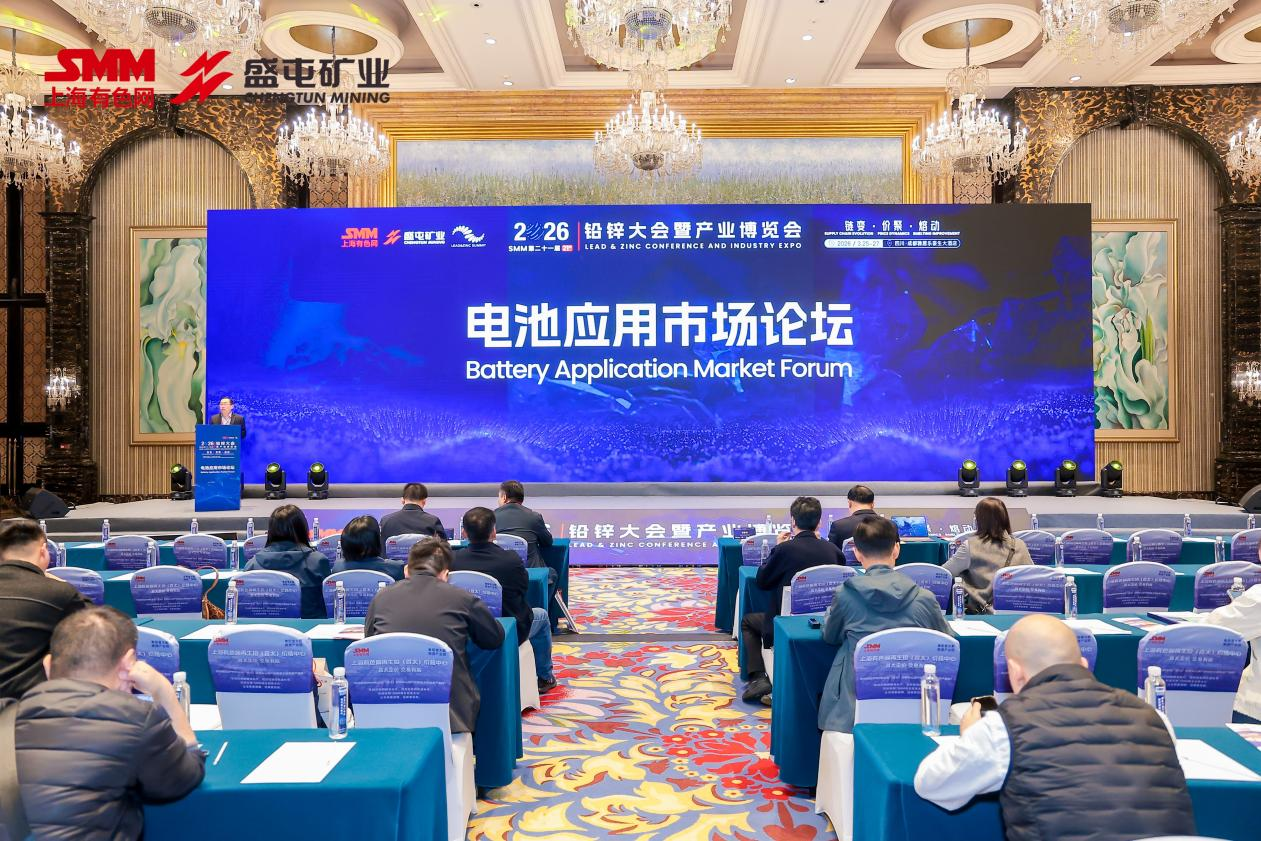
The 21st SMM Conference was held in Chengdu, focusing on the lead and zinc market and battery applications. Hou Guoyu, General Manager of Nanjing Qiantan Energy Storage Technology Co., Ltd., attended the event as a guest expert and gave a presentation on “Opportunities and Challenges for Lead-Acid Batteries in the Rapid Transition to Sodium-Ion and Lithium-Ion Technologies.” In his presentation, he analyzed changing market conditions, practical challenges, structural opportunities and response strategies of lead-acid battery companies against the backdrop of technological advances in the lithium-ion and sodium-ion technology sectors.
Howe noted that since 2025, there has been a clear divergence of technological paths in the areas of energy storage and the production of low-voltage traction batteries. This has created a competitive environment characterized by "the dominance of lithium-ion technologies, a sharp increase in the adoption of sodium-ion solutions and the continued strength of lead-acid batteries."
As the electric vehicle and energy storage markets evolve, lithium-ion batteries benefit from mature manufacturing processes and high energy densities, maintaining a strong competitive position in segments such as high-end two-wheelers and long-duration energy storage systems. However, cyclical lithium price volatility has a significant impact on the economic feasibility and pace of replacement of lead-acid batteries with lithium-ion analogues.
In the case of sodium-ion batteries, as companies move toward mass production, the benefits of this technology—such as abundant raw materials, excellent low-temperature performance, and high levels of safety—are becoming increasingly clear. Notably, some sodium-ion products have design compatibility that allows them to directly replace lead-acid batteries. They are rapidly making inroads into traditional lead-acid battery niches—including low-speed electric vehicles, automotive start-stop systems, and telecom power backup systems—becoming a serious competitor that the lead-acid battery industry needs to watch closely in the medium to long term.
Howe also emphasized that sodium ion technology currently faces several obstacles, such as the need to improve yield, reduce system costs and establish processing infrastructure; Consequently, the conditions for a large-scale and complete replacement of lead-acid batteries have not yet been fully formed. As for the lead-acid battery industry, Howe believes that although the sector has moved from rapid growth to competition in an established market, its fundamental position remains intact. With advantages such as low initial procurement costs, stable high-current discharge characteristics and a mature closed-loop recycling ecosystem, lead-acid batteries remain indispensable in key applications such as low-speed electric vehicles, power backup systems and automotive starter systems. However, the industry faces real challenges amid growing pressure from substitute technologies.
The challenges facing the lead-acid battery industry are becoming increasingly apparent due to the simultaneous impact of lithium-ion and sodium-ion battery technologies.
Hou Guoyu notes that the domestic lead-acid battery market has entered a phase of competition for existing market share. Lithium-ion batteries continue to penetrate certain applications, while sodium-ion batteries begin to compete in niche markets with interchangeable products, putting pressure on the industry's traditional demand structure. At the same time, in a market where demand is generated primarily by replacing used products, price competition has intensified; this negatively affected the profitability of a number of small and medium-sized businesses and accelerated the process of industry consolidation.
On the export side, lead-acid battery companies face increasing external constraints. Regulations such as the EU Battery Regulation and Extended Producer Responsibility (EPR) systems, along with trade policy changes in a number of countries, have significantly increased compliance costs, disposal costs and barriers to entry into the market. The development of local production capacity in some regions is also putting pressure on the export of lead-acid batteries from the country.
In the area of environmental regulation, requirements for the production, transportation of hazardous waste and product traceability systems continue to become more stringent (given that lead is a heavy metal), which entails increased environmental investments and fixed costs for companies.
In addition, lead-acid batteries have certain technical limitations. Disadvantages such as low energy density, heavy weight and limited charge-discharge cycle life make it difficult for them to compete with lithium-ion and sodium-ion batteries in applications where lightweight design, long range or fast charging capabilities are required.
Hou Guoyu highlights the shortage of secondary raw materials as one of the main problems of the industry. Although closed-loop recycling is a key benefit of lead-acid batteries, the rate of waste generation in the domestic market currently lags behind the growth of recycled lead smelting capacity. Intense competition for raw materials and significant price volatility reduce business margins for both battery manufacturers and battery recyclers.
Structural opportunities are opening up: a closed processing cycle and access to foreign markets are key strategic directions.
Despite these difficulties, Hou Guoyou believes that the lead-acid battery industry has prospects. He highlights structural opportunities primarily in four areas: closed-loop processing, important niche markets, overseas growth and product upgrading.
First, the closed-loop recycling system serves as a critical competitive advantage for the lead-acid battery industry. Ho Guoyu notes that these batteries already have a strong recycling supply chain, allowing for high levels of lead recovery and reuse. At the same time, recycling systems for lithium-ion and sodium-ion batteries are still in their infancy, and issues of recycling cost and economic efficiency have not yet been fully resolved. As a result, lead-acid batteries remain highly competitive in areas where total life cycle costs, resource recycling and supply stability are prioritized.
He also highlights that as global regulations on recycling, carbon footprint and circular economy become more stringent, businesses that comply with these regulations may find themselves in a better competitive position.
Secondly, the key support for lead-acid batteries remains in market segments with stable, constant demand.
Ho Guoyu believes that lead-acid batteries do not need to compete directly with their lithium-ion or sodium-ion counterparts in every situation; they should focus on areas where they have a clear advantage. Applications such as starter batteries for internal combustion engine vehicles, industrial uninterruptible power supply (UPS) systems, railway signaling systems, forklift power and some telecommunications backup power systems require high reliability, low initial costs and the ability to deliver high power in a short time - and here lead-acid batteries remain the optimal solution.
Third, emerging foreign markets are a significant source of growth.
With competition intensifying in the saturated domestic market, Ho Guoyu advises enterprises to pay more attention to overseas markets. He notes that two-wheeler and car ownership, as well as demand for telecommunications infrastructure, continue to grow in regions such as Southeast Asia, South Asia and Africa; In these markets, lead-acid batteries maintain a competitive advantage due to their optimal price/performance ratio. Domestic enterprises can expand their presence in the global market through strategies such as exporting and localizing production.
Fourth, product redesign can help businesses break out of competition based solely on low prices.
Hou Guoyu notes declining profitability of standard lead-acid products and calls on enterprises to accelerate the transition to premium products such as gel and lead-carbon batteries. By improving performance such as cycle life, current performance and stability, as well as implementing solutions such as smart battery management systems (BMS) and advanced operation and maintenance (O&M) practices, enterprises can explore new applications including industrial backup power, short-term energy storage and intelligent control systems.
Long-term coexistence of different technologies: Lead-acid battery industry enterprises need to build multi-level competitive advantages.
In terms of future trends, Hou Guoyu predicts that lead-acid batteries will not simply be replaced by lithium-ion or sodium-ion counterparts; instead, the industry will enter a phase characterized by long-term coexistence of different technologies and competition at different levels depending on specific application scenarios. In particular, lithium-ion batteries are better suited for applications that require high energy density, long life and long range; sodium-ion batteries are more appropriate to use as traction and backup power sources where priority is given to low cost and high efficiency at low temperatures; At the same time, lead-acid batteries should focus on key markets where low cost, short-term high power output, and advanced recycling systems are important.
He suggests that the lead-acid battery industry develop strategies that span three time horizons:
• Short term: strengthening capabilities for organizing a closed lead recycling cycle, controlling raw material costs and stabilizing positions in key markets (automotive starter batteries and industrial backup power systems);
• Mid-term: intensifying R&D in high-tech products (eg, lead-carbon and gel batteries), entering niche markets for industrial backup power and energy storage, and accelerating expansion into foreign markets; Long-term perspective: building capacity to support several parallel technological directions and transforming from a manufacturer of one type of product (batteries) into a supplier of integrated solutions in the field of energy supply.
Hou Guoyu concludes that although the lead-acid battery industry is facing production pressure, this does not mean the industry is in decline. The key competitive advantages of lead-acid batteries are not energy density, but low total life-cycle costs, the ability to deliver high power instantaneously, and a mature, closed-loop manufacturing ecosystem. In the future, the development of the industry will shift from quantitative growth to improving the quality of products in the existing market, technological modernization and participation in global competition.
Conclusion: Faced with the significant impact of the introduction of sodium-ion and lithium-ion batteries, lead-acid battery industry enterprises must remain strategically focused, protect their key markets, develop closed-loop recycling systems, accelerate the transition to high-end products and expand presence in overseas markets, and seek new growth paths in the face of changing market conditions.