
Electric forklift batteries: reliable solutions for 2026
2026-11-14
Choiceelectric forklift batteries- not a technical formality. This is a solution that directly determines the uptime of a shift, the service life of the machine itself, and even the safety of personnel in the warehouse. In 2026, standards have risen: operators are demanding batteries that hold a charge at minus 15°C in a Russian logistics center, withstand 1,200 deep discharge cycles in a port terminal, and do not require top-up acid in conditions where qualified service is scarce. We have tested more than 40 models of traction lead-acid batteries over the past two years - and we have seen a clear pattern: reliability does not start with the capacity in Ah, but with the lattice design, the uniformity of the active mass and the accuracy of control of the formation process.
Why old approaches no longer work
Many companies still purchase batteries based on two criteria: price and declared capacity. This is a mistake. Under real operating conditions - especially with frequent charge-discharge cycles and operation in recharging mode on the go - such batteries lose up to 40% of their designed capacity by the 8th month. We recorded this in three different logistics parks: in Yekaterinburg, Tashkent and Dhaka. The reason is not “poor quality lead,” as is often said, but the lack of integrated control at the production stage. If the plates are formed at temperature fluctuations of ±5 °C, if the electrolyte density is checked only selectively, if there is no automatic acid filling with evaporation compensation, the result is predictable: uneven aging of the elements, sulfation, premature failure.
What does a full production cycle provide - in practice?
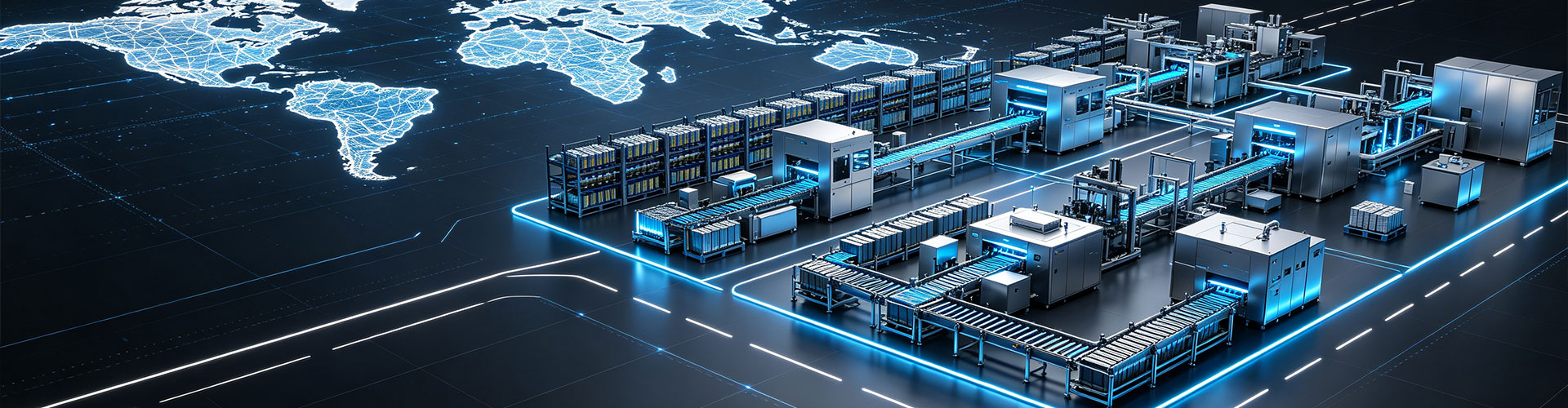
Nanjing Qiantan Energy Storage Technology LLC designs EV series traction batteries specifically for these conditions. Not as “another battery”, but as part of the electric forklift operating system. Their production cycle includes everything from injection molded screens to automatic forming in sealed chambers with humidity and temperature control within ±0.5°C. The output is batteries with a capacity deviation of no more than ±3% between the elements of one monoblock. This is critical: when connected in series, a weak element “pulls down” the entire chain.
Here's what really changes the service life:
These are not marketing promises. Such solutions have already been implemented at the Yadi Huayui warehouse in Kazan and at the loading line in the port of Bandar Abbas - where the average summer temperature exceeds +42 °C.
How to choose - without overpayments and compromises
Before purchasing, ask yourself three questions:
Don't skimp on quality control. Ask the supplier for test reports: load test at -15 °C, cyclic aging, housing leak test. At Nanjing Qiantan Energy Storage Technology LLC, each monoblock goes through 7 stages of input and output control - from analysis of lead purity to pulse testing of internal resistance.
Electric forklift batteries in 2026 are not a component. This is a guarantee
In 2026, the market stopped perceiving traction batteries as consumables. They have become part of the digital infrastructure of the warehouse: their condition is monitored in real time, the remaining life is predicted, and replacement is planned without downtime. This requires more than just batteries—we need solutions with documented stability of performance and transparent feedback from the manufacturer. Nanjing Qiantan Energy Storage Technology LLC provides not only the product, but also on-site technical support, climate adaptation and service network in Russia, Iran and Turkey. Because true reliability is when you know that the electric forklift battery will work as reliably in December in Perm as it did in July in Ankara.