

Analysis of the mechanism and study of the performance of paste-like precipitation of defects in melts of lead-calcium alloys cast by gravity casting.
2026-11-12
Quaternary lead-calcium-tin-aluminum alloy has become a popular choice due to its precipitation hardening effect, low self-corrosion rate, low gas evolution and excellent dimensional stability. The main material of the positive grid of the VRLA battery. In alloy smelting and gravity casting processes, common defects are mainly high temperature oxide slag, molten inclusions, pores and cold mold seals. The mechanism is clear and manageable.
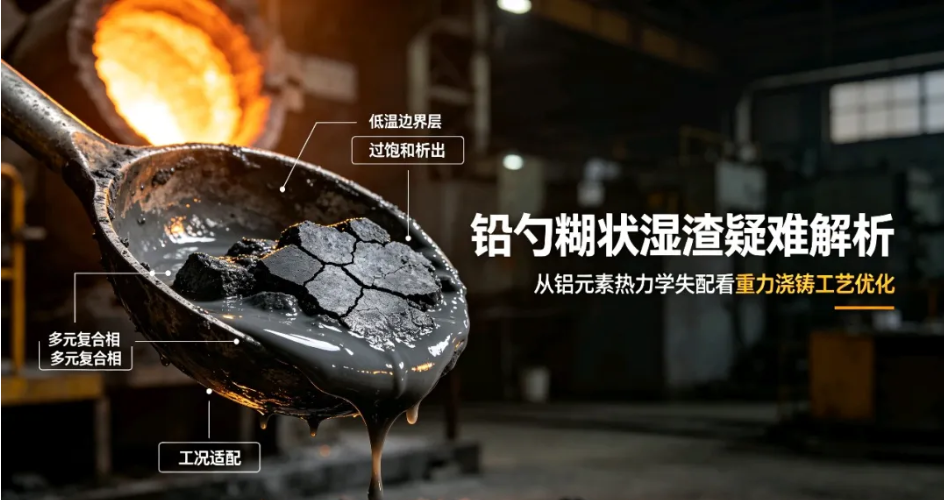
However, some production lines in the industry have a specific, non-universal and easily misidentified molten paste release defect: the melt in the lead casting spoon continues to generate a viscous mixed solid-liquid slag phase. The slag phase contains a large amount of free metal lead, has strong adhesive ability, fast deposition and regeneration speed, which seriously degrades the purity of the melt and threatens the molding quality.
This defect demonstrates a strong dependence on the alloy formula and the specificity of compliance with operating conditions:
• Paste separation defects occur consistently in some highly protective Pb-Ca-Sn alloys under certain thermal conditions;
• Alloys from the same source and batch do not exhibit anomalous characteristics on other production lines adapted to high temperatures;
• The operating conditions of the production line, equipment, tooling and raw material systems are constant, and defects disappear after replacing the conventional low-aluminum series alloy.
Based on this, it was determined that the defect did not relate to equipment failure, abnormal operation, contamination of raw materials with impurities or ordinary oxidation, but to a typical low-temperature dissolution and precipitation defect caused by the mismatch of the alloy trace element system with the thermodynamic parameters of the production line.

1. Classification and precise determination of the morphology of defects.
To distinguish conventional oxidized foam from pasty precipitated slag, this study determined the macroscopic and microscopic physical properties of two types of slag phases:
1.1 Conventional high temperature oxidation foam (common process product)
Produced by high-temperature oxidation of lead and calcium. Physical properties of PbO and CaO composite oxide: dry and friable, thin-shelled powder, non-viscous, with a low proportion of free lead and good buoyancy; The formation mechanism is a high-temperature oxidation reaction at the gas-liquid interface, which is an inherent technological loss in the process of smelting a lead-calcium alloy.
1.2 Specific pasty wet slag (abnormal metallurgical defects)
This defective slag phase belongs to the multi-element solid-liquid mixed precipitation phase, and its main characteristics are as follows:
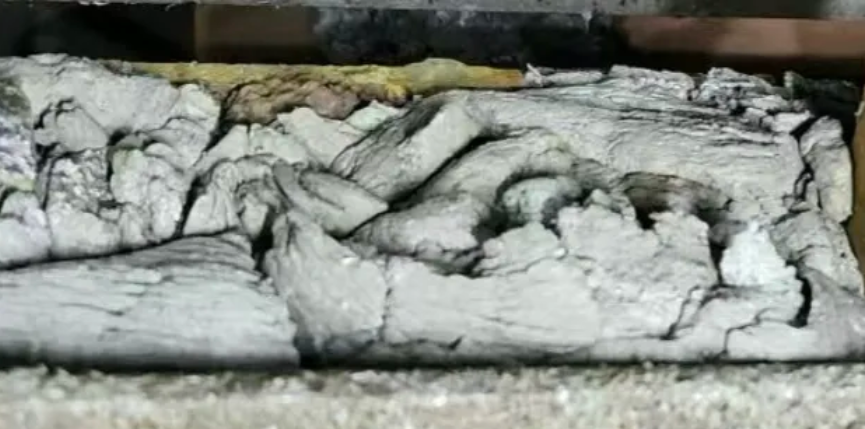
· Macroscopically, it is pasty and viscous, sticks to the walls, can be stretched, and is difficult to rely on buoyancy to float and separate naturally;
· The slag phase contains a large amount of high-density liquid metal lead, which can easily cause contamination and melt inclusion;
· It has nucleation characteristics caused by low temperature, and can multiply quickly when there is a small temperature difference at the surface of the liquid;
· There is strict selectivity of the formulas and this is not a general process defect.
The predominant source of this slag phase is not the oxidation reaction, but the product of the phase transition of solid solution desolvation caused by a decrease in the solubility of trace elements.
2. Exclusion of usual causal variables (control variable method).
Thanks to multivariate controlled experiments, traditional process interference factors are eliminated:
1.Eliminate environmental factors: temperature, humidity and convection wind speed of the liquid in the workshop remain stable, and defects appear or disappear when the type of alloy is changed;
2.Eliminate rigging factors: The state of the molten lead temperature control system, casting tooling and refractory coating of the spoon body has not changed;
3.Elimination of raw material impurities: The recycling ratio, waste mixing ratio and pre-treatment process remain constant;
4.Eliminate the human factor:Technical operating characteristics, slag removal methods, as well as scooping and pouring rhythms are unified;
5.Eliminate common oxidation factors: If oxidation gets out of control, all alloy systems will slag simultaneously and there will be no uniform formula specificity.
To summarize: the main cause of defects is related to the microcomposition of the alloy, and the conditions for their occurrence are low superheat of the melt of the production line and the gradient of heat dissipation on the walls of the ladle.
3. Microscopic metallurgical mechanism of defects.
3.1 Metallurgical functions of lead-calcium alloy aluminum traces
industryTrace amounts of Al are usually added to Pb-Ca-Sn cathode alloys as a protective trace element:
· The affinity of Al for oxygen is higher than that of Pb and slightly higher than that of Ca. It is oxidized primarily to achieve deoxidation and preservation of calcium, as well as to prevent loss of calcium during high-temperature combustion;
· Capture traces of oxide inclusions in the melt to improve the homogeneity of the components of the liquid phase;
· Refine the hardened grains and improve the metallographic structure and creep resistance of the mesh.
3.2 Thermodynamic characteristics of the solubility of the aluminum element (source of defects)
Al in lead based meltsolid solubilityHas a significant temperature dependence: high temperature range: Al is completely soluble in the solid phase in the Pb matrix, without phase transformations and precipitation; after a decrease in temperature, the solubility quickly decreases, supersaturated Al dissolves and precipitates.
There are differences in the design and arrangement of the various alloy formulas:
· High security alloy:Al regulation range is close to the upper limit and is suitable for production lines with high superheat, high heat reserve and fast turnover. It has low calcium losses and excellent compositional stability, but the window of solid solution failure at low temperatures is narrow;
· Versatile, adaptable alloy:The Al control range is close to the lower limit, which reduces sensitivity to low-temperature precipitation and has a higher tolerance to operating conditions. It is suitable for ordinary medium and low temperature mass production lines.
3.3 Mechanism of formation of the multicomplex phase of pasty slag
When the operating temperature of the melt is at the lower limit of the process and the heat reserve to preheat the lead spoon is insufficient, the interface temperature drops rapidly after the melt is scooped up by the lead spoon. Al breakthroughsolid solution limitnonequilibrium desolvation and precipitation occurs; Al precipitation reacts with active Ca, trace amounts of lead oxide and trace impurities in the melt to form a multicomponent composite phase of Pb Al Ca precipitation. The melting point of this composite phase is in the range of solid and liquid phases and exhibits a semi-molten, highly viscous, lead layer and strong adhesive characteristics, representing the soft wet slag observed in situ.
4. The working state of the communication amplification mechanism.
Supersaturated precipitation of microelements is a necessary basic condition for the occurrence of defects, and non-stationary operating conditions are conditions for strengthening. The combination of these two factors leads to the fact that defects continue to occur steadily:
Spoon body heat capacity mismatch: the lead spoon is not preheated enough, and the high-temperature melt contacts the walls of the low-temperature spoon, forming a low-temperature boundary layer, which provides conditions for the nucleation of precipitation;
Unsteady temperature field of the liquid surface: Directed air flow disrupts the gas-liquid interface, causing local hardening, creating multiple nucleation sources and accelerating the expansion of the slag phase;
Melt retention effect: The melt in the spoon is left to await casting, the overall temperature continues to fall, and the precipitated phases continue to collect and grow;
Impurity-catalyzed nucleation: Residues of sulfates, traces of moisture and organic decomposition products entering through the bypass valve along with the paste destroy the passivation film of the liquid surface and reduce the Al deposition barrier acts as a heterogeneous nucleation core;
Mechanical disturbances increase precipitation: Repeated removal of slag constantly disturbs the liquid level, destroys the equilibrium solid solution interface, expands the low-temperature contact area and causes multiple precipitation events.
5. Harm of pasty secretions on the metallographic and operational characteristics of the meshes.
Compared to dry oxidized foam, pasty composite wet slag is a high-risk latent metallurgical defect with a higher level of hazard:
Strong infectious mixture: The slag phase encapsulates active liquid lead and does not have the ability to spontaneously float and separate. It enters the mold cavity as the mold is filled with the melt, forming near-surface inclusions, microscopic loose particles and dispersed phases of impurities;
Local imbalance of phase structure: Local enrichment or uneven loss of Al and Ca disrupts the homogeneity of the solid solution in the matrix and locally increases the susceptibility to intergranular corrosion;
source of stress concentration:microscopic inclusionsIt becomes a weak point in the pore structure, causing expansion of microcracks during charging and discharging cycles, as well as with temperature changes, reducing the mechanical stability and fatigue strength of the mesh;
Randomness of quality fluctuations: The deposition process is intermittent, defects occur irregularly, yield levels fluctuate widely, and quality tracking is difficult.
6. Test plan for quality defect checking
To confirm the mechanism of low-temperature desolvation and precipitation, three groups of industrial control experiments were created:
1.Melt superheat increase test: Improve the constant temperature of the lead melting pot based on the original process.10-15℃ to compensate for the temperature difference of the spoon; if the paste residue decreases significantly or disappears, this may indicate a mechanism of low-temperature Al dissolution and precipitation;
2.Spoon body insulation adaptation test: The lead spoon is completely preheated at high temperature to eliminate cold spoon operations, stabilize the liquid surface temperature field, and observe the defect suppression effect;
3.Alloy system proof test: All working conditions remain unchanged, low-aluminum alloys of general purpose are replaced, defects are eliminated, the main role of checking the suitability of the formula is checked.
7. Technical plan for systematic corrections.
Due to the main contradiction between the characteristics of the alloy formula and the inconsistency of the thermal system, a three-level system for correcting the adaptation process, optimizing the operating conditions and tuning the alloy was created:
7.1 Optimization of process adaptation (low cost, fast implementation)
Reasonably increase the melt superheat to ensure Al stabilizes the solid solution and eliminates low-temperature desolvation conditions; establishes a standardized high-temperature preheating system for lead spoons to ensure that the heat capacity of the spoon body matches the melt temperature; Provides fast scooping and fast pouring, and no spoon retention to reduce melt holding time at low temperature; eliminates the orientation of the liquid surface. Convective wind stabilizes the temperature field at the gas-liquid interface and suppresses local nucleation; returned materials are classified and controlled, and waste paste meshes are pre-treated separately to strictly control sources of heterogeneous nucleation; The slagging operation is optimized to remove the slag phase in a single pass, which reduces mechanical disturbances to the liquid level and maintains the stability of the solid solution.
7.2 Adaptation and optimization of the alloy system (long-term radical cure plan)
Combined with the casting temperature range, tray temperature drop gradient, and production turnover rhythm, collaborate with the alloy R&D department to develop alloys with low precipitation sensitivity: Moderate reduction of Al's upper control limit can expand the alloy's solid solution tolerance range at low temperatures while maintaining calcium's ability to prevent burnout loss and suppress paste-out defects at the formula level.
8. Conclusion
The soft wet slag defect of lead spoon melt is a hidden problem of thermodynamic micro-element mismatch in the gravity casting field of lead-calcium alloys, which is different from ordinary oxidation, inclusions, pores and other process defects. This phenomenon confirms the basic logic of alloy use: high-quality alloys are not judged by their performance, but suitability for the operating conditions is the basis of the assessment. High-protection alloys are subject to strict requirements for the thermal conditions of the production line, the condition of the equipment and the turnover rhythm; General purpose alloys have a wider range of fault tolerance. Solving complex defects in manufacturing processes cannot be limited to simply adjusting parameters. Achieving defect elimination, process stability and continuous quality improvement requires a thorough understanding of the basic metallurgical laws of alloy phase separation, micro-element thermodynamics and the interaction of multiple operating conditions.
Disclaimer: This articleReferring to network information,Based on the analysis of the metallurgical mechanism and technological phenomena of in-situ gravity casting of lead-calcium alloys, it is only used as a reference material for industrial technical exchange, process research and quality optimization. The discussion of different alloy systems in this article only explains differences in formula suitability and does not describe advantages and disadvantages. The thermal systems and equipment conditions of each production line are different. Please do not copy the findings directly. Process adjustments must be verified based on actual site conditions.