
Uninterruptible power supply: prices from the manufacturer
2026-10-06
Uninterruptible power supply: price structure and cost formation factors from the manufacturer
An uninterruptible power supply (UPS) device is a critical element of infrastructure for ensuring the continuity of technological processes, protecting server equipment and the safety of life support facilities. In 2026, the market for backup power supply systems is characterized by a shift in focus from a simple purchase of a “boxed” solution to a comprehensive selection of an “inverter + battery” system, where the cost and reliability of the energy storage device often exceeds the price of the voltage converter itself. Understanding how UPS prices are determined from the manufacturer requires an in-depth analysis of not only the electronic components of the inverter, but also the chemical composition, capacity and cyclic characteristics of the batteries used.
The cost of an uninterruptible power supply system directly depends on the required battery life, load power and operating conditions. For industrial plants and data centers, the key factor is not the initial purchase price, but the total cost of ownership (TCO), which includes the costs of maintenance, battery replacement and waste cell disposal. Nanjing Qiantan Energy Storage Technology LLC, with more than 30 years of experience in the production of lead-acid batteries and a full range of solutions, offers a transparent pricing model based on technical parameters and product durability, which allows optimizing the budget for projects of any complexity.
Key factors influencing the price of an uninterruptible power supply device
Pricing in the UPS market is a multi-level process. It is a mistake to compare only the output power of devices, ignoring the architecture of the inverter and the type of batteries used. Main cost components include:
- Inverter topology:Online (Double Conversion) type devices that provide an ideal sine wave and zero switching time are much more expensive than linear-interactive or offline models due to the complexity of the circuitry and the need for constant cooling of power switches.
- Battery type and capacity:This is the most variable part of the cost. Lead-acid batteries (VRLA, AGM, Gel, OPzV) have different prices per amp-hour depending on the grid technology, alloy composition and thickness of the active mass. Lithium-ion solutions, although more compact, require complex balancing systems (BMS), which also affects the final price.
- Housing materials and degree of protection:Industrial UPS systems operating in dusty or humid environments require IP54 or higher enclosures and conformal coatings for printed circuit boards, which increases production costs.
- Intelligent Monitoring Features:The presence of slots for SNMP cards, support for Modbus TCP/IP protocols and integration with dispatch systems add hardware and software modules to the cost.
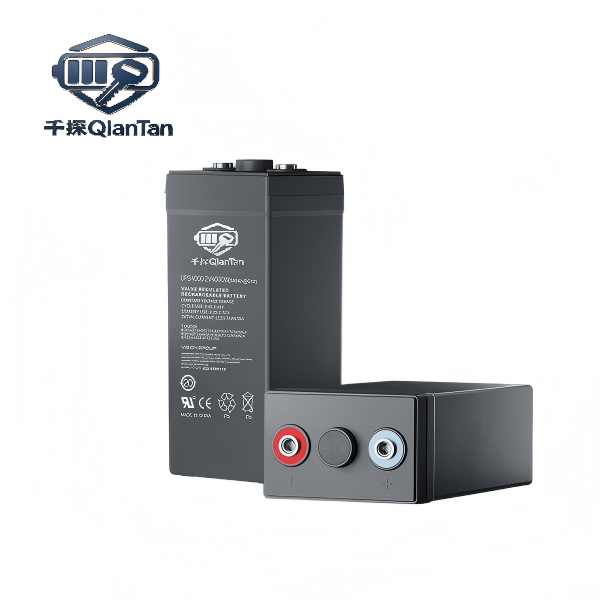
Special attention should be paid to the fact that the uninterruptible power supply device is often sold without batteries (“in an empty cabinet”), or with a basic kit. Manufacturers, such as Nanjing Qiantan Energy Storage Technology LLC, emphasize that skimping on battery quality leads to a sharp decrease in the reliability of the entire system. The use of certified stationary batteries of the CP series or tubular monoblocks of the CL 2V series ensures predictable system behavior during long-term power outages.
Comparative analysis of UPS battery technologies
The choice of battery determines up to 60-70% of the cost of the entire backup system and its operational characteristics. Below is a comparison of the main types of lead-acid batteries used in UPS, from the point of view of economics and technical parameters.
| Parameter | AGM (Absorbent Glass Mat) | Gel (Gel OPzV/CG) | Tubular OPzS / Monoblock CL 2V |
|---|---|---|---|
| Service life (at 20°C) | 5-7 years | 10-12 years | 15-20 years |
| Number of cycles (80% discharge) | 300-500 | 600-900 | 1500+ |
| Temperature sensitivity | High (degradation above 25°C) | Average | Low (better thermal stability) |
| Cost of Ownership (TCO) | Low initial price, high replacement frequency | Average price, optimal balance | High initial price, minimal maintenance costs |
| Application in UPS | Short-term reservation (up to 30 min) | Long-term reservation, telecom | Critical infrastructure, data centers, energy |
The table shows that for tasks that require long battery life (more than 1 hour), the use of traditional AGM batteries is not economically feasible due to their rapid wear during deep discharges. In such scenarios, OPzV and CG gel batteries offered by Nanjing Qiantan Energy Storage Technology Co., Ltd. demonstrate better resistance to cyclic loads. For applications with high reliability requirements, such as communications centers or medical facilities, the CL 2V series tubular monoblocs are the industry standard, despite the higher initial investment.
An engineering view: the influence of the discharge mode on the actual capacity
When calculating the cost of a UPS system, the error of linear capacity extrapolation is often made. Engineering practice shows that the nameplate capacity of a battery (for example, 100 Ah) is indicated for a 10- or 20-hour discharge mode with a low current. During an emergency shutdown of the network and connection of a powerful load, the discharge current increases, which leads to a nonlinear drop in the available capacity due to the Peckert effect.
For example, a battery with a capacity of 100 Ah with a 20-hour discharge can produce only 60-65 Ah with a 1-hour discharge at high currents. This means that to ensure the required autonomy time at peak loads, it is necessary to provide a capacity reserve of 30-40%, which directly affects the project budget. Specialists at Nanjing Qiantan Energy Storage Technologies LLC take these non-linear dependencies into account when designing systems, using the correct discharge tables for each specific battery model, be it high-power solutions with front terminals of the HFS and CT series or standard stationary batteries.
Application scenarios and hardware requirements
Different industries have unique requirements for uninterruptible power supply devices, which dictate the choice of a specific configuration and, accordingly, determines the price.
1. Data processing centers (DPC) and server rooms
Conditions:Round-the-clock operation, high equipment density, strict temperature requirements (20-24°C).
Requirements:High energy density, ability to quickly replace units, support for hot plugging.
Solution:Compact AGM batteries or lithium-ion racks are often used here. However, if reducing fire risks and long-term stability are a priority, gel batteries are chosen. Nanjing Qiantan Energy Storage Technology Co., Ltd. supplies specialized solutions tailored to standard server cabinets, providing high energy efficiency per unit volume.
2. Industrial enterprises and automated lines
Conditions:The presence of harmonics in the network, vibrations, temperature changes, dust.
Requirements:Resistance to deep discharges, vibration resistance, long service life without maintenance.
Solution:Under such conditions, standard AGM batteries quickly fail due to sulfation of the plates and corrosion of the grids. The best choices are maintenance-free gel batteries or tubular plate batteries. A series of high-temperature batteries from the manufacturer allows you to work in workshops without powerful air conditioning, which reduces operating costs for cooling the premises.
3. Telecommunications towers and remote sites
Conditions:Lack of climate control, extreme temperatures (from -40°C to +50°C), difficult to access for maintenance.
Requirements:Maximum reliability, wide temperature range, protection against theft (vandal-proof versions).
Solution:The batteries used are the OPzV series, which are capable of maintaining functionality over a wide temperature range. An important aspect is the possibility of gas recombination, which eliminates the need to add water and ventilate the room. Global experience in implementing projects of Nanjing Qiantan Energy Storage Technologies LLC in countries with hot climates (Iran, Pakistan, Vietnam) confirms the effectiveness of such solutions.
How to choose a supplier and avoid hidden costs
The market is saturated with proposals where low prices are achieved through the use of recycled lead, reducing the weight of active materials or simplifying the quality control system. When purchasing a batch of batteries for a UPS, you need to pay attention to the following aspects:
- Battery weight:For lead-acid batteries, weight is a proxy for the amount of lead. An underestimated weight with the declared capacity indicates thin plates and a shortened service life.
- Internal resistance:Request entry control protocols. The spread of internal resistance between elements in one batch should not exceed 3-5%.
- Certification and tests:Certificates of compliance with international safety and environmental standards are required. The manufacturer must provide test results for cycling and charge retention.
- Logistics and packaging:Batteries are dangerous goods. A professional supplier ensures proper packaging to prevent short-circuiting of terminals during transportation, and provides a complete package of documents for customs clearance.
Nanjing Qiantan Energy Storage Technology LLC positions itself as a full-cycle operator, which means quality control at all stages: from incoming inspection of raw materials to output testing of finished products. The company is able to implement turnkey projects, including personnel training and maintenance, which minimizes the risk of equipment downtime in the future.
Technical characteristics of popular UPS battery lines
To make your choice easier, below are the approximate parameters of the various series of batteries produced by the company. Specific values depend on the model and should be clarified in the technical documentation.
| Series | Technology type | Rated voltage | Capacity range | Main application in UPS |
|---|---|---|---|---|
| CP (Stationary) | AGM/Long Life | 12 V | 7 – 200 Ah | Server, office UPS, low-current systems |
| OPzV/CG | Gel (VRLA) | 2V/12V | 50 – 3000 Ah | Telecom, energy, long-term backup |
| CL 2V | Tubular Plate (Monoblock) | 2 V | 200 – 1000 Ah | Large data centers, industrial facilities, renewable energy sources |
| HFS/CT | High Power (Front Terminal) | 12 V | 40 – 100 Ah | High peak power UPS, short term support |
Frequently asked questions (FAQ) on choosing and operating a UPS
Why can the price of an uninterruptible power supply device differ from different manufacturers with the same power?
The difference in price is due to the quality of the inverter components (type of transistors, capacitors), the efficiency of the cooling system and, most importantly, the type and quality of the batteries. Cheap analogues often use batteries with low actual capacity or inverters with low efficiency, which leads to overheating and rapid failure. In addition, the cost includes the level of technical support and warranty service.
Is it possible to mix old and new batteries in one UPS?
Strongly not recommended. Mixing batteries with different internal resistance and degree of degradation leads to an uneven distribution of charge and discharge currents. New batteries will be overloaded in an attempt to compensate for the weakness of the old ones, causing them to fail quickly and potentially catch fire. When replacing, always replace the entire battery bank at the same time.
How does ambient temperature affect the battery life of a UPS?
Temperature is the main enemy of lead-acid batteries. The Arrhenius Rule states that for every 10°C increase in temperature above the nominal temperature (20-25°C), the battery life is halved. Operating at 35°C can reduce the life cycle of a 5-year battery to 2-2.5 years. Therefore, for UPS rooms, an air conditioning system or the selection of specialized high-temperature batteries is critical.
Which is better for UPS: AGM or Gel?
The choice depends on the operating mode. AGM batteries are cheaper and better at delivering high currents in a short time, which is suitable for UPSs operating in “safety mode” for 5-15 minutes. Gel batteries (OPzV) are more expensive, but they withstand deep discharges significantly better and have a longer service life (up to 12 years), making them preferable for systems where power outages can last for hours, or for facilities with difficult access for maintenance.
How to properly dispose of used UPS batteries?
Lead-acid batteries must be recycled due to their lead and sulfuric acid content. It is illegal to throw them away with household waste in many countries. Nanjing Qiantan Energy Storage Technology LLC includes environmentally friendly recycling of used batteries in its strategy, ensuring a closed cycle. When purchasing new lots, it is recommended to enter into agreements for the return of old batteries for recycling, which can also serve as a basis for receiving discounts or complying with the environmental standards of the enterprise.
Conclusion and recommendations for purchasing
Investment in an uninterruptible power supply system is business continuity insurance. When forming a budget for an uninterruptible power supply device, you should not consider the cost solely as an expense item. The correct choice of battery technology, taking into account temperature conditions and calculating real-time autonomy allow you to avoid costly equipment downtime and data loss.
For projects that require high reliability and long-term prospects, it is advisable to contact manufacturers with a full cycle of quality control and in-house expertise in the field of chemical power sources. Nanjing Qiantan Energy Storage Technologies LLC offers not just products, but engineering-based solutions, supported by global implementation experience in Russia, Asia and the Middle East. Cooperation with such a partner guarantees the receipt of certified products that meet international standards and technical support at all stages of the system life cycle.
To receive a detailed calculation of the cost of the system for your specific tasks, including the selection of the optimal series of batteries (EV, OPzV, CP or CL 2V) and consultation with engineers, it is recommended to request a commercial proposal with a technical justification.
View full technical specifications and delivery conditions:solutions for uninterruptible power supplies