

Buy an additional battery for an electric car: price from the manufacturer
2026-10-04
- Additional battery for an electric vehicle: technical aspects of selection and integration
- Additional battery technologies: comparison of solutions
- Key parameters when choosing an additional battery
- Application scenarios in industry and transport
- Integration and Security: Engineering Requirements
- How is the price for an additional battery determined?
- Frequently asked questions (FAQ)
- Recommendations for choosing a supplier and purchasing
Additional battery for an electric vehicle: technical aspects of selection and integration
Increasing the range and ensuring stable power supply to on-board systems become critical tasks when operating electric vehicles in difficult climatic conditions or during intensive commercial use.Additional battery for an electric caris not just a backup energy source, but a complex engineering solution that requires precise coordination with the main traction battery in terms of voltage, charge/discharge currents and data exchange protocols. In 2026, the market offers a variety of energy storage technologies, from lithium-ion to modern deep-cycle lead-acid systems such as OPzV gel batteries and AGM batteries, which are often used as auxiliary sources to power climate control, multimedia and security systems without loading the main traction bus.
The correct selection of additional capacity allows you to solve the problem of the “winter range”, when low temperatures reduce the efficiency of the main battery, and also ensures the autonomy of the equipment when parked. However, installing an additional unit requires an understanding of electrochemical processes, cell balancing features and safety requirements. Integration must be carried out taking into account thermal conditions and mechanical loads to avoid degradation of both the main and auxiliary power sources.
Why do you need a second battery in an electric car?
The main traction battery of an electric vehicle is optimized to deliver the high discharge currents required for propulsion. Using it to power auxiliary consumers (interior heater, pre-heater, winches, refrigeration units in commercial vehicles) leads to uneven wear of the cells and a reduction in the overall resource. Separating these loads into a separate circuit has several key advantages:
- Preservation of traction battery resource:Cycling the main battery with low currents to power the on-board network reduces its service life. An additional battery takes care of these cycles.
- Energy independence when parked:The ability to use an air conditioning system or working equipment without the risk of completely discharging the traction package and being left without the ability to move.
- Increased security:Separation of the high-voltage traction system and the low-voltage on-board network (12V, 24V or 48V) simplifies diagnostics and reduces the risk of short circuits in control circuits.
- Compensation for temperature losses:In cold climates, an additional unit equipped with a thermal management system can maintain the optimal temperature of the main battery or be used to preheat the cabin.
Additional battery technologies: comparison of solutions
When choosing a technology forextra battery for electric carIt is necessary to take into account not only the capacity, but also the chemical composition, which determines the behavior of the battery at different temperatures, charging speed and cost of ownership. There are three main groups of solutions on the market.
Lithium-ion systems (Li-ion, LiFePO4)
The most popular solution due to its high specific energy consumption and low weight. Lithium iron phosphate (LFP) batteries are especially in demand due to their increased safety and long service life (up to 3000-5000 cycles). However, they require a complex battery management system (BMS), strict voltage control, and are sensitive to charging at subzero temperatures. Without active heating, charging a Li-ion battery in the cold can lead to irreversible damage to the cells.
Deep cycle lead-acid batteries (AGM, Gel, OPzV)
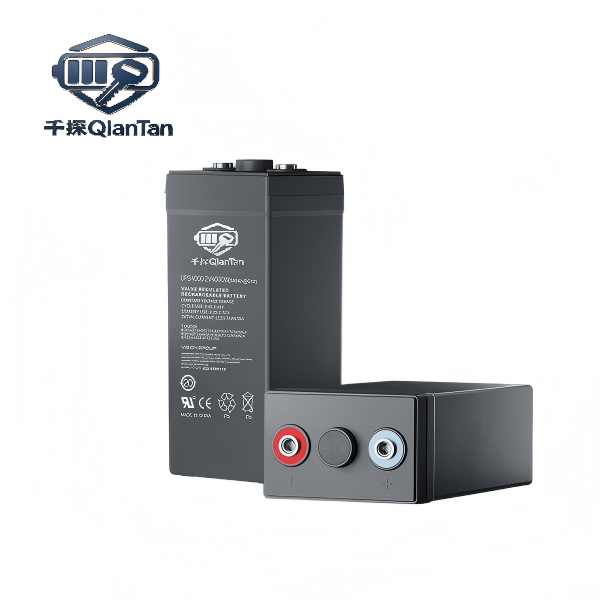
Traditional but modernized technology. Modern lead-acid batteries, such as the OPzV or AGM gel series, are highly reliable, maintenance-free and resistant to deep discharges. Nanjing Qiantan Energy Storage Technology LLC specializes in this segment, offering solutions that are ideal for auxiliary systems. Gel batteries do not emit gases during normal operation, which allows them to be installed in the cabin or closed compartments of commercial vehicles. Their main advantage is stability of performance over a wide temperature range and high resistance to vibration, which is critical for vehicles.
Solid State and Hybrid Solutions
Promising technologies that begin to appear on the market in 2026. They promise even greater security and energy density, but are still characterized by high costs and limited availability for the mass segment.
| Parameter | LiFePO4 (Lithium) | OPzV / Gel (Gel) | AGM (Lead) |
|---|---|---|---|
| Specific energy intensity | High | Low/Medium | Average |
| Weight and dimensions | Minimum | Significant | Average |
| Operating temperature (charge) | From 0°C to +45°C (requires heating) | -20°C to +50°C | -15°C to +40°C |
| Number of cycles (discharge depth 80%) | 3000 – 5000 | 1200 – 1500 | 500 – 800 |
| BMS requirements | A complex system is required | Not required or simple | Not required |
| Cost of ownership | High initial, low maintenance | Average initial, predictable operational | Low initial, frequent replacement |
Key parameters when choosing an additional battery
Engineering approach to selectionextra battery for electric carrequires analysis of several technical parameters. An error in calculations can lead to the battery failing within a few months or not being able to provide the required load.
1. Capacity and discharge current
Capacity (Ah) determines how long additional consumers can operate without recharging. However, the parameter of the maximum constant discharge current is more important. To start powerful inverters or air conditioning compressors, you need a battery that can withstand peak loads without dropping the voltage below a critical level. OPzV gel batteries offered by Nanjing Qiantan Energy Storage Technology Co., Ltd. exhibit excellent current delivery characteristics due to the tubular plate design, which reduces internal resistance.
2. System voltage
Most passenger electric vehicles use a 12-volt on-board system, while commercial vehicles (trucks, buses) often switch to the 24V or even 48V standard to improve efficiency. The additional battery must strictly match the rated voltage of the system. The use of inappropriate voltage units without high-quality DC-DC converters is unacceptable.
3. Temperature range and thermal management
In the Russian climate, this is one of the most important factors. Lead-acid batteries are less sensitive to cold when discharged, but their capacity decreases. Lithium batteries at temperatures below 0°C are generally prohibited from charging without heating. When choosing a solution, it is necessary to take into account the presence of a heating system or the possibility of installing a battery in a heated compartment.
4. Dimensions and method of fastening
An additional battery takes up space and adds weight. It is important to design the fastening system in advance, taking vibration loads into account. The batteries must be securely fixed to prevent them from moving during an accident or sudden braking. The battery case must have a protection class of at least IP54 to prevent moisture and dust from entering.
Application scenarios in industry and transport
Practice shows that the need for additional power sources varies depending on the type of vehicle and the tasks it solves.
Commercial electric vehicles and refrigerated vehicles
For electric refrigerated vans, it is critical to keep the refrigeration unit running while unloading, without draining the traction battery power needed to return to base. In this case, a separate deep-cycle battery pack is used. The OPzV or CG series gel batteries from Nanjing Qiantan Energy Storage Technology Co., Ltd. are ideal for this task due to their cycling ability and resistance to road vibrations. The engineering solution here is to install a mass isolator or a smart relay-regulator, which connects an additional battery only when a certain voltage is reached on the generator or main unit, preventing their mutual discharge.
Special equipment and campers
Electric mobile homes and special equipment (for example, mobile workshops) require power from powerful inverters for tools or household appliances. What is important here is high capacity and the ability to quickly replenish energy. The use of high-power solutions with front terminals of the HFS and CT series allows you to conveniently connect large cross-section power cables, minimizing heating losses. Engineers are required to calculate cable cross-sections and install fuses as close to the battery terminals as possible to ensure fire safety.
Integration and Security: Engineering Requirements
Installationextra battery for electric car- it's not just connecting terminals. This is the creation of a new subsystem that must interact safely with the rest of the car.
- Circuit decoupling:It is mandatory to use DC-DC converters or smart relays (Battery Isolators). Direct parallel connection of dissimilar batteries (for example, an old traction battery and a new additional one) will lead to voltage equalization with high currents, which can cause overheating and fire.
- Short circuit protection:A fuse or DC circuit breaker must be installed on the positive terminal of the additional battery, designed for the maximum load current plus a margin of 20-30%.
- Ventilation:Although modern gel and AGM batteries are maintenance-free and sealed, gases may be released during emergency recharging. The installation compartment must have ventilation or be located outside the cabin.
- Condition monitoring:It is recommended to install a voltmeter or smart sensor that transmits state of charge (SOC) and battery temperature data to the dashboard or driver's mobile app.
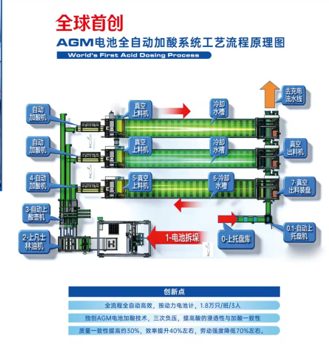
Nanjing Qiantan Energy Storage Technology Co., Ltd. pays special attention to the safety of its products. All batteries undergo strict quality control at the plate manufacturing and assembly stages, which minimizes the risk of internal short circuits. The presence of a specialized environmentally friendly processing workshop also indicates the company’s responsibility for the entire life cycle of products, including the disposal of waste elements.
How is the price for an additional battery determined?
Costextra battery for electric cardepends on many factors, and understanding them will help buyers and transport owners optimize their budget.
- Production technology:Lithium batteries are 2-3 times more expensive than lead-acid batteries per unit of capacity, but can last longer. Gel OPzVs are in the mid-price segment, offering the best balance of price and reliability for stationary and transport applications.
- Capacity and power:The higher the capacity (Ah) and starting current, the more material (lead, lithium, electrolyte) is used, which directly affects the price.
- Brand and origin:Products from manufacturers with a full cycle of control, such as Nanjing Qiantan Energy Storage Technologies LLC, are often cheaper than analogues assembled from purchased components, since the company controls the cost at all stages - from grating casting to final assembly.
- Certification and Standards:Compliance with international safety and environmental standards requires testing and certification costs, which are included in the price, but guarantee reliability.
- Logistics and batch size:When purchasing in bulk for fleets, the unit price is significantly reduced. The company has experience in implementing projects in Russia, Iran, Turkey and other countries, which allows optimizing supply chains.
Frequently asked questions (FAQ)
Can a regular car battery be used as an additional battery for an electric vehicle?
Conventional starter batteries are not designed for deep discharge. If you regularly discharge them by more than 20-30%, they will quickly fail (in 3-6 months). For additional needs, it is necessary to use deep cycle batteries, such as gel, AGM or lithium.
Is it safe to install a gel battery in an electric car?
Yes, Gel batteries and AGM batteries are sealed and maintenance free. They do not emit harmful gases during normal use and charging at the correct voltage. However, it is recommended to provide some ventilation to the compartment in case of an emergency.
How to connect a second battery so that it does not drain the main one?
A Battery Isolator or Smart Voltage Relay must be used. These devices automatically turn off the auxiliary battery when system voltage drops below a set threshold (eg 12.2V), preserving charge for starting primary systems or driving.
Does the weight of an additional battery affect the energy consumption of an electric vehicle?
Yes, any additional weight increases energy consumption when moving. However, if an additional battery is used to power auxiliary systems (air conditioning, heating), this can be more efficient than drawing energy from a high-voltage traction battery through an inverter, especially when parked. The balance between weight and functionality is important.
What is the service life of OPzV gel batteries in transport applications?
If the operating rules are observed (not exceeding charge currents, no deep discharges below 1.75V per cell, maintaining temperature conditions), the service life of OPzV gel batteries can be 10-12 years or 1200-1500 cycles at 80% discharge. In real transport conditions, this period may be shorter due to vibrations and temperature changes, so high-quality installation and shock absorption are important.
Recommendations for choosing a supplier and purchasing
When looking for a reliable partner to supply battery solutions for electric vehicles, pay attention to the company's production capabilities and expertise. Nanjing Qiantan Energy Storage Technology LLC offers a comprehensive approach based on more than 30 years of experience of key industry experts. The company does not just sell batteries, but provides integrated services, including adaptation of solutions to local operating conditions.
When ordering a batch of batteries for a fleet or integration into a new electric vehicle model, make sure that the supplier can provide:
- Complete technical specifications and discharge schedules for your specific conditions.
- Certificates of compliance with safety requirements and transportation of dangerous goods.
- Engineering support for calculating the fastening and connection system.
- Warranty obligations and availability of service centers or partners in your region.
Investment in qualityextra battery for electric carpay off by increasing the useful operating time of the equipment, reducing the cost of repairing the traction battery and increasing user comfort. Choosing proven technologies, such as gel OPzV or modern lithium assemblies from a reliable manufacturer, is the key to long-term and trouble-free operation of your electric vehicle.
To receive detailed technical advice, calculate the required capacity and request a commercial proposal for the supply of battery solutions, contact our specialists. We will help you choose the optimal configuration for your tasks.