

Buy a short circuit detector: price from the manufacturer
2026-10-06
- Short circuit detector: operating principles and selection criteria for industrial systems
- Technical characteristics and detector selection parameters
- Application of detectors in the battery production cycle
- Factors affecting the price of short circuit detector
- An engineering view: typical mistakes when implementing security systems
- Frequently asked questions (FAQ)
- Conclusion and recommendations for purchasing
Short circuit detector: operating principles and selection criteria for industrial systems
In modern energy storage systems (ESS) and lead-acid battery production lines, safety is the number one priority.Short circuit detectoris a specialized device or software and hardware complex designed to instantly detect abnormal currents that arise when unintentionally connecting points in a circuit with different potentials. In the context of battery production and operation of systems such as EV series traction batteries or OPzV stationary solutions, the role of the detector goes beyond mere protection. It ensures process integrity by preventing thermal destruction of cells, electrolyte ignition and failure of expensive forming equipment.
For engineers and technical directors involved in plant equipment or line modernization, the question of “buying a short circuit detector” transforms into the task of integrating a reliable monitoring system. The price from the manufacturer in this case often correlates not only with the hardware, but also with the accuracy of the algorithms for recognizing false positives, the reaction speed (in microseconds) and the ability of the device to operate in an aggressive acidic environment. Nanjing Qiantan Energy Storage Technologies LLC, with more than 30 years of experience in the industry, integrates advanced diagnostic methods directly into the processes of designing production facilities and testing finished products, which allows minimizing risks even at the stage of battery formation.
Physics of the process and types of short circuits in battery systems
To select the correct detection equipment (detector), it is necessary to understand the nature of the defects that it is intended to detect. In the production of lead-acid batteries, a short circuit (short circuit) can have a different physical nature:
- Metal short circuit:Direct contact of the positive and negative plates through a lead bridge or foreign metal object. Characterized by a sharp drop in voltage to zero and an extreme increase in current.
- Partial (soft) short circuit:Occurs due to shedding of the active mass, formation of dendrites or disruption of the separator. The leakage current may be small, but over time it leads to self-discharge of the battery and local overheating.
- External short circuit:An error occurred when connecting the load equipment or a short circuit in the DC distribution buses at the charging station.
Traditional fuses often fail to operate when a soft fault develops in the early stages, making the use of smart detectors critical for quality control at the stages of incoming raw material inspection and final product testing.
Technical characteristics and detector selection parameters
When purchasing equipment for assembly lines or test benches, it is important to pay attention not to marketing names, but to engineering specifications. The short circuit detector must meet the stringent requirements of the industrial environment. Below are the key parameters that affect the efficiency of the system and, consequently, its final cost.
| Parameter | Description and impact on work | Recommended values for industry |
|---|---|---|
| Response time | Interval between detecting an anomaly and issuing a shutdown signal. Critical to prevent thermal runaway. | < 100 µs for electronic systems; < 5 ms for electromechanical. |
| Current sensitivity | The minimum leakage current that the device can distinguish from normal operating conditions. | From 1 mA (for cell diagnostics) to 100 A (for power buses). |
| Operating voltage | The maximum circuit voltage in which the detector can safely operate. | Up to 1000 V DC (for series UPS battery assemblies and traction applications). |
| Interference immunity | Ability to ignore impulse noise from welding machines or frequency converters on the line. | Availability of low-pass filters and galvanic isolation. |
| Communication interface | Protocol for transmitting data about the state of the system to the central controller. | Modbus RTU/TCP, CAN bus, Profibus (for integration into process control systems). |
Engineering practice shows that an attempt to save on detector sensitivity often leads to missing latent defects in CP or CL 2V series batteries. Such batteries may pass the initial test, but fail after a few months of use by the customer, damaging the manufacturer's reputation. Therefore, companies such as Nanjing Qiantan Energy Storage Technology Co., Ltd. pay special attention to setting the trigger thresholds on their automated assembly lines and forming systems.
Comparison of detection technologies: Analog vs Digital systems
The choice between analog relays and digital microprocessor units determines not only the price, but also the functionality of the protection system. For battery quality control and production line safety, digital solutions are preferred.
| Criterion | Analog Relays/Fuses | Digital Smart Detectors |
|---|---|---|
| Reaction speed | Depends on the inertia of the mechanism, usually slowly (ms-s). | High (μs), programmable delays. |
| Diagnostics | Absent. Only the fact of operation. | Waveform recording, event log, trend analysis. |
| False positives | High probability with inrush currents. | Low, thanks to filtering algorithms and AI analysis. |
| Integration | Complex, requires additional converters. | Direct connection to plant SCADA systems. |
| Cost of ownership | Low initial price, high maintenance costs. | Higher initial price, but lower operating costs. |
The table shows that for modern high-tech industries, such as the production of OPzV gel batteries or high-power solutions with front terminals of the HFS and CT series, the use of digital detectors is the de facto standard. They allow you not only to turn off the line in case of an emergency, but also to analyze the causes of the failure, which is part of the philosophy of continuous quality improvement.
Application of detectors in the battery production cycle
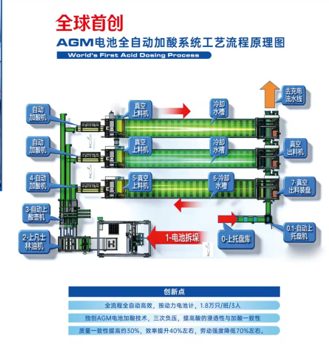
Integration of short-circuit detection systems is required at several key stages in the battery life cycle. Nanjing Qiantan Energy Storage Technology LLC implements turnkey projects where the security system is designed simultaneously with the production line.
1. Stage of assembly and welding of interelement connections
When assembling blocks from CL 2V series tubular monoblocks or flat plates, there is a risk of lead shavings or damage to the cage. Detectors installed on the conveyor conduct low-voltage testing of each cell immediately after welding. If the insulation resistance is below a set threshold, the system marks the defect and excludes it from further processing. This prevents defective cells from entering the expensive forming and charging processes.
2. Forming and charging process
Formation is the most energy-intensive and time-consuming stage. When charging thousands of batteries simultaneously (for example, maintenance-free 1S series car batteries), the risk of external short circuit due to operator error or breakdown of cable insulation increases. Intelligent detectors monitor each branch of the charging cabinet. When an abnormal current is detected, they turn off only the problematic branch without stopping the entire charging process of the batch, which saves time and energy.
3. Input and output quality control
Before shipment to the client, each batch undergoes stress tests. Short circuit detectors are used as part of test benches to check the resistance of batteries to external influences. For stationary batteries of the CP series and telecommunication solutions, it is important to guarantee the absence of internal micro-short circuits, which can only appear under load. The presence of a certified test report with detection data increases the confidence of buyers from Russia, Iran, Turkey and other countries where the company operates.
Factors affecting the price of short circuit detector
When an industrial buyer requests a "manufacturer's price" quote, he must consider several cost components. The market offers solutions from budget modules to complex Premium systems.
- Measurement accuracy:High-precision Hall sensors and shunts are more expensive, but provide reliable diagnostics of soft faults.
- Software:The cost of a software license for data analysis and integration with plant ERP systems can be a significant portion of the price.
- Case materials:To work in workshops with high humidity and the presence of acidic vapors, housings made of stainless steel or special polymers with protection class IP65/IP67 are required, which increases the cost of the product.
- Certification:Compliance with international standards (IEC, GOST, CE) requires costs for testing and qualification confirmation, which is included in the price of the certified product.
- Support and customization:Adaptation of algorithms for specific tasks (for example, for high-temperature batteries) requires the participation of development engineers.
Nanjing Qiantan Energy Storage Technology LLC offers transparent pricing as it is a full-cycle operator. By purchasing equipment or technological solutions from an integrator with its own production experience, the client avoids intermediary markups and receives a product tested under real operating conditions at partner factories such as Tianneng and Chaowei.
An engineering view: typical mistakes when implementing security systems
The experience of implementing projects in Asia and Eastern Europe reveals a number of system errors that technical specialists make when equipping new lines. First, ignoring temperature compensation. The resistance of materials changes with temperature, and a detector set at +20°C may give false alarms at +40°C in a hot shop. Secondly, there is insufficient galvanic isolation of the measuring circuits from the power buses, which leads to burnout of the detector electronics at the first serious breakdown.
Engineering tip: When selecting a detector, always ask for data on its performance in electromagnetic interference (EMI/EMC) environments. For battery factories that operate high-power rectifiers and inverters, this parameter is more important than the stated maximum accuracy in laboratory conditions.
Frequently asked questions (FAQ)
How often should a short circuit detector be calibrated?
The frequency of calibration depends on the intensity of use and environmental conditions. For industrial battery production lines, it is recommended to carry out verification at least once a year or after each major emergency. Modern digital systems are self-calibrating when turned on, reducing the need for frequent manual intervention.
Can the detector differentiate between inrush current and short circuit?
Yes, quality smart detectors use rate of rise (di/dt) analysis algorithms. The inrush current increases gradually, while the short-circuit current has an almost vertical edge. Correctly setting the time delay and thresholds allows you to avoid false shutdowns when starting up powerful equipment.
Does the type of battery (GEL, AGM, Flooded) affect the choice of detector?
The type of electrolyte itself does not affect the operating principle of the current detector. However, different types of batteries have different internal resistances and self-discharge currents. When diagnosing internal defects (soft short circuits), sensitivity settings should be adjusted depending on the battery production technology (for example, for gel OPzV the thresholds will be different than for liquid starter batteries).
What documents are required to import detectors to Russia?
To import and operate industrial equipment in the Russian Federation, you must have a GOST R certificate of conformity or a declaration of conformity, as well as an EAC certificate (for EAEU countries). Nanjing Qiantan Energy Storage Technology LLC ensures that the solutions supplied comply with local regulatory requirements by providing a full package of technical and permitting documentation.
What to do if the detector goes off for no apparent reason?
It is necessary to check the presence of impulse noise in the network, the integrity of the grounding of the measuring equipment and the condition of the cable insulation. It is also worth analyzing the detector’s event log: if alarms occur at certain points in the process cycle, the reason may be in the operation of neighboring equipment (welding machines, cranes). In such cases, installation of additional filters or shielding of communication cables is required.
Conclusion and recommendations for purchasing
Choosing a short circuit detection system for your battery production is an investment in product safety and quality. Skimping at this stage can lead to catastrophic consequences, including fires and loss of product batches. When making a purchase decision, you should be guided not only by the cost of the device, but also by the reputation of the supplier, the ability to technical support and adapt the solution to specific tasks.
Nanjing Qiantan Energy Storage Technologies LLC is ready to offer an integrated approach to ensuring the safety of production processes. Thanks to the deep expertise of a team that has worked for leading international corporations and experience in implementing projects in various climate zones, we ensure the delivery of solutions that actually work in intensive industrial environments. Our specialists will help you select the optimal configuration of monitoring systems for production lines of traction, stationary and automotive batteries, ensuring compliance with international safety standards.
To receive detailed technical advice, calculate the cost of equipment and discuss the possibilities of integration into existing production lines, contact our engineers. We offer not just equipment, but a technological partnership aimed at creating safe and efficient production facilities of the future.
Find out more about ourcomplete solutions for battery technologiesand plant design services.