
Batteries for energy storage: prices from the manufacturer
2026-10-05
- Batteries for energy storage: cost formation and technology choice in 2026
- Technology choice: comparison of architectures for different tasks
- An engineering perspective: why reliability is more important than the initial price
- Real application scenarios and equipment selection
- Line of solutions from a full-cycle manufacturer
- How to check the quality of a battery when purchasing
- Frequently asked questions (FAQ)
- Conclusion and recommendations for purchasing
Batteries for energy storage: cost formation and technology choice in 2026
In conditions of instability of energy networks and rising electricity tariffsbatteries for energy storagemoved from the category of auxiliary equipment to the category of critical assets of industrial infrastructure. For CTOs, chief energy officers and buyers, the key issue is not just battery availability, but understanding the true cost of ownership (TCO) and the suitability of system chemistry for specific operating conditions. The 2026 market shows a clear shift from chasing the lowest entry price to evaluating the durability, safety and ability of a system to withstand cyclic loads.
The cost of energy storage systems (ESS) is determined by many factors: from the type of electrolyte and grid design to logistics and disposal requirements. In this material, we will look at how the price of industrial batteries is calculated, what technological solutions are offered by full-cycle manufacturers, such as Nanjing Qiantan Energy Storage Technologies LLC, and why lead-acid technologies remain the only choice for a number of critical applications.
Pricing factors in the industrial segment
The price of an energy storage battery is not a static value. It depends on the cell architecture, the alloys used and the depth of engineering solutions. When requesting a quote, it is important to understand what exactly the customer is paying for.
- Type of electrolyte and separator:Traditional liquid acid batteries require less production costs, but require maintenance. Gel (GEL) and AGM batteries have more complex gas separation and recombination technology, which increases their cost but reduces operating costs.
- Plate design:The use of tubular plates (as in the OPzV or CL 2V series) is much more expensive than lattice plates, but provides a service life of up to 15–20 years in buffer mode. This is an investment in long-term reliability.
- Down conductor material:The use of alloyed lead alloys (calcium-tin, antimony) affects corrosion resistance and the ability to withstand deep discharges. Highly purified lead reduces self-discharge, but increases cost.
- Certification and testing:Products that have passed strict tests for vibration, thermal stability and compliance with international safety standards always have a premium price, which is compensated by the absence of emergency downtime.
Full-cycle companies such asNanjing Qiantan Energy Storage Technology LLC, are able to optimize these costs through quality control at the stage of grating production and assembly, eliminating intermediary markups and guaranteeing stability of characteristics from batch to batch.
Technology choice: comparison of architectures for different tasks
There is no “universal” battery. The choice of technology is dictated by the load profile: whether the battery will operate in buffer mode (constant recharging, rare discharges) or in cyclic mode (regular charge-discharge). An error in choosing an architecture leads to either premature failure or an unjustified increase in the cost of the project.
Comparative analysis of popular technologies
| Parameter | Stationary AGM (CP series) | Gel OPzV/CG | Tubular monoblocks (CL 2V) | Traction EVs (EV series) |
|---|---|---|---|---|
| Main Application | UPS, telecommunications, power backup | RES, remote sites, frequent cycles | Large data centers, energy, long service life | Electric forklifts, warehouse equipment |
| Lifetime (buffer) | 5–7 years | 10–12 years | 15–20 years | Depends on cycles (up to 1500) |
| Depth of Discharge (DoD) | Up to 30–50% (recommended) | Up to 60–80% | Up to 80% | Up to 80–100% (cyclic mode) |
| Maintenance Requirements | Maintenance-free | Maintenance-free | Maintenance-free | Electrolyte level monitoring required |
| Temperature sensitivity | High | Average | Low (high stability) | Average |
| Relative cost | Low | Medium/High | High | Average |
The table shows that for server backup tasks where discharges occur rarely, it is economically feasible to use CP series AGM batteries. However, for hybrid power plants, where the battery supplies energy daily in the evening and charges during the day, OPzV gel solutions or specialized tubular batteries that can withstand thousands of cycles without capacity degradation are required.
An engineering perspective: why reliability is more important than the initial price
In industrial practice, a common mistake occurs when the purchasing department selects a supplier solely based on the lower limit of the price per kWh of capacity. An engineering assessment shows that such savings are imaginary. Cheap batteries often use secondary lead with impurities, which leads to accelerated sulfation and an increase in internal resistance after just a year of operation.
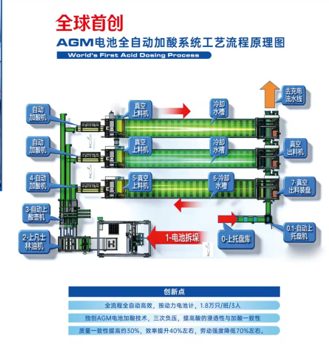
Engineering rule:In critical systems (medicine, data centers, emergency lighting), battery failure is unacceptable. Therefore, the priority should not be the minimum purchase price, but the predictability of the behavior of the battery over its entire service life. Nanjing Qiantan Energy Storage Technology LLC focuses on this: thanks to 30 years of experience of key specialists and its own production from grating casting to final molding, the company ensures strict control of each stage. This allows you to avoid the “lottery” quality typical of assemblers who buy components externally.
In addition, having an in-house green recycling facility means that the manufacturer is responsible for the entire life cycle of the product. This reduces the risks for the customer in terms of compliance with environmental standards when disposing of used batteries, which is especially important for enterprises in Russia and the EAEU countries.
Real application scenarios and equipment selection
To understand whatbatteries for energy storagesuit your facility, let's look at two typical industrial cases.
Scenario 1: Backup power for a telecommunications site in a remote area
Conditions:The facility is located in an area with unstable power supply. The temperature in the container can range from -20°C to +40°C. Requires autonomy of up to 48 hours when the network is disconnected.
Technical solution:Using standard AGM batteries is risky here due to sensitivity to temperature changes and deep discharges. The optimal choice is gel batteries of the OPzV or CG series. Their immobilized electrolyte design prevents acid separation and the thick plates provide cycling resistance.
Result:The system remains operational over a wide temperature range, requiring minimal maintenance. The service life exceeds 10 years, which reduces the frequency of replacements and the logistics costs of delivering new batteries to hard-to-reach areas.
Scenario 2: A fleet of electric forklifts in a Class A warehouse
Conditions:Intensive work in several shifts. High inrush currents when lifting loads. The need to quickly recharge during breaks.
Technical solution:This requires specialized EV series traction batteries. They are designed to withstand mechanical vibrations and high discharge currents. An important parameter is the ability to accept a charge at high currents without overheating (an effect that is minimized in high-quality traction batteries due to the special structure of the active mass).
Result:Loaders work the entire shift without loss of power. High charging efficiency reduces equipment downtime. The durability of the plates ensures that the capacity is retained even after 1200–1500 charge-discharge cycles.
Line of solutions from a full-cycle manufacturer
Nanjing Qiantan Energy Storage Technology LLC offers an integrated approach that meets the needs of various market segments. The company's product range is formed on the basis of a deep understanding of physical and chemical processes and the requirements of international standards.
- EV series traction batteries:Designed for floor transport and special equipment. They are characterized by high vibration resistance and the ability to deliver high currents.
- Gel batteries OPzV and CG:Ideal for renewable energy (solar and wind power plants) and uninterruptible power supply systems with frequent discharges. They have low self-discharge and long service life.
- High temperature batteries:Special series for regions with hot climates or rooms without air conditioning. They retain capacity where conventional batteries degrade within a few months.
- High power solutions with front terminals (HFS and CT):Convenient for compact UPS racks, where layout density and ease of busbar installation are important.
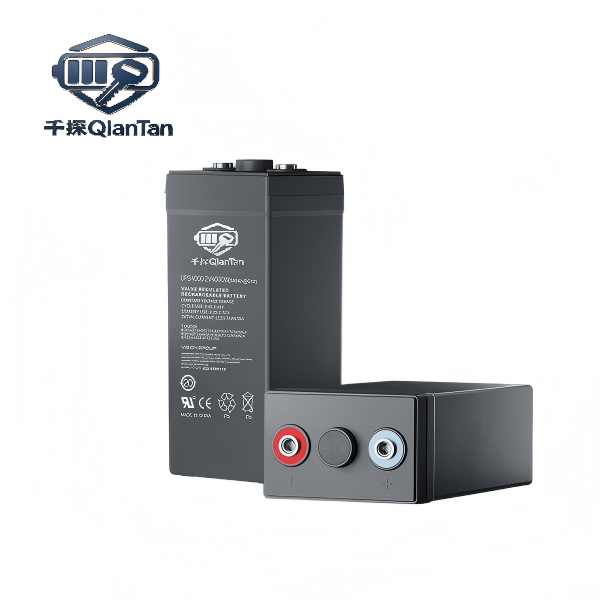
- Stationary batteries CP series:A classic solution for telecommunications and office UPSs. Optimal price/reliability ratio for buffer mode.
- Tubular monoblocks CL 2V:Flagship solution for large energy facilities. Maximum reliability and service life up to 20 years.
The geography of the company's projects includes Russia, Iran, Turkey, Vietnam and other countries, which confirms the adaptability of products to various climatic and regulatory conditions. Partnerships with such giants as Tianneng and Chaowei, as well as the implementation of turnkey projects (from plant design to commissioning) indicate a high level of technological expertise.
How to check the quality of a battery when purchasing
When choosing a supplierbatteries for energy storagea technician should pay attention not only to passport data, but also to indirect signs of production quality.
- Product weight:A lead-acid battery is essentially lead. If a battery of the declared capacity weighs significantly less than its analogues, the manufacturer has probably saved on the amount of lead in the plates, which will directly affect the service life.
- Date of production and freshness:Even maintenance-free batteries lose capacity during storage. Request certificates with date of issue. A battery that has been left in a warehouse for more than 6 months without being recharged may have irreversible changes.
- Availability of technical documentation:A professional supplier is required to provide datasheets with discharge curves, temperature dependence of service life and charging recommendations. The absence of such data is a red flag.
- Service support:Check to see if the manufacturer provides on-site engineering support. Nanjing Qiantan Energy Storage Technologies LLC includes in its service the adaptation of solutions to local conditions and regular updating of technical documentation, which is critical for complex industrial facilities.
Frequently asked questions (FAQ)
Does ambient temperature affect the price and choice of battery?
Yes, temperature is a critical factor. For hot climates or unheated rooms with large temperature differences, it is necessary to choose specialized series (for example, high-temperature batteries or gel OPzV). Conventional AGM batteries in such conditions quickly lose capacity due to increased corrosion of the grids and drying out of the electrolyte. Although specialized batteries are more expensive, replacing them with regular ones will result in the need to replace the entire battery every 1-2 years, which ends up being more expensive.
Is it possible to mix batteries from different manufacturers in one system?
Strongly not recommended. Batteries from different manufacturers, and even different batches from the same manufacturer, may have different internal resistance and capacity. When connected in series or parallel, this will lead to an uneven distribution of charge and discharge currents. A weaker battery will be constantly overcharged or undercharged, causing it to fail quickly and potentially damage the entire energy storage system.
What is the service life of lead-acid batteries in renewable energy mode?
In renewable energy mode (solar panels), where daily charge-discharge cycles occur, the service life depends on the depth of discharge (DoD). For conventional AGM batteries it is 3–5 years at DoD 30–50%. For OPzV gel batteries and CL 2V tubular batteries, the service life can reach 10–15 years even at deeper discharges, due to the plate design and electrolyte composition.
Does the manufacturer provide recycling services?
Yes, responsible manufacturers, such as Nanjing Qiantan Energy Storage Technology LLC, have specialized workshops in their infrastructure for environmentally friendly recycling of used lead-acid batteries. This ensures a closed loop and compliance with the principles of sustainable development. When purchasing large quantities, it is worth checking the conditions for the return or disposal of old batteries, as this may be regulated by local legislation.
What is the difference between front terminal and top terminal batteries?
The difference lies in ease of installation and maintenance. Top terminal batteries are traditional and convenient for vertical busbar connection. Batteries with front terminals (HFS, CT series) are designed for installation in tight racks (tight cabinets) where access from above is limited. They allow cables to be easily connected from the front, which speeds up installation and facilitates visual inspection of connections. The electrical characteristics do not depend on the location of the terminal, but on the internal design.
Conclusion and recommendations for purchasing
The choice of energy storage system is a strategic decision that impacts business continuity. In 2026, the market requires buyers to have a deep technical understanding of the process. Saving on battery quality inevitably leads to increased operating costs for replacement and maintenance.
To ensure reliability, we recommend:
- Clearly define the load profile (buffer or cyclic).
- Take into account operating temperature conditions when choosing the type of electrolyte (AGM, Gel, Tubular).
- Work with full-cycle manufacturers who control quality from raw materials to the finished product and have their own expertise in the field of processing.
- Request not only the price, but also a full package of technical documentation and warranty obligations.
Nanjing Qiantan Energy Storage Technologies LLC is ready to provide detailed advice on the selection of equipment, calculate the required capacity and offer solutions adapted to the specifics of your region and tasks. Engineering support and process transparency allow our partners to build energy infrastructure that lasts for decades.
To obtain technical specifications, calculate costs and discuss delivery conditions, contact our specialists or study the detailed catalogproducts and technological solutions.