
Uninterruptible power supply TN VED: code and price from the manufacturer
2026-10-07
- HS code for uninterruptible power supplies: classification and impact on cost
- Detailed decoding of HS codes for UPS
- Factors that determine the price of a UPS from the manufacturer
- An Engineering Perspective: Choosing a UPS for Challenging Industrial Environments
- Comparison of battery technologies for UPS
- Logistics and customs clearance: advice from professionals
- Frequently asked questions (FAQ)
- Conclusion and recommendations for purchasing
HS code for uninterruptible power supplies: classification and impact on cost
Correct determination of the code of the Commodity Nomenclature of Foreign Economic Activity (TN FEA) is a critical stage when importing industrial equipment, includingUninterruptible power supplies (UPS). An error in classification can lead to cargo delays at customs, incorrect calculation of duties and even administrative fines. For most modern UPSs used in industry and data centers, the base code is8504 40, however, the exact detail depends on the power, type of current and design features of the device.
In 2026, the logistics supply chains for battery systems and power electronics require special regulatory attention. Importers are often faced with the question: how to classify hybrid systems where the inverter and battery pack are supplied separately or as a single module? Understanding the logic of customs classification allows you not only to optimize costs, but also to choose the right manufacturer capable of providing a full package of certification documents. CompanyNanjing Qiantan Energy Storage Technology LLC, with more than 30 years of experience in the energy storage industry, helps partners from Russia, the CIS countries and Asia to competently build logistics, ensuring that products comply with international standards and the requirements of local legislation.
Detailed decoding of HS codes for UPS
Group 85 of Section XVI of the EAEU Commodity Code for Foreign Economic Activity covers electrical machines and equipment. Uninterruptible power supplies belong to the category of static converters. Below is a classification structure relevant for industrial procurement.
Main group 8504: Electrical transformers, static converters…
Within this group, UPS most often fall under the subheading8504 40— “Static converters.” However, to accurately determine the duty rate, the following parameters must be taken into account:
- 8504 40 100 0: Frequency converters. This may include some specific variable-frequency output UPSs if they are marketed primarily as motor drives, but this is uncommon for classic UPSs.
- 8504 40 900 0: Other static converters. This is the most common code for online UPS (Double Conversion), line-interactive and standby models used in server, medical and industrial applications.
Important clarification: if the UPS is supplied with batteries, customs authorities may require separate classification of the components if they do not constitute a “single product” by design. Batteries are usually classified by code8507(Electric batteries).
Specifics of classification of battery packs
Since the heart of any UPS is the energy storage system, understanding battery codes is imperative. In the practice of Nanjing Qiantan Energy Storage Technologies LLC, the most common types of batteries used in UPS are:
| Battery type | HS code (approximate) | Description |
|---|---|---|
| Lead-acid (VRLA/AGM/Gel) | 8507 20 000 0 | The most popular type for UPS. Sealed, maintenance-free. |
| Lithium-ion (Li-ion) | 8507 60 000 0 | Used in modern high-density UPSs. Require special transportation conditions. |
| Nickel-cadmium | 8507 40 000 0 | Rarely used in new systems, more often in modernized old facilities. |
Engineering practice shows that when supplying monoblock solutions (UPS + built-in batteries), customs can accept the entire complex as a single product under code 8504 if the batteries are an integral part of the design. However, when External Battery Packs are supplied, they are almost always declared separately under code 8507. This affects the final import duty and VAT rate.
Factors that determine the price of a UPS from the manufacturer
Request "uninterruptible power supply TN VED price» often leads buyers to average market indicators that do not reflect the real cost of industrial solutions. The price of a UPS is determined not only by the cost of components, but also by the complexity of engineering solutions, build quality and level of technical support.
1. Energy conversion topology
The cost directly depends on the device architecture:
- Offline (Reserve):The cheapest models. Switching to the battery occurs when the network is lost. Suitable for home PCs and non-critical equipment.
- Line-Interactive:Middle price segment. They have a voltage stabilizer (AVR). Effective for office equipment and light industrial controllers.
- Online (Double Conversion):The most expensive and reliable. The inverter operates continuously, providing a perfect sine wave and zero switching time. Critical for servers, medical equipment and CNC machines.
2. Battery cell type and service life
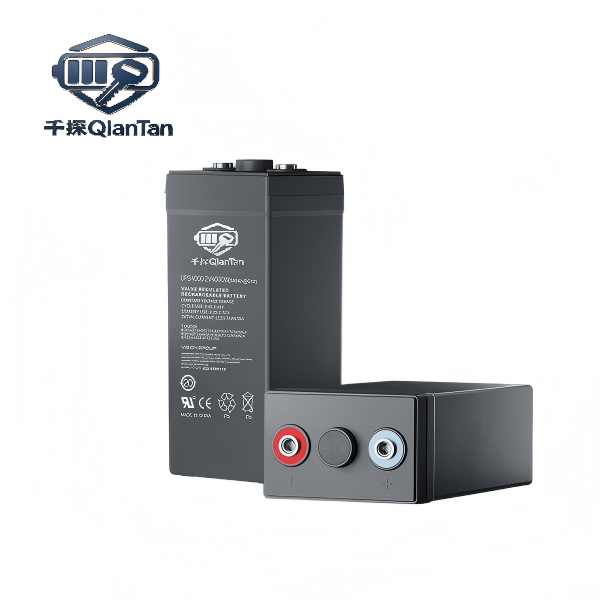
CompanyNanjing Qiantan Energy Storage Technology LLCproduces a wide range of lead-acid batteries, which determine up to 40-50% of the cost of a UPS system. The use of tubular plates in the CL 2V and OPzV series ensures a service life of up to 15-20 years, which is significantly higher than standard AGM batteries (3-5 years). Although the initial investment in such solutions is higher, the total cost of ownership (TCO) is lower due to the infrequent replacement of batteries.
3. Power and scalability
Industrial UPSs ranging from 10 kVA to several megawatts require sophisticated cooling systems, parallel operation of modules and intelligent load management. The presence of the possibility of “hot” replacement of modules (Hot-Swap) also increases the cost of the device, but reduces the risk of enterprise downtime.
An Engineering Perspective: Choosing a UPS for Challenging Industrial Environments
When choosing an uninterruptible power supply for an industrial facility, it is not enough to look only at the power in kilowatts. It is necessary to take into account the nature of the load and the quality of the input network.
Engineering Judgment:In an unstable industrial network with high harmonic distortion, using a UPS with an input power factor (PF) below 0.9 can lead to overloading of input cables and transformers. Modern online UPS from leading manufacturers, such as partners of Nanjing Qiantan LLC, provide input PF > 0.99, which minimizes the reactive load on the enterprise network.
Real-life application scenario: Metallurgical production
Let's consider an example of implementing an uninterruptible power supply system at a continuous steel casting site. Here, failure of the control system in a fraction of a second can lead to solidification of the metal in the mold and multimillion-dollar losses.
- Problem:High levels of electromagnetic interference (EMI) from arc furnaces and rolling mill drives.
- Solution: Installation of an online double conversion UPS with galvanic isolation and external battery racks based on tubular batteries of the CL 2V series from Nanjing Qiantan Energy Storage Technology LLC.
- Rationale:Galvanic isolation protects the sensitive PLC electronics from ground loops and impulse noise. Tubular batteries provide stable current output even at high temperatures in the machine room, where it is difficult to maintain ideal climate control.
Real Application Scenario: Data Center (DPC)
For modern data centers, energy density and efficiency are key parameters.
- Problem:Limited floor space and high energy efficiency (PUE) requirements.
- Solution:High-density modular UPS with lithium-ion batteries or compact OPzV gel packs.
- Rationale:Lithium-ion solutions take up 2-3 times less space than lead-acid counterparts of the same capacity and can reduce charging time. However, if budget is limited, the use of high temperature CG gel batteries from our range allows operation at temperatures up to 40°C without critical degradation, reducing air conditioning costs.
Comparison of battery technologies for UPS
Choosing between different battery chemistries is one of the most difficult decisions when designing an uninterruptible power system. Below is a comparison of the main types available on the market in 2026.
| Parameter | Lead-acid (AGM) | Lead-acid (Gel/OPzV) | Lithium-ion (LiFePO4) |
|---|---|---|---|
| Service life (cycles) | 300-500 | 1000-1500 | 3000-5000 |
| Temperature sensitivity | High (degradation at >25°C) | Medium (tolerate heat better) | Low (require BMS) |
| Specific energy (Wh/kg) | Low | Average | High |
| Cost of ownership (5 years) | Low initial, high maintenance | Average | High initial, low maintenance |
| Maintenance Requirements | Visual inspection | Minimum | BMS monitoring |
The table shows that for applications where reliability and long service life without frequent replacement are important, such as telecommunication towers or remote industrial sites, OPzV gel batteries and CL series tubular batteries from Nanjing Qiantan LLC are the optimal balance of price and quality. Lithium-ion solutions are preferred where weight and size are critical, such as in mobile data centers or electric vehicles.
Logistics and customs clearance: advice from professionals
Importing UPS and batteries requires careful preparation of documentation. Errors in the package of documents can lead to additional checks and storage of cargo in a temporary storage warehouse (temporary storage warehouse).
Required documents for import
- Contract and invoice:Must contain a clear description of the product, including model, power, and type of batteries.
- Technical data sheet:Confirms the characteristics of the device for the correct selection of the HS code.
- Certificates of conformity:UPSs and batteries often require a declaration of conformity with TR CU (EAC) for electromagnetic compatibility and safety standards.
- Safety Data Sheet (MSDS):Mandatory for the transportation of batteries, especially lithium-ion batteries, as they are classified as dangerous goods.
CompanyNanjing Qiantan Energy Storage Technology LLCprovides complete technical documentation in Russian and English, and also assists partners in obtaining the necessary certificates for the markets of Russia, Kazakhstan, Belarus and other EAEU countries. Our experience in implementing projects in Iran, Turkey and Pakistan allows us to adapt the package of documents to the requirements of local regulators.
Frequently asked questions (FAQ)
Which HS code should I use for a 5 kVA UPS?
For most 5kVA UPS the code is8504 40 900 0(other static converters). However, if the device has specific frequency conversion functions for driving motors, classification according to 8504 40 100 0 is possible. It is recommended to request a preliminary classification decision from the Federal Customs Service or contact a broker with a technical description of the specific model.
Does the type of battery affect the HS code of the UPS itself?
No, the battery type does not change the code of the UPS itself (8504), if it is built-in. However, if batteries are supplied as separate units, they are classified separately under group 8507. This is important for calculating the total duty amount, as the rates for batteries and converters may differ.
Why choose lead acid batteries over lithium batteries for an industrial UPS?
Lead-acid batteries, especially gel (OPzV) and tubular (CL 2V), have high resistance to overcharging and deep discharge, and are also less demanding of complex balancing systems (BMS). They are cheaper to dispose of and have a developed recycling infrastructure. Nanjing Qiantan LLC offers environmentally friendly solutions with a closed recycling cycle, which reduces the environmental risks of the enterprise.
How to calculate the required battery capacity for a UPS?
The calculation depends on the required battery life and load power. The formula looks simplified like this:Capacity (Ah) = (Load Power (W) × Time (h)) / (Battery Voltage × Inverter Efficiency × Discharge Ratio). Our company's engineers help customers make accurate calculations taking into account temperature coefficients and battery aging to avoid situations where the UPS shuts down earlier than planned.
Does the manufacturer provide a warranty on batteries?
Yes, Nanjing Qiantan Energy Storage Technology LLC provides a warranty for its products, the terms of which depend on the series (for example, up to 5 years for the CP and OPzV series). The warranty covers manufacturing defects and loss of capacity beyond standard values, subject to operating conditions. We also offer service support and replacement of defective items under partnership agreements.
Conclusion and recommendations for purchasing
Selecting an uninterruptible power supply and accompanying battery systems is an investment in business continuity. Correct classification according to the Commodity Nomenclature of Foreign Economic Activity allows you to optimize your import budget, and choosing a reliable manufacturer guarantees the longevity of the system.
When purchasing a UPS, pay attention to:
- Match the UPS topology to the quality of your electrical network.
- Type of batteries used: For long-term projects, choose gel or tube batteries.
- Availability of complete technical documentation and certificates for customs clearance.
- Possibility of obtaining technical support and spare parts in your region.
CompanyNanjing Qiantan Energy Storage Technology LLCis ready to become your reliable partner in the supply of comprehensive energy supply solutions. Our experts will help you select the optimal UPS and battery configuration, ensure correct customs documentation and provide technical support at all stages of the project. Entrust the energy security of your enterprise to professionals with 30 years of experience.
For detailed advice on equipment selection and cost calculation, contact our specialists or study our catalogbattery solutions and uninterruptible power supplies.