
Prescription materials for batteries: buy in bulk from the manufacturer
2026-10-03
- Battery formulation materials: quality criteria and supplier selection
- Key components of the battery formulation and their impact on performance
- Technical parameters and quality standards of raw materials
- Application of formulation solutions in various segments
- Comparative analysis of technologies: AGM vs Gel (GEL)
- Logistics and quality control for wholesale supplies
- Frequently asked questions (FAQ)
- Engineering advice and procurement strategy
Battery formulation materials: quality criteria and supplier selection
The stability of the electrochemical characteristics of lead-acid batteries directly depends on the chemical composition of the active masses, separators and electrolyte.Battery Formulation MaterialsThey are not just a raw material base, but a complex engineering product that determines the service life, capacity and resistance of the current source to deep discharges. In industrial production conditions, even a slight deviation in the purity of the lead alloy or the structure of the fiberglass can lead to the rejection of an entire batch of finished products.
For battery manufacturers, purchasing components in bulk requires careful auditing of suppliers. The key factors are the reproducibility of the properties of raw materials from batch to batch, compliance with international environmental safety standards and the availability of technical support in adapting recipes to specific production lines. Nanjing Qiantan Energy Storage Technologies LLC offers an integrated approach to procurement, combining the supply of certified materials with an expert assessment of their compatibility with the customer’s technological processes.
Key components of the battery formulation and their impact on performance
A lead-acid battery is a system where each element performs a strictly defined function. An error in the choice of material at the design stage often cannot be compensated for at the assembly stage. Let's consider the main groups of materials that form the recipe of a modern battery.
Lead alloys and lattice structure
The basis of any battery is current-carrying grids. Pure lead is too soft for mechanical stress, so alloying additives are used. Traditionally, an antimony alloy was used, but it causes high self-discharge and the need for regular maintenance (topping up water). Modern industry is switching to calcium and tin alloys, which make it possible to create maintenance-free batteries (1S, CP series).
The engineering nuance lies in the balance between corrosion resistance and electrical conductivity. Excess calcium can lead to brittleness of the grid under cyclic loads, which is critical for traction batteries (EV series). Manufacturers such as Nanjing Qiantan LLC control the microstructure of alloys at the foundry level, ensuring grain uniformity, which prevents premature failure of down conductors.
Active mass and expansion additives
The paste applied to the gratings consists of lead oxide, sulfuric acid and functional additives. This is where the “recipe” that determines the type of battery is formed:
- For starter batteries:Organic expanders are added to increase surface area and increase inrush current.
- For traction and stationary batteries (OPzV, CL 2V):Carbon nanomaterials and barium sulfate play a key role, preventing sulfation of the plates during deep discharges.
The quality of lead oxide (density, particle size) affects the rate of battery formation. Unstable raw materials lead to uneven distribution of the active mass and a decrease in actual capacity below the declared one.
Separators: AGM and gel technologies
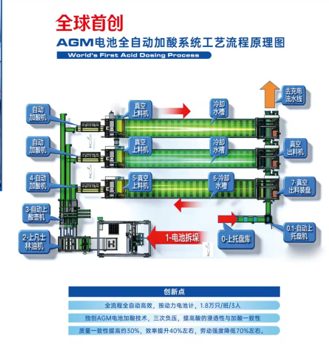
The separation of the electrodes and retention of the electrolyte is carried out by separators. AGM (Absorbent Glass Mat) technologies use glass microfiber mats. Their porosity and compression resistance determine the battery's ability to operate in any position and withstand vibration. In gel batteries (CG, OPzV series), silicon dioxide is added to the electrolyte, forming a thixotropic gel. The quality of silicon dioxide is critical: it must provide a stable structure without delamination throughout its entire service life.
Technical parameters and quality standards of raw materials
Bulk purchases of prescription materials must rely on strict technical specifications. Below are typical requirements for key components that Nanjing Qiantan Energy Storage Technology Co., Ltd. adheres to during production and supply.
| Component | Key Parameter | Typical Value/Requirement | Impact on the battery |
|---|---|---|---|
| Lead alloy (grid) | Lead Purity (Pb) | >99.99% | Reduced self-discharge, increased corrosion resistance |
| Alloying additives (Ca, Sn) | Uniformity of distribution | ±0.01% by volume | Mechanical strength, service life |
| Lead oxide (paste) | Particle size | 0.5 – 5 µm (bulk) | Formation speed, capacity |
| AGM separator | Porosity | >90% | Internal resistance, cold start current |
| Silicon dioxide (gel) | Specific surface | 150 – 200 m²/g | Gel stability, prevent short circuit |
| Polymer housings | Impact resistance (at -30°C) | GOST/IEC compliance | Sealing, transportation safety |
It is important to note that specific parameters may vary depending on the type of battery being designed (starter, traction or backup). The company's engineers carry out incoming inspection of each batch of raw materials using spectrometric analysis and microscopy to eliminate the risk of substandard materials entering production.
Application of formulation solutions in various segments
There are no universal materials. A recipe that is ideal for a car starter will be ineffective in a data center uninterruptible power supply system. Nanjing Qiantan Energy Storage Technologies LLC adapts the supply of materials to the specific tasks of clients in Russia, Iran, Turkey and other countries.
Traction batteries for warehouse equipment and electric vehicles
In this segment, batteries are subjected to daily deep discharges (up to 80% DOD). The main problem is sulfation of the negative plate and shedding of the active mass. Here, reinforced tubular plates (CL 2V series) and special polymer additives to the electrolyte are used, which increase ionic conductivity at low temperatures. Experience shows that the use of standard automotive formulations in traction batteries reduces their service life by 2–3 times.
Stationary backup power systems (UPS, telecom)
For cellular bases and data centers, durability in buffer charge mode (always connected to the network) is critical. Gel technologies (OPzV) and lead-carbon additives are used. The carbon components create a conductive network within the active mass, preventing loss of contact between the lead oxide particles. This allows CP series batteries to last up to 10–12 years without significant loss of capacity.
Automotive and motorcycle starter batteries
A high starting current at low temperatures is important here. Thin grids made of lead-calcium alloy with the addition of tin for strength are used. The active mass is formulated to maximize the reaction area in a fraction of a second. The company supplies ready-made solutions for the 1S series, ensuring stable engine starting even in the harsh climatic conditions of Russia and Northern Europe.
Comparative analysis of technologies: AGM vs Gel (GEL)
The choice between AGM and GEL technologies is often faced by manufacturers of industrial batteries. Both types are VRLA (Valve Regulated Lead-Acid), but their internal structure and formulation features differ.
| Characteristics | AGM (Absorbent Glass Mat) | GEL (Gel Electrolyte) |
|---|---|---|
| Internal resistance | Low (high current) | Higher (peak current limitation) |
| Deep discharge resistance | Medium (up to 50-60% DOD optimal) | High (up to 80-90% DOD) |
| Temperature | Sensitive to overheating (>45°C) | Better thermal stability |
| Production cost | Below (ease of automation) | Higher (difficulty of dosing the gel) |
| Main Application | Starter, UPS (short-term loads) | Traction, solar energy, long-term discharge |
From an engineering point of view, the choice of technology is dictated by the load profile. If the equipment requires short-term high-power impulses (for example, starting a motor or compensating for voltage sags), AGM is a more effective solution due to its low internal resistance. For cyclic loads with slow discharge (electric forklifts, autonomous lighting), gel technology provides a longer cycle life, since the gel better holds the active mass on the plates, preventing it from shedding.
Logistics and quality control for wholesale supplies
Purchasing prescription materials in bulk involves risks of violating storage and transportation conditions. Lead powders are sensitive to oxidation, and polymer separators can become deformed if improperly packaged. Nanjing Qiantan Energy Storage Technology LLC implements strict logistics protocols:
- Sealed packaging:Lead oxide and alloying additives are supplied in multi-layer bags with a moisture barrier.
- Batch certification:Each batch is accompanied by a quality certificate with laboratory test results (chemical composition, granulometry).
- Environmental safety:All materials comply with requirements for restricting the use of hazardous substances, which is important for export to countries with strict environmental regulations (Europe, North America).
The company also provides audit services for clients' production lines. Specialists with 30 years of experience help set up equipment for applying paste and forming plates for specific purchased materials, minimizing the percentage of defects at the start of production.
Frequently asked questions (FAQ)
What documents are required to import prescription materials to Russia?
To import chemical components and lead alloys, it is required to provide certificates of conformity (GOST R or TR CU), safety data sheets (MSDS) for chemicals and shipping documents with an exact indication of HS codes. Nanjing Qiantan LLC has experience in processing export shipments for Russian enterprises and provides consulting support on customs clearance.
Can standard formulations be used for high temperature conditions?
Standard formulations are not designed for long-term operation at temperatures above 40–45°C. For such conditions, it is necessary to modify the composition of the grating alloy (increasing the tin content) and use special heat-resistant separators. The company develops customized solutions for regions with hot climates (Iran, Pakistan, Southeast Asia).
How to check the quality of an AGM separator before putting it into production?
Key tests include measuring thickness under load, testing for voltage breakdown, and assessing capillary activity (rate of electrolyte absorption). Visual inspection is also important: the material must be homogeneous, without visible inclusions or fiber breaks. The company's laboratory conducts random tests on each incoming batch.
How are lead-carbon batteries different from regular lead-acid batteries?
In lead-carbon batteries, a carbon material (graphene or activated carbon) is added to the negative active mass. This reduces sulfation, speeds up charging and increases the number of discharge-charge cycles. Such batteries occupy an intermediate position between classic lead and lithium power sources, offering high power at a lower cost.
Engineering advice and procurement strategy
When forming a supply strategy for battery production, it is important to avoid the mistake of “chasing for the cheapest raw materials.” Skimping on the quality of lead alloy or lead oxide often leads to an increase in the percentage of defects at the battery formation stage, which ultimately costs more. It is recommended to conduct pilot tests of new batches of materials on pilot lines before full-scale implementation.
Nanjing Qiantan Energy Storage Technology LLC acts not just as a supplier, but as a technology partner. We provide access to leading-edge lead-acid systems, including gel, AGM and lead-carbon technologies. Our goal is to ensure the stability of your production and the competitiveness of the final product on the global market.
To obtain technical specifications, material samples or advice on adapting recipes to your equipment, contact our engineers. We are ready to discuss the terms of wholesale supplies and options for technical support for your projects.
Find out more about ourproduct solutions and technology servicesfor the battery industry.