

Backup battery for power supply: price from the manufacturer
2026-09-12
- Backup battery for power supply: an engineering approach to selection and cost calculation
- Technical characteristics and choice of technology for various tasks
- Influence of operating conditions on actual service life
- Industrial use cases for backup batteries
- How to check the quality of a batch upon acceptance: a checklist for the buyer
- Eco-friendliness and sustainable development: closed loop
- Frequently asked questions (FAQ)
- Conclusion and recommendations for purchasing
Backup battery for power supply: an engineering approach to selection and cost calculation
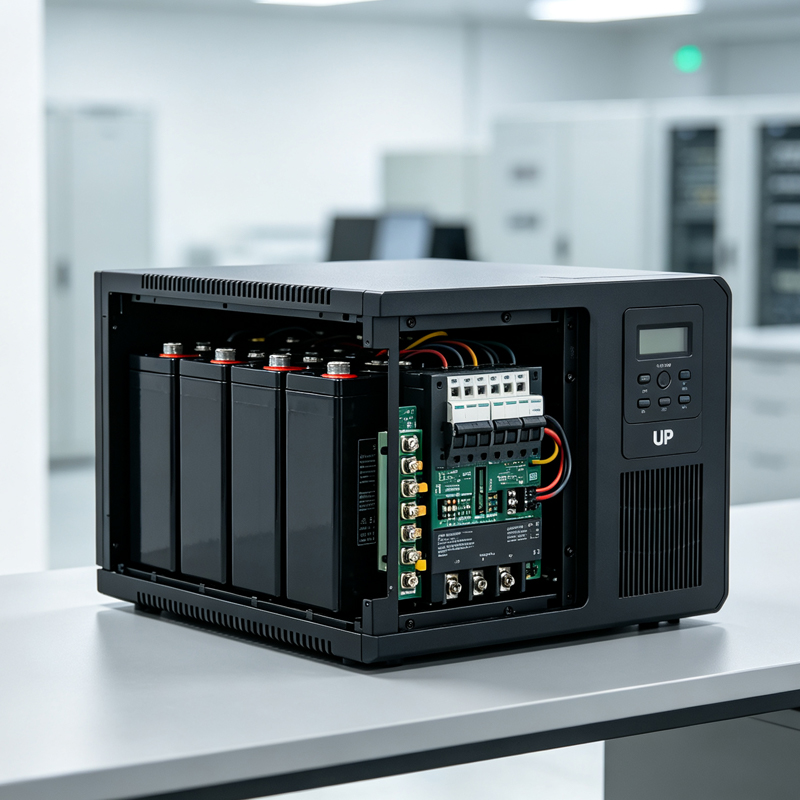
In conditions of instability of industrial energy networksbackup battery for power supplyis no longer just an auxiliary component of the infrastructure. This is a critical component that ensures the continuity of technological processes, data security and personnel safety. For engineers and technical directors, purchasing battery systems is not just a transaction, but a complex process of verifying technical parameters, compatibility with existing UPS (uninterruptible power supplies) and assessing the total cost of ownership (TCO).
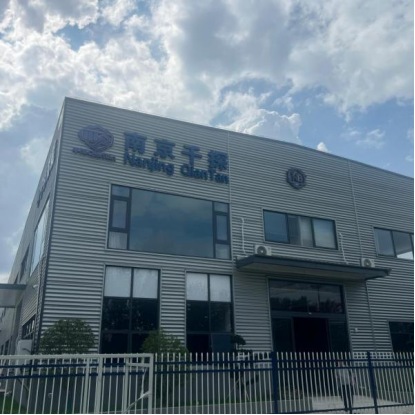
The price from the manufacturer is formed not only on the basis of capacity (Ah), but also depends on the production technology of the plates, the composition of the alloy of the gratings, the type of separator and the expected service life in specific temperature conditions. In 2026, the market demands transparency: buyers want to understand what they are paying for and how the chosen technology will affect operating costs in 5-10 years. Nanjing Qiantan Energy Storage Technology Co.,Ltd., with more than 30 years of industry experience and full production cycle, offers solutions that balance initial cost with long-term reliability.
Key factors in determining the price of backup batteries
When requesting a commercial offer for a batch of batteries, many buyers are faced with a significant range of prices. To avoid errors when comparing, it is necessary to decompose the cost of the product into its components. The price of a backup battery is determined by the following technical and manufacturing factors:
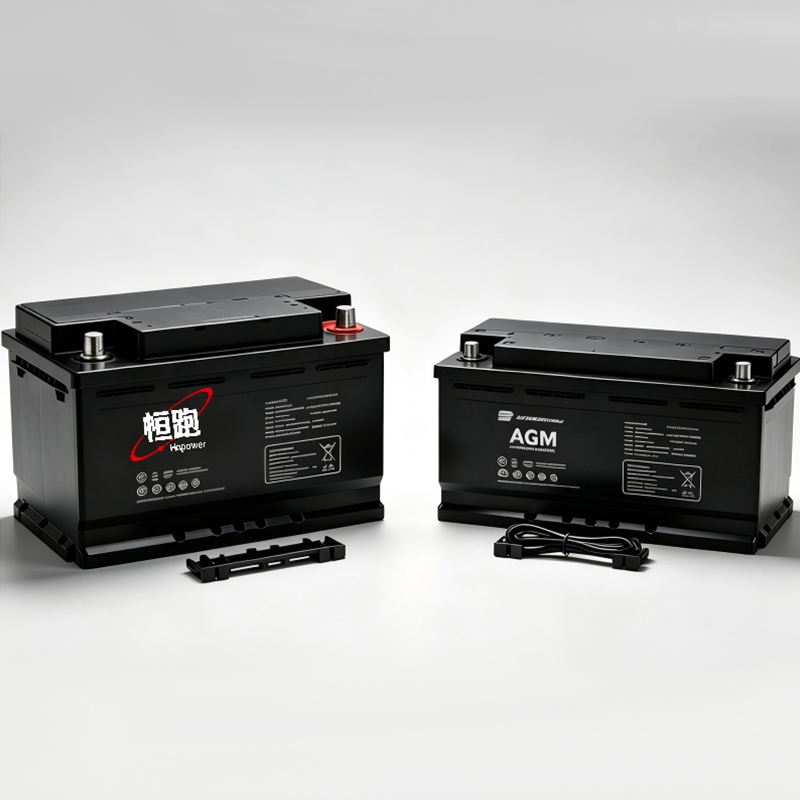
- Plate manufacturing technology:Traditional lead-acid batteries with liquid electrolyte (Flooded) are usually cheaper, but require maintenance. Gel (GEL) and AGM (Absorbent Glass Mat) batteries have a higher initial cost due to the complexity of producing separators and controlling valve pressure, but they are sealed and do not require topping up with water.
- Lead alloy composition:The use of calcium, tin or antimony affects the corrosion resistance of the gratings and the self-discharge rate. Highly purified lead and alloying additives increase service life, but increase the cost of the raw material base.
- Positive plate thickness:In stationary series (for example, OPzV or tubular monoblocks CL 2V), the thickness of the plate directly correlates with the number of charge-discharge cycles and service life in buffer mode. Thicker plates mean more lead consumption and higher cost, but significantly reduce the frequency of replacement.
- Certification and quality control:Products that have undergone rigorous testing to meet international safety and environmental standards require costs for laboratory equipment and audit procedures. Nanjing Qiantan Energy Storage Technology Co., Ltd. integrates these costs into the price, ensuring predictable battery behavior in critical situations.
- Logistics and packaging:The weight of lead acid batteries makes logistics a significant expense. Optimization of packaging for sea and rail transportation, as well as the availability of warehouses in the regions of presence (Russia, Central Asia, the Middle East) allow the manufacturer to offer competitive delivery conditions.
Technical characteristics and choice of technology for various tasks
There is no universal battery that will work equally well in an air-conditioned server room as in an unheated container in the north. The choice of technology should be dictated by operating conditions. An error in choosing the type of electrolyte or design can lead to a reduction in service life by 2–3 times compared to the specifications.
Comparison of lead-acid battery technologies
To make your decision-making process easier, below is a comparison table of the main types of backup batteries offered in the Battery Solutions line.
| Parameter | AGM (Absorbent Glass Mat) | GEL (Gel OPzV/CG) | Tubular OPzS/CL 2V |
|---|---|---|---|
| Cost (relative) | Low / Medium | Medium/High | High |
| Service life (buffer mode, 20°C) | 5–7 years | 10–12 years | 15–20 years |
| Cyclic resource | Low (up to 300 cycles at 80% discharge) | Medium (up to 600 cycles) | High (up to 1500 cycles) |
| Temperature sensitivity | High (degradation above 25°C) | Moderate (tolerate heat better) | Low (stable over a wide range) |
| Service | Maintenance-free | Maintenance-free | Requires electrolyte level monitoring (OPzS) or maintenance-free (OPzV) |
| Typical Application | Low power UPS, security and fire systems | Telecommunications, solar energy, difficult climatic conditions | Large data centers, industrial substations, energy |
Engineering experience has shown that attempting to save on initial purchase costs by selecting low-cost AGM batteries for environments with frequent power outages or high temperatures often results in higher operating costs. At the same time, installing expensive CL 2V tubular batteries in a small office UPS is not economically justified due to excess capacity and dimensions.
CP and HFS series: balance of power and compactness
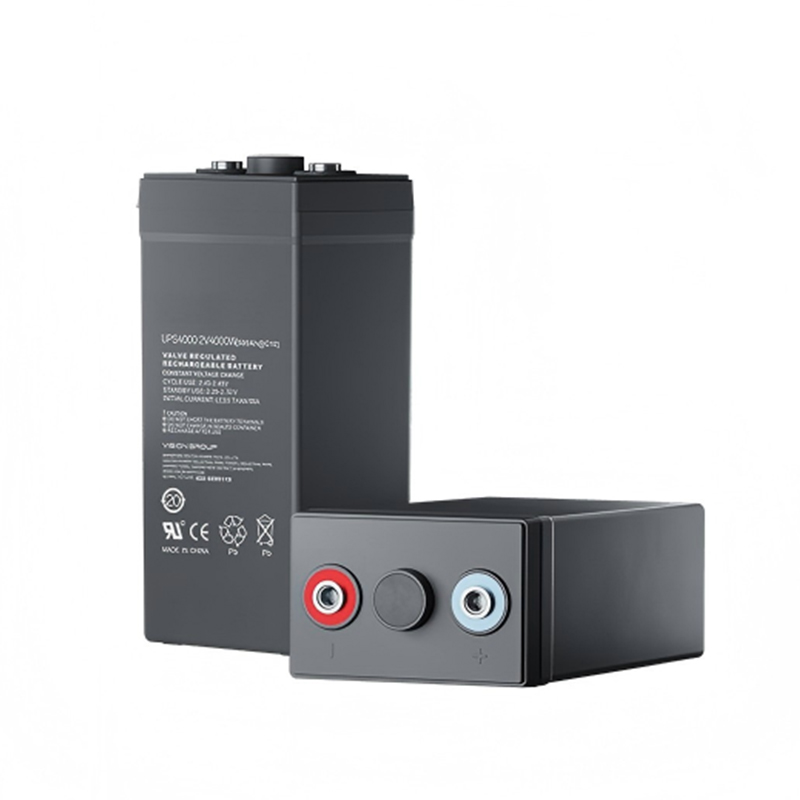
For applications that require high energy density and fast current delivery, Nanjing Qiantan Energy Storage Technology Co., Ltd. recommends the CP and HFS series. Front Terminal batteries of the HFS and CT series are designed specifically for rack mounting in telecommunications cabinets and server racks. This design simplifies wiring and maintenance, allowing technicians to quickly visualize terminal status without removing the battery.
The CP series stationary batteries feature an optimized internal structure that ensures low internal resistance. This is critical for systems where switching time to backup power is measured in milliseconds. High-power solutions are capable of supporting peak loads, which is typical for modern IT equipment with switching power supplies.
Influence of operating conditions on actual service life
The battery life rating is always based on ideal laboratory conditions: temperature 20–25°C, no vibration, ideal charge profile from a compatible charger. In real industry, these conditions are rarely met. Understanding how external factors degrade a chemical system helps you budget for replacement.
Temperature factor.Arrhenius' rule states that the rate of chemical reactions doubles for every 10°C increase in temperature. For lead-acid batteries, this means that operation at 35°C reduces the service life by approximately half compared to operation at 25°C. Gel batteries (OPzV) exhibit better thermal stability due to the immobilized electrolyte, which is less susceptible to separation and evaporation than the liquid electrolyte in AGM.
Depth of Discharge (DoD).The deeper the battery is discharged, the more mechanical stress the active masses of the plates experience. Frequent deep discharges lead to shedding of the active mass and irreversible loss of capacity. If your facility is located in an area with unstable mains voltage, where discharges occur regularly, you should choose batteries with reinforced plates or switch to lithium solutions, although in the lead-acid technology segment, CG and OPzV gel batteries show better cyclic endurance.
Charge quality.Overcharging causes corrosion of the positive grids and loss of water (even in sealed batteries through emergency pressure relief valves). Undercharging leads to sulfation - the formation of coarse-crystalline lead sulfate, which does not participate in reactions and reduces capacity. Modern chargers must be temperature compensated for voltage, especially if the batteries are installed in unconditioned areas.
Industrial use cases for backup batteries
To choose the right configuration, consider two typical use cases that require different approaches to hardware specification.
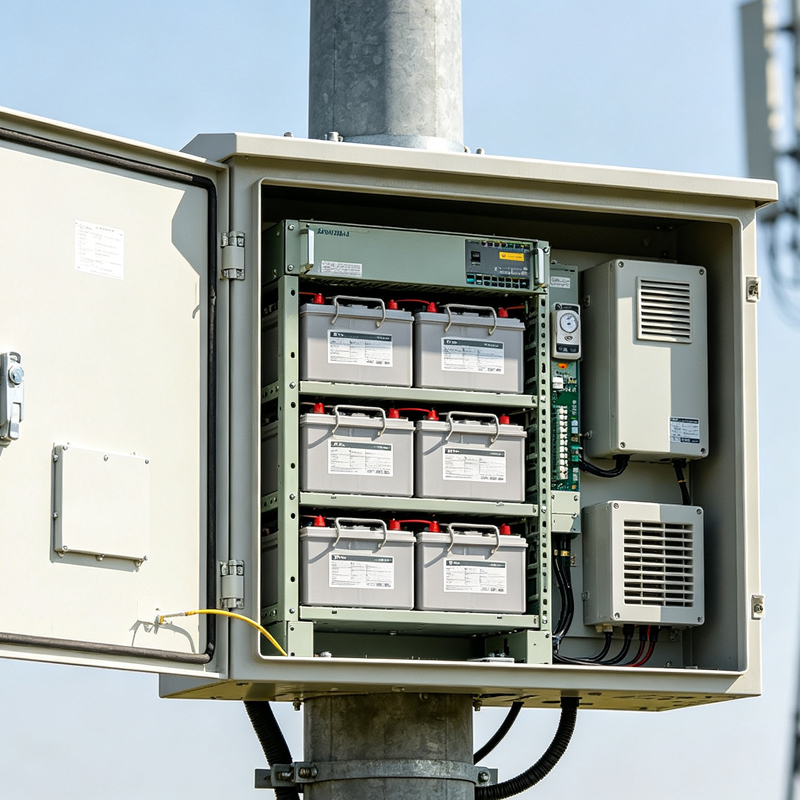
Scenario 1: Telecommunications base station in a remote region
Conditions:Lack of constant maintenance, high summer temperatures (up to +40°C), frequent outages of the main network (up to 10–15 times a month).
Requirements:High cyclic resistance, heat resistance, tightness (eliminating the risk of acid leakage).
Solution:Gel batteries of the OPzV or CG series. Their design allows them to operate effectively in a temperature range of up to 40–45°C without catastrophic loss of service life. Due to the complete absence of the need to add water, they are ideal for remote sites. Engineers at Nanjing Qiantan Energy Storage Technology LLC recommend adding a capacity reserve of 20–30% above the design value to compensate for accelerated degradation at high temperatures.
Scenario 2: Data center in an industrial area
Conditions:Strict climate control (22°C), rare power outages (1-2 times a year), but critical importance of instantaneous switching and high energy density per square meter of floor.
Requirements:Compact, high short-circuit current, long service life in standby mode.
Solution:Stationary CP series batteries or high power AGM front terminal batteries (HFS). Under stable temperature conditions, AGM technology reveals its potential: it provides a high power-to-volume ratio. The CP series guarantees a service life of up to 10–12 years in buffer mode, which coincides with a typical IT infrastructure renewal cycle. Using front terminal batteries speeds up installation and replacement of modules in densely packed racks.
How to check the quality of a batch upon acceptance: a checklist for the buyer
Purchasebackup battery for power supplydirectly from the manufacturer, such as Nanjing Qiantan Energy Storage Technology LLC, eliminates the risks of counterfeit goods, but requires proper incoming inspection. Here are the key points to monitor:
- Visual inspection of the housing:No cracks, swelling or traces of electrolyte on the terminals. The body must be clean, the markings must be clear and indelible.
- Open Circuit Voltage (OCV) Measurement:The voltage of each battery in the batch must be the same (dispersion of no more than 0.03–0.05 V for 12V blocks). A significant difference indicates a possible internal defect or deep discharge during storage.
- Checking production date:Lead-acid batteries lose capacity during storage. It is advisable that no more than 3–6 months have passed since production. If batteries have been stored longer, they must be recharged before being put into service.
- Impedance Test:This is the most informative rapid test. The internal resistance of all batteries in a batch must be close to the nameplate value and identical to each other. A deviation of more than 10–15% from the average value for the batch is grounds for rejecting the element.
- Completeness of documentation:Availability of passports, certificates of conformity (EAC, CE, ISO) and installation instructions in the language of the country of operation.
Nanjing Qiantan Energy Storage Technology LLC provides complete quality control at all stages: from incoming inspection of raw materials to output testing of finished products. Each batch is tested for formation and capacity, minimizing the risk of defective units.
Eco-friendliness and sustainable development: closed loop
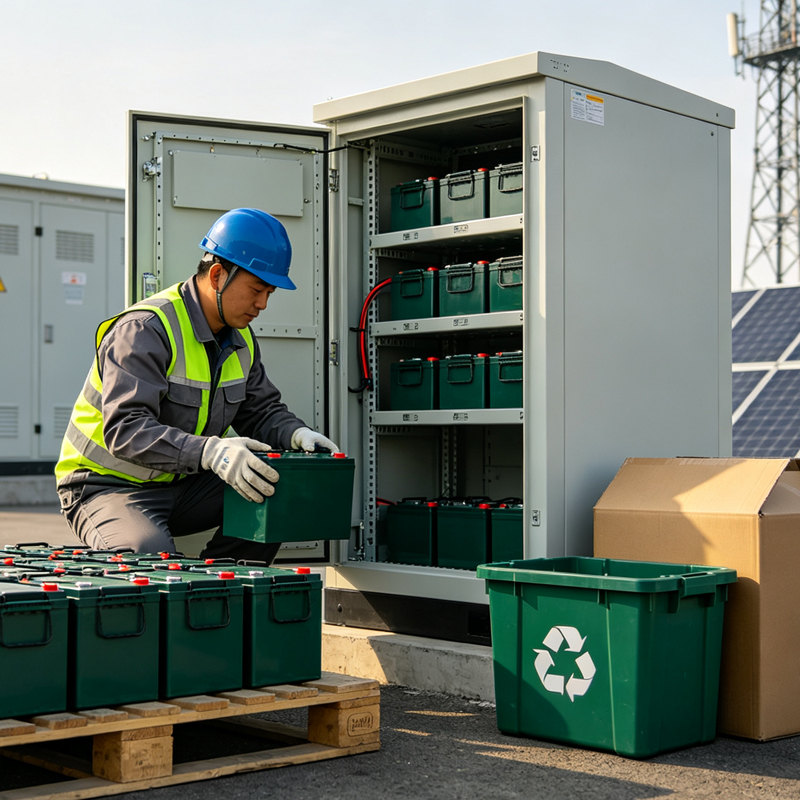
In 2026, environmental requirements for the production and disposal of batteries have become stricter. Procurers are increasingly including ESG (environmental, social and corporate governance) criteria in tender documents. Nanjing Qiantan Energy Storage Technologies LLC positions itself as a full-cycle operator, which includes not only production, but also environmentally friendly recycling of used batteries.
Having a dedicated recycling facility allows the company to reintroduce lead and plastic into the production cycle, reducing the product's carbon footprint. For industrial partners, this means not only compliance with regulatory standards, but also the opportunity to participate in trade-in programs or organized collection of used batteries, which simplifies disposal logistics and reduces legal risks.
Frequently asked questions (FAQ)
Is it possible to mix old and new batteries in the same circuit?
Strongly not recommended. Old batteries have increased internal resistance and altered capacity. When connecting them in parallel or in series with new ones, there will be an imbalance of currents: the new batteries will be overcharged or undercharged, trying to compensate for the weak links. This will lead to rapid failure of the entire chain. When expanding the system, it is better to replace the entire group or use separate charging circuits.
What storage temperature is allowed for backup batteries?
The optimal storage temperature is from 10°C to 25°C in a dry, ventilated area. Storage at temperatures above 30°C accelerates self-discharge and corrosion. If batteries are stored for more than 6 months, they must be recharged to compensate for self-discharge. Specific recharging intervals depend on the storage temperature and are indicated in the technical data sheet for the specific series.
Does the way the battery is installed affect its lifespan?
Yes. Most modern maintenance-free batteries (AGM, GEL) can be installed vertically. Some models allow horizontal installation, but this must be explicitly stated in the documentation. Upside down installation is prohibited. It is also important to provide clearances between batteries (typically 10-20mm) for air circulation and heat dissipation, especially in tightly packed cabinets.
How to calculate the required backup battery capacity?
The calculation is made based on the load power (W or VA), the required battery life (hours) and the aging factor. The formula looks simplified like this:Capacity (Ah) = (Load Power / System Voltage) × Operating Time × Safety Factor (1.2–1.5). However, for accurate selection it is necessary to use the manufacturer’s discharge characteristics tables, since the capacity depends on the discharge current. Specialists of Nanjing Qiantan Energy Storage Technologies LLC are ready to perform a free engineering calculation for your task.
What to do if the battery is swollen?
A bulging case indicates excessive internal pressure caused by overcharging, a short circuit inside the cell, or a malfunctioning emergency pressure relief valve. Such a battery must be immediately disconnected from the load and charger. Operating swollen batteries poses a risk of fire or leakage of electrolyte. It must be replaced and disposed of in accordance with environmental standards.
Conclusion and recommendations for purchasing
Choicebackup battery for power supplyis an investment in the reliability of your business. Saving on battery quality often results in equipment downtime, data loss, and costly emergency repairs. The engineering approach involves analyzing not only the initial price, but also operating conditions, required service life and maintenance costs.
Nanjing Qiantan Energy Storage Technologies LLC offers an integrated approach: from assistance in selecting the optimal technology (AGM, GEL, OPzV) to the supply of certified products and service support. Thanks to global experience in implementing projects in Russia, Iran, Turkey and other countries, the company understands local climate conditions and regulatory requirements, adapting solutions to the needs of a specific customer.
Recommendation for purchasers:Before placing an order, conduct an audit of the current operating conditions (temperature, load profile, service availability). Request from the manufacturer not only a price list, but also technical datasheets with discharge curves for your specific currents. Compare warranty conditions and service support availability in your region.
To obtain a detailed technical calculation, specification and current price forbackup batteries and battery solutionsContact the engineering team of Nanjing Qiantan Energy Storage Technology Co.,Ltd. We will help you choose a solution that will ensure uninterrupted operation of your equipment for years to come.