
Fully Automatic Acid Filling Machine: Factory Price
2026-10-02
Fully Automatic Acid Filling Machine: Manufacturer Price and Key Cost Factors
In modern lead-acid battery manufacturing, the electrolyte formation step is a critical bottleneck, determining both the final product quality and the overall efficiency of the production line.Fully automatic acid filling machineis a complex engineering solution that replaces manual or semi-automatic labor, providing high precision dosing of sulfuric acid of a given density into battery cells. For industrial buyers and process engineers, the issue of the cost of such equipment does not come down to a simple amount in the price list. The price is influenced by many technical parameters: productivity (number of batteries per hour), type of dosing system, materials of contact parts, level of integration with the manufacturing execution system (MES) and environmental safety requirements.
Nanjing Qiantan Energy Storage Technologies LLC, with more than 30 years of experience in the industry and implementing turnkey projects in Russia, Asia and the Middle East, offers an integrated approach to equipping battery factories. Unlike suppliers selling isolated machines, we integrate acid filling systems into the overall process cycle, taking into account the specifics of the products we produce - from EV series traction batteries to stationary CP solutions and CL 2V tubular monoblocs. Understanding the cost of a fully automatic acid filling machine can help you avoid hidden costs during operation and upgrades.
Architecture and operating principle of automatic dosing systems
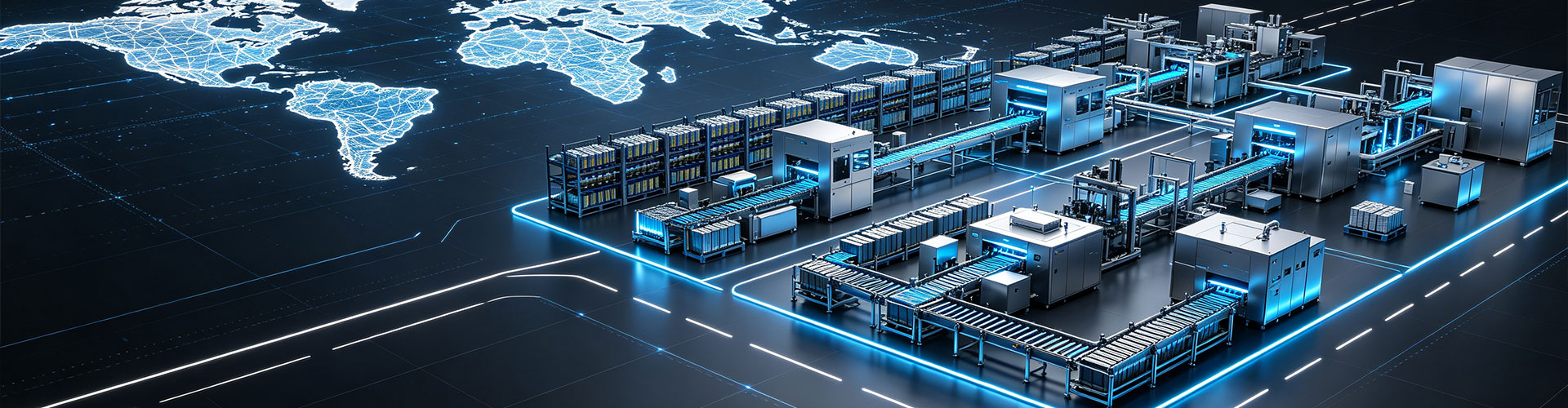
An automatic electrolyte filling line is not just a pump and tubes. This is a high-precision complex, including an acid preparation system, a precision dosing unit, manipulators for positioning filling heads and a vapor neutralization system. The operating principle is based on continuous monitoring of the volume or mass of liquid being poured. Modern systems use mass flow meters or high-precision volumetric dispensers with compensation for thermal expansion of the acid, since the density of the electrolyte directly depends on temperature.
The key element is the control system. It synchronizes the conveyor speed with the filling cycle, eliminating overfilling and underfilling. For manufacturers such as Nanjing Qiantan Energy Storage Technology LLC, it is important that the equipment can adapt to different types of battery housings. For example, filling OPzV and CG gel batteries requires different evacuation parameters and feed rates than filling traditional 1S series liquid acid starter batteries. An error in dosing of even a few milliliters can lead to the entire batch being defective, a decrease in capacity, or premature failure of the battery due to sulfation or corrosion of the grids.
Factors shaping the price of equipment
When requesting a quote for a fully automatic acid filling machine, customers are often faced with a wide range of prices. This is due to technical differences in the configuration. Below are the main cost drivers:
- Performance and number of channels.Machines with 4, 8, 12 or more filling heads are more expensive, but provide a multiple increase in production output. The choice depends on the takt time of the entire assembly line.
- Execution materials.Contact with sulfuric acid requires the use of special alloys, titanium, Teflon (PTFE) or ceramics. Cheap alternatives may use less durable plastics, which reduces the life of seals and increases the risk of leaks.
- Dosing accuracy.Systems with an accuracy of ±1 ml are significantly more expensive than systems with an accuracy of ±5 ml. For high densities and low volumes (such as motorcycle batteries), high accuracy is critical.
- Recovery and ecology system.Modern standards, especially in the Russian Federation and Europe, require closed loops for collecting acid vapors and droplets. Having an effective scrubber and neutralization system affects the final price.
- Integration and software.The ability to connect to plant SCADA systems, maintain fill logs for each specific battery (traceability) and remote diagnostics increase cost, but reduce operational risks.
Technical parameters and specifications
To select the equipment correctly, it is necessary to compare the requirements of the production line with the technical capabilities of the machine. The table below shows typical parameters, which vary depending on the configuration offered by Nanjing Qiantan Energy Storage Technology Co.,Ltd.
| Parameter | Description/Value Range | Impact on the process |
|---|---|---|
| Dosing type | Volumetric (piston) or mass (flow-meter) | Mass more accurate when acid temperature changes |
| Dosing accuracy | ±0.5% – ±2% of the set volume | Determines the stability of the electrical characteristics of the battery |
| Productivity | From 200 to 1200 batteries/hour (depending on model) | Matches assembly line capacity |
| Electrolyte Density Range | 1.20 – 1.30 g/cm³ (adjustable) | Critical for different types of batteries (starter vs traction) |
| Material of contact parts | Titanium, PVDF, PTFE, Ceramic | Corrosion resistance and component durability |
| Level control system | Laser or mechanical overflow indication | Prevents scrap and contamination of the conveyor |
| Control Interface | HMI panel, connection to PLC, Ethernet/MQTT | Ease of setup and integration into Industry 4.0 |
It is important to note that specific parameters depend on the equipment model and the tasks of a particular production. Engineers at Nanjing Qiantan Energy Storage Technology Co., Ltd. conduct detailed audits of existing lines or new plant designs to propose the optimal configuration, avoiding both overcapacity and underperformance.
Comparison of technologies: Volumetric vs Mass dosing
The choice of dosing technology is one of the main issues when forming a budget. Buyers often choose based on the initial price, but operating costs can offset the savings.
| Criterion | Volumetric dosing (Piston) | Mass dosing (Flow-meter) |
|---|---|---|
| Operating principle | Measures a fixed volume of a cylinder | Measures the mass of a passing stream in real time |
| Temperature dependence | High. Requires strict temperature control of acid | Low. Automatic density compensation |
| Accuracy | Average (±1-2%) | High (±0.5% and above) |
| Equipment cost | Below | 30-50% higher |
| Service | Requires regular replacement of piston seals | Fewer moving parts in contact with acid |
| Recommendation for use | For budget lines, stable temperature conditions | For premium batteries with strict capacity requirements |
From an engineering point of view, for the production of high-quality OPzV gel batteries or UPS batteries, where every gram of electrolyte affects the service life, mass dosing is preferable, despite the higher initial investment. For mass-produced maintenance-free 1S series automotive batteries, where speed and low cost are more important, bulk systems can be economically justified provided that the temperature of the acid in the tanks is strictly controlled.
Integration into the production cycle: the experience of Nanjing Qiantan LLC
Nanjing Qiantan Energy Storage Technology LLC positions itself as a full-cycle operator. This means that the supply of an acid filling machine is not an isolated transaction. The equipment must work in conjunction with machines for assembling plates, welding inter-cell connections and forming batteries. Our team, with experience in leading Chinese and international corporations, takes these relationships into account.
For example, when implementing projects in Russia and the CIS countries, we adapt systems to local climatic conditions. The temperature regime of a workshop in winter can differ significantly from summer, which requires the filling system to have increased resistance to external fluctuations or the presence of built-in heat exchangers. In addition, our expertise covers not only new production facilities, but also the modernization of existing lines for partners such as Tianneng and Chaowei, where seamless integration of new equipment into the old technological structure is important.
The environmental aspect also plays a role in pricing. Our solution infrastructure includes closed-loop support. The filling system is designed to minimize emissions of acid aerosols, which complies with the principles of sustainable development and strict environmental standards in force in the Russian Federation and other countries where the company operates.
Real industrial application scenarios
To understand how hardware choices impact business performance, consider two typical scenarios.
Scenario 1: Production of traction batteries for warehouse equipment.
It uses high capacity batteries (EV series). Requires filling of a large volume of high-density electrolyte. The key risk is overheating of the plates during rapid filling and uneven distribution of acid in the separators.
Solution:Application of a machine with multi-stage filling and vacuum support. This increases the cycle time, but ensures that the separators are completely wetted and there are no air pockets. The price of such a solution is higher, but it reduces the percentage of defects during the formation (formation) of batteries, which is the most energy-intensive stage.
Scenario 2: Mass production of starter batteries for passenger cars.
The main priority is speed and minimal cost.
Solution:High-speed rotary machine with volumetric dosing. Accuracy is maintained through frequent calibration and stabilization of acid temperature in storage tanks. This solution makes it possible to achieve a productivity of over 1000 batteries per hour, which is critical for the profitability of the mass market.
An engineering view: what to look for when accepting
When evaluating an offer from a manufacturer, in addition to price, you should pay attention to design features that are not always obvious from the catalog. Firstly, this is the availability of service nodes. Pumps and dispensers should be easily dismantled for cleaning and replacement without long line downtime. Secondly, the quality of the neutralization system. If a machine does not effectively remove vapors, it will lead to corrosion not only of the machine itself, but also of adjacent equipment (welding machines, conveyor electronics), which will result in hidden repair costs.
Software functionality is also important. The system's ability to store a fill history for each pallet or batch of batteries allows for in-depth quality analysis. If a problem with the battery capacity is subsequently discovered, data from the filling machine will help you quickly determine whether there was a deviation in the amount of electrolyte, or whether the reason is something else (for example, in the quality of the plates).
Frequently asked questions (FAQ)
What is the average payback of a fully automatic acid filling machine?
The payback period depends on the volume of production and the type of product produced. For large factories producing more than 5,000 batteries per day, automating the filling process usually pays for itself in 12–18 months due to reduced electrolyte consumption, reduced scrap and reduced wages. For small lines the period may be longer, but the decisive factor here is the consistency of product quality.
Is it possible to modernize an existing semi-automatic line?
Yes, in many cases it is possible to integrate automatic dosing modules into existing conveyor systems. Specialists from Nanjing Qiantan Energy Storage Technologies LLC conduct an audit of current equipment and offer modular solutions that allow you to automate the dosing stage without changing the entire line. This is an economical way for enterprises seeking to improve quality without the capital construction of a new workshop.
What maintenance is required for the acid filling machine?
Basic maintenance includes regularly checking and replacing O-rings, filtering acid to prevent clogging of dosing channels, and calibrating flow or volume sensors. We recommend daily visual inspection for leaks and weekly check of dosing accuracy by check weighing. The use of high-quality materials (titanium, Teflon) significantly increases service intervals.
Does acid temperature affect pouring accuracy?
Yes, temperature directly affects the density and viscosity of sulfuric acid. If volumetric dosing is used, temperature fluctuations lead to a change in the mass of the poured electrolyte at the same volume. Therefore, modern systems either have heat exchangers to stabilize the temperature or use mass flow meters that automatically compensate for changes in density. Temperature control is a prerequisite for following the recipe.
Does the manufacturer provide staff training?
Nanjing Qiantan Energy Storage Technology LLC includes full training of customer technical personnel in its turnkey projects. This includes learning how equipment operates, maintenance procedures, troubleshooting, and safety precautions when working with acids. Training can be carried out both at the manufacturer’s site and directly at the customer’s site in Russia or another country.
Conclusion and recommendations for choosing a supplier
Selecting a fully automatic acid filling machine is a strategic decision that affects the competitiveness of a battery plant. The low initial price of equipment can result in high operating costs and losses due to defects. When evaluating proposals, it is recommended to focus not only on the cost of the machine, but also on the total cost of ownership (TCO), including reliability, accuracy, energy efficiency and level of technical support.
Nanjing Qiantan Energy Storage Technology LLC offers balanced solutions based on many years of experience working with the world's leading brands. We understand that not only technical characteristics are important for the Russian market, but also adaptation to local conditions, availability of spare parts and prompt engineering support. Our design-to-launch approach ensures that the filling system becomes a reliable link in your production chain, providing consistent quality for EV, OPzV, HFS, CT and other battery series.
To receive a detailed technical calculation, estimate the cost of equipment for your specific tasks and advice on integration into existing lines, contact our engineers. We are ready to provide customized solutions to suit your production capacity and budget.
Find out more about our complete battery solutions:technological equipment and services.