
Lead-acid battery formation line: price from the manufacturer
2026-10-02
- Lead-acid battery formation line: technological features and pricing factors
- Technological process of formation: from chemistry to engineering
- Architecture of a modern formation line
- Factors influencing the price of a forming line from the manufacturer
- Comparison of types of formation lines: Conveyor vs Stationary
- Integration into the production cycle: experience of Nanjing Qiantan Energy Storage Technologies LLC
- Practical recommendations for selecting and purchasing equipment
- Frequently asked questions (FAQ)
- Conclusion and next step
Lead-acid battery formation line: technological features and pricing factors
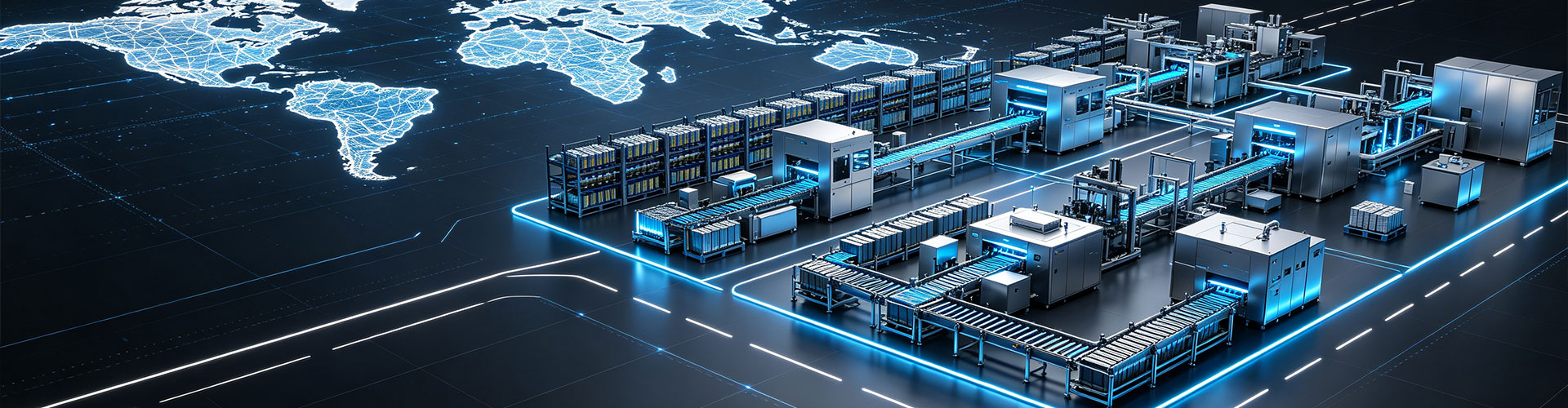
The forming process is a critical step in the production of lead-acid batteries, determining their final capacity, service life and stability of performance.Lead-acid battery formation lineis a complex automated complex that carries out the first charge of finished batteries, controls temperature conditions, electrolyte density and voltage on each cell. For industrial manufacturers, the choice of forming equipment directly affects the profitability of production and the quality of the final product.
In 2026, the battery industry equipment market will be characterized by a transition to intelligent control systems capable of adapting charge cycles to specific active mass chemistry. Nanjing Qiantan Energy Storage Technologies LLC, with more than 30 years of experience in the industry and implementing turnkey projects in Russia, Asia and the Middle East, offers solutions that integrate advanced generation algorithms with high energy efficiency. Understanding what goes into the price of a forming line allows buyers and engineers to avoid hidden costs during the operational phase and ensure that products meet international standards.
Technological process of formation: from chemistry to engineering
Battery formation is an electrochemical process of converting lead sulfate in the active mass of the plates into lead dioxide (at the positive electrode) and lead sponge (at the negative electrode). The quality of this process determines whether the battery can claim its nameplate characteristics. The forming line doesn't just supply current; it controls the complex thermodynamics inside the battery case.
Key stages of the formation line operation
- Filling with electrolyte:Modern lines are equipped with vacuum filling systems, which ensure complete penetration of sulfuric acid into the pores of the separators and active mass, eliminating the formation of air pockets.
- Formation Charge:A multi-stage process involving constant current (CC) and constant voltage (CV). This stage generates a significant amount of heat, requiring precise cooling.
- Degassing and pressure control:During the electrolysis of water, hydrogen and oxygen are released. The line must efficiently remove these gases while adhering to strict safety standards, especially when producing maintenance-free AGM and GEL batteries.
- Cycling and testing:After the main charge, the batteries undergo discharge-charge cycles to stabilize the capacity. The equipment records voltage curves, identifying defective cells (short circuits, reverse polarities).
- Finishing:Drying the housings, adding electrolyte (if required), sealing the valves and applying markings.
Engineering practice shows that the uniformity of temperature distribution during formation is a more critical parameter than the maximum current strength. Overheating even 5°C above the optimal value can lead to accelerated corrosion of the grilles and a reduction in battery life by 20-30%. Therefore, modern lines, such as those implemented by Nanjing Qiantan Energy Storage Technology LLC, pay special attention to thermal stabilization systems.
Architecture of a modern formation line
The design of the formation line varies depending on the type of batteries being produced (starter, traction, stationary) and the required performance. However, the core modules remain unchanged.
Charging module system
The heart of the line are the charging racks or conveyor modules. Traditional systems used transformer-thyristor rectifiers, but in 2026, high-frequency switching power supplies with an efficiency of over 95% are becoming the standard. They allow more precise control of the shape of the current curve and reduce the load on the plant's electrical network.
Thermal control system
Since the exothermic reaction during formation is intense, the line is equipped with water cooling channels. The batteries are installed on plates with circulating water or in chambers with forced air circulation. The accuracy of temperature control should be ±1°C. For companies producing OPzV gel batteries or high temperature batteries, this parameter is decisive, since the gel is sensitive to thermal shocks.
Data acquisition and analysis system (SCADA)
The modern formation line is an IT product. Each cell is monitored individually. The software collects voltage, current, temperature and time data. Machine learning algorithms used in the solutions of Nanjing Qiantan Energy Storage Technology LLC make it possible to predict potential defects in the early stages of charging by analyzing deviations in voltage curves. This reduces dropout rates and saves energy.
Factors influencing the price of a forming line from the manufacturer
The query “Formation line for lead-acid batteries price” often leads to a scatter of values several times. This is due to the fact that the cost is formed not only from metal and electronics, but also from the level of engineering integration. Let's consider the main components of the price.
| Cost factor | Impact on price | Technical justification |
|---|---|---|
| Automation level | High | Fully robotic lines with automatic loading/unloading and transport require sophisticated visione systems and PLC controllers, but reduce operating personnel costs. |
| Cooling system type | Medium | Air cooling is cheaper to install, but less efficient for high energy densities. Liquid cooling requires complex hydraulics and chillers, but provides better quality consistency. |
| Energy efficiency of charging modules | Medium/High | The use of regenerative power supplies, which return energy back to the network during the discharge stage, increases the initial cost of equipment by 15-20%, but pays off in 1-2 years due to energy savings. |
| Reconfiguration flexibility | High | Lines that can quickly switch between battery formats (for example, from automotive 1S to industrial OPzV) require universal conductors and adaptive software, which increases the cost of the project. |
| Software and Analytics | Medium | Licenses for SCADA systems, predictive analytics modules and integration with plant ERP systems make up a significant part of the cost of an intelligent line. |
When evaluating commercial proposals, it is important to consider not only capital costs (CAPEX), but also operating costs (OPEX). A cheap line with low efficiency chargers will consume 20-30% more electricity, which on the scale of a large plant amounts to millions of rubles annually. Nanjing Qiantan Energy Storage Technology LLC, when designing lines for partners in Russia and Turkey, focuses on the balance between initial investment and long-term efficiency, offering energy recovery solutions.
Comparison of types of formation lines: Conveyor vs Stationary
The choice of line architecture depends on the product range and production volume. Below is a comparison of the two main approaches.
| Characteristics | Conveyor line (Continuous) | Fixed line (Batch/Room) |
|---|---|---|
| Productivity | High, continuous flow | Limited by chamber volume, cyclic |
| Occupied area | Compact, linear layout | Requires large areas for forming chambers |
| Flexibility | Low, complex reconfiguration for a different type of battery | High, can load different types of batteries into different cameras |
| Temperature control | Pointed, fast heat dissipation | Depends on the efficiency of chamber ventilation, risk of local overheating |
| Capital costs | Higher due to the complexity of mechanics and conveyors | Lower, simpler design |
| Recommended Application | Mass production of starter and motorcycle batteries | Production of industrial, traction and specialized batteries in small batches |
For businesses that produce a wide range of products, including CL 2V series tubular monoblocs and EV series traction batteries, stationary or hybrid systems often make more sense. They allow you to adapt the formation time to the specifics of each model. At the same time, for the mass segment of maintenance-free car batteries of the 1S series, conveyor lines provide the necessary turnover rate.
Integration into the production cycle: experience of Nanjing Qiantan Energy Storage Technologies LLC
Delivery of a forming line is not just the shipment of equipment. This is the integration of a key node into the overall logic of the plant. Nanjing Qiantan Energy Storage Technology LLC positions itself as a full-cycle operator, which means responsibility for the compatibility of the formation line with previous (assembly, soldering) and subsequent (packaging, warehouse) stages.
The experience of implementing projects in China, Iran, Vietnam and Russia shows that a successful launch requires taking into account local characteristics. For example, in regions with a hot climate (Pakistan, Türkiye), the requirements for chiller power are much higher than in the temperate zone. The company's engineers adapt cooling systems, ensuring process stability regardless of external temperature.
In addition, the company pays attention to the environmental aspect. Formation lines are equipped with systems for neutralizing gas emissions and treating wastewater generated during battery washing. This is in line with the company's mission to create environmentally friendly manufacturing bases and allows customers to easily pass environmental audits.
Practical recommendations for selecting and purchasing equipment
When preparing technical specifications for the supply of a formation line, purchasers and chief engineers should pay attention to the following aspects:
- Energy capacity audit:Ensure that the plant's substation can handle peak loads when all charging modules are turned on at the same time. Preference should be given to equipment with a soft start function and recuperation.
- Requirements for measurement accuracy:The accuracy class of voltage sensors must be no lower than 0.05%, and that of current sensors must be no lower than 0.1%. Errors at the formation stage directly affect the sorting of batteries into capacitance groups.
- Service support and spare parts availability:Electronic components of charging modules operate in an aggressive environment (acid fumes, humidity). It is important to have a spare parts warehouse in the country of operation or to guarantee a quick response from the supplier. Nanjing Qiantan Energy Storage Technology LLC provides local engineering support and spare parts supply for its projects in Russia and the CIS.
- Software scalability:The software should allow you to add new shaping recipes without the participation of the developer. This is critical for new product launches such as the HFS and CT series high power front terminal batteries.
Engineering tip: Don't strive for maximum formation speed at the expense of quality. Accelerated modes (Fast Formation) are possible, but they require the use of special additives in the active mass and more expensive separators. For standard technologies, the optimal balance is one that ensures the complete occurrence of chemical reactions without thermal damage to the gratings.
Frequently asked questions (FAQ)
What is the average length of the formation process on a modern line?
The duration of formation depends on the type of battery and the technology used. For standard starter batteries, the process takes 12 to 24 hours. For industrial stationary batteries (OPzV, tubular plates) the cycle can last from 48 to 72 hours or more. Modern pulse methods can reduce this time by 15-20% without loss of quality.
Does the price of the formation line affect the cost of one battery?
Yes, but indirectly. The more expensive but energy-efficient line reduces energy costs, which constitute a significant portion of the operating costs of a forming shop. In addition, high control accuracy reduces the percentage of defects, which directly reduces the cost of suitable products.
Is it possible to upgrade the existing formation line?
In most cases, it is possible to upgrade the control system and charging modules. Replacing outdated thyristor rectifiers with high-frequency inverters and introducing a new SCADA system can significantly increase the efficiency of the old line without completely replacing the mechanical part. Specialists from Nanjing Qiantan Energy Storage Technologies LLC conduct an audit of existing capacities and offer upgrade options.
What safety requirements are critical for the formation line?
The main danger is the release of an explosive mixture of hydrogen and oxygen. The line must be equipped with an effective ventilation system, hydrogen concentration sensors and intrinsically safe electrical equipment in risk areas. Protection against short circuits and overheating is also important, since thermal runaway (uncontrolled heating) can lead to fire.
What maintenance is required for the forming line?
Regular maintenance includes calibrating voltage and current sensors (recommended every 6 months), checking power bus contacts, descaling cooling ducts, and replacing filters in ventilation systems. The software requires regular data backups and algorithm updates.
Conclusion and next step
The choice of a lead-acid battery formation line is a strategic decision that determines the competitiveness of the plant for years to come. Equipment price must be considered in the context of total cost of ownership, which includes energy consumption, scrap rates and production flexibility. Companies seeking to produce high-quality products, such as OPzV gel batteries or long-life CP series stationary batteries, require equipment with precision control.
Nanjing Qiantan Energy Storage Technologies LLC is ready to offer a comprehensive solution that combines advanced generation technologies with a deep understanding of the market requirements of Russia and the CIS countries. Our experts will help you calculate the optimal line configuration based on your product portfolio and budget constraints.
To receive a detailed technical proposal, payback calculation and advice on integrating equipment into your production cycle, please contact our engineers.