
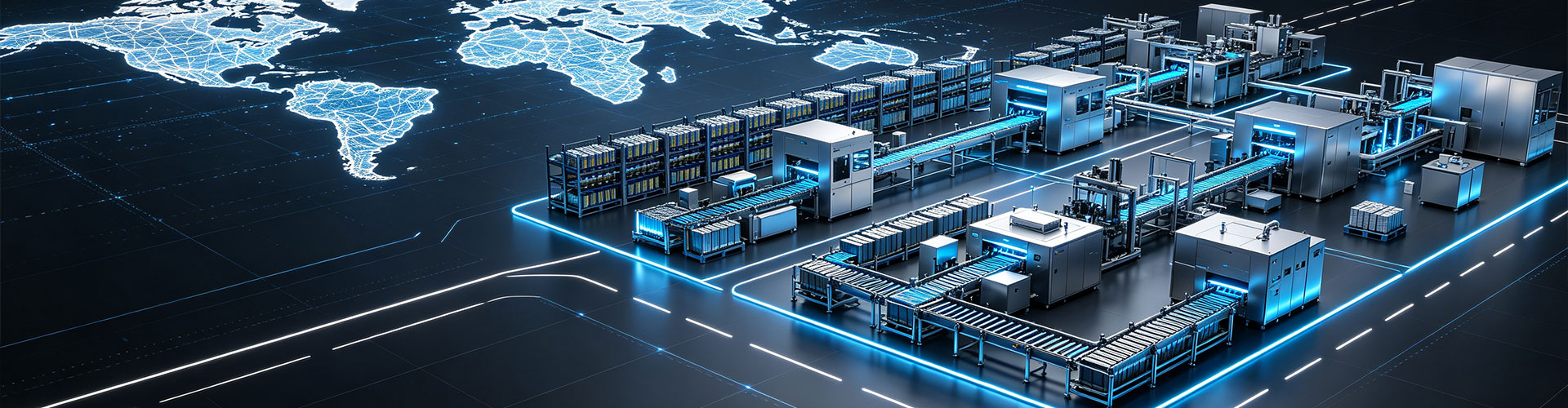
Intelligent charge-discharge machine: price from the manufacturer
2026-10-02
Intelligent charge-discharge machine: from laboratory test to on-line quality control
In today's battery manufacturing and service industryintelligent charge-discharge machineno longer just a measuring device. This is a key component that determines the accuracy of product data sheets, the efficiency of wafer formation processes and the reliability of the final product. For lead-acid battery manufacturers in the traction, stationary and automotive energy storage segments, the choice of such equipment directly impacts profitability and brand reputation.
The price from the manufacturer for such complexes varies widely, but savings at the initial stage of procurement often result in high operating costs due to inaccurate calibration, low energy recovery efficiency or insufficient software flexibility. In this material we will analyze the technical aspects of choosing charging and discharging installations, the impact of their characteristics on the production cycle and the criteria that allow us to assess the real cost of owning equipment, based on the experience of integrating solutions into production lines.
Architecture and operating principle of intelligent testers
The basic task of a charge-discharge cycling machine is to simulate real battery operating conditions while simultaneously taking high-precision metrics. Unlike simple load forks or linear power supplies, smart systems use bidirectional power converters and multi-channel data acquisition systems.
The testing process usually includes several stages:
- Constant Current Charge (CC):Voltage control at the terminals to prevent gas evolution and overheating of the electrolyte.
- Charge with constant voltage (CV):Recharging until a full state of charge is achieved (SOC 100%) with monitoring of current drop to threshold values.
- Exposure (Rest):A pause to stabilize the chemical processes inside the element, necessary for the correct measurement of open circuit voltage (OCV).
- Rank:Energy removal at a fixed power or current until the cut-off voltage is reached.
- Data analysis:Plotting voltage curves, calculating capacitance (Ah), energy (Wh) and internal resistance.
The key difference between an “intelligent” machine is the presence of feedback and adaptive algorithms. The system can automatically adjust the charge profile depending on the temperature of the battery or its age, which is critical when forming new batteries or when reconditioning old ones.
Key technical parameters when choosing equipment
When formulating technical specifications for the supply of charge-discharge systems, engineers must take into account not only the rated currents and voltages, but also the dynamic characteristics of the system. Errors in the selection of equipment lead to the fact that it is not able to provide the required accuracy at low currents or overheats at peak loads.
| Parameter | Technical significance | Impact on the process |
|---|---|---|
| Voltage measurement accuracy | ±0.05% FS (Full Scale) and higher | Determines the correctness of determining the end of charge/discharge point. An error of 0.1 V for a 12-volt battery can skew the capacity calculation by 2-3%. |
| Current measurement accuracy | ±0.1%FS | Critical for calculating capacity (Ah). Low accuracy leads to defects when sorting batteries into capacitance groups. |
| Operating current range | From 0.1% to 100% of nominal | Allows you to test both powerful traction batteries and low-capacity starter batteries on one channel without loss of accuracy at the lower limits. |
| Recovery factor | >85-90% | Returns energy to the network or adjacent channels during a discharge. Reduces energy costs by up to 40-50% and reduces the load on workshop cooling systems. |
| Number of channels | Independent management | Provides line flexibility: each battery is tested according to an individual program, stopping one channel does not affect the others. |
It is important to note that the manufacturer's stated parameters are often based on ideal laboratory conditions. In a real production workshop, where there are vibrations, temperature changes and electromagnetic interference from welding machines or cranes, the stability of the readings depends on the quality of the shielding and the circuit design of the input filters.
Application scenarios in the production of lead-acid batteries
The integration of charging and discharging machines into the production cycle of Nanjing Qiantan Energy Storage Technology LLC demonstrates how the equipment is adapted to different types of products. The company, with over 30 years of industry experience and projects in Russia, Iran, Turkey and other countries, uses these systems at several key stages.
1. Formation process
This is the most energy-intensive stage of production. After assembly and filling with electrolyte, the plates are in an inactive state. The first charge converts lead sulfate into the active mass (lead dioxide on the positive plate and lead sponge on the negative).
Equipment requirements:
- High reliability and continuous operation 24/7.
- Efficient energy recovery as the process lasts tens of hours.
- Accurate control of electrolyte temperature to avoid thermal runaway.
For the production lines of EV series traction batteries and CP series stationary batteries, multi-stage charge profiles are used. The intelligent machine allows you to set complex algorithms, for example, pulsating current to improve the structure of the active mass, which increases battery life.
2. Quality control and grading
Each battery undergoes a test cycle before shipment. Speed and accuracy are important here. The machines group batteries by actual capacity.
Engineering nuance:When testing OPzV and CG gel batteries, it is important to use low discharge currents for in-depth analysis, while for 1S series starter batteries, inrush currents and the ability to restore voltage after a powerful pulse discharge are critical. A universal machine must have a wide dynamic range to handle both types of products without changing the hardware.
3. R&D and new product development
When creating high-power front terminal solutions (HFS and CT series) or CL 2V tubular monoblocs, engineers need to obtain complete I-V characterizations. Intelligent systems allow you to export data in CSV format for subsequent analysis in specialized software, simulating thousands of battery life cycles in a short time using accelerated tests.
Factors shaping the price of an intelligent machine
The query “intelligent charge-discharge machine price” often leads to a scattering of offers from different suppliers. Understanding the cost structure helps buyers negotiate reasonably.
- Power section topology:Transformerless, high-switching frequency inverters are more compact and efficient, but are more expensive to manufacture due to complex EMC (electromagnetic compatibility) requirements. Linear regulators are cheaper, but have low efficiency and require powerful water cooling systems.
- Recovery level:Systems that return energy to the enterprise's general network are more expensive, but pay for themselves in 1-2 years due to energy savings. Systems with energy dissipation on resistive loads (heating elements) are cheaper initially, but increase electricity bills and require room conditioning.
- Software:A software license for managing thousands of channels, integration with plant MES systems, the ability to remotely monitor and update firmware - this is a significant part of the cost of the intellectual component.
- Calibration and metrology:Equipment supplied with verification certificates and the ability to trace to national standards is more expensive. For export projects (for example, deliveries to Europe or the Russian Federation), the availability of appropriate test reports is mandatory.
Comparison of types of charging and discharging systems
The choice between different architectural solutions depends on the scale of production and the type of product being manufactured. Below is a comparison of the main types of equipment used in the industry.
| Characteristics | Resistive Load Banks | Linear electronic loads | Pulse bidirectional (regenerative) |
|---|---|---|---|
| Energy efficiency | Low (energy goes into heat) | Average | High (up to 90% return to network/bus) |
| Heat dissipation | Very high, requires powerful ventilation | High | Low/Moderate |
| Control accuracy | Low/Medium | High | Very high |
| Equipment cost | Low | Average | High |
| Operating costs | High (electricity + cooling) | Average | Low |
| Application | Rough testing, old technology | Laboratories, small series | Mass production, “green” factories |
For modern enterprises, such as the partner factories of Nanjing Qiantan LLC, pulsed recuperative systems are the preferred choice. They help reduce the carbon footprint of production, which is in line with the company's mission to shape a low-carbon future.
Line integration and technical support
Buying hardware is only half the battle. The success of the implementation depends on how the machine is integrated into the overall technological flow. Nanjing Qiantan Energy Storage Technology LLC offers a full cycle approach: from designing equipment layout to personnel training.
Key aspects of integration:
- Communication protocols:Supports Modbus TCP/IP, CAN bus or Profibus for communication with a central server. This allows the operator to see the status of thousands of batteries in real time.
- Security:Hardware locks in case of excess temperature, short circuit or open circuit. For lead-acid batteries, protection against overcharging, which can lead to the release of acid and hydrogen, is critical.
- Scalability:The ability to add new racks with channels without completely stopping the line and rewriting the control software.
Experience in implementing projects in various climatic zones (from humid Vietnam to the continental climate of Russia) shows that equipment must have reserves for cooling and dust protection. Acid mist is common in molding shops, so printed circuit boards and power modules must be additionally coated with varnish or housed in sealed positive pressure cabinets.
Frequent errors during procurement and operation
Analysis of customer requests and service cases reveals a number of typical problems that manufacturers face when using incorrectly selected equipment.
1. Ignoring sensor calibration.Over time, shunts and voltage dividers drift. If you do not calibrate regularly (every 6-12 months is recommended), the capacity data will be incorrect. This leads to the fact that the client receives a battery with underrated characteristics, or the plant rejects suitable products.
2. Wrong choice of cable cross-section.At high currents (hundreds of amperes), the voltage drop on the cables becomes significant. If the machine compensates for this drop in software, but the cables overheat, there is a risk of fire and loss of accuracy. It is necessary to use cables with a current reserve and a minimum length.
3. Lack of channel reservation.In low-cost systems, the failure of one power module can stop the entire rack. Smart systems from Nanjing Qiantan LLC use a modular architecture that allows you to replace a faulty unit “hot” or isolate it while maintaining the operation of other channels.
FAQ: Frequently asked questions
How is the payback of a regenerative charge-discharge machine calculated?
Payback depends on the electricity tariff and the volume of batteries tested. Typically, energy return systems pay for themselves in 12-24 months. For example, when a 200 Ah battery with a voltage of 12 V is discharged, about 2.4 kWh of energy is released. If the recovery efficiency is 90%, then 2.16 kWh is returned to the network. When testing thousands of batteries per month, the savings become significant.
Can one machine be used for different types of batteries?
Yes, intelligent machines allow you to create different testing profiles for each channel. You can simultaneously test starter batteries (high current, short time) and traction batteries (medium current, long time). The main thing is that the rated currents and voltages of the battery fit within the range of the channel's capabilities.
What are the space requirements for equipment installation?
The room must have industrial ventilation to remove possible gases (hydrogen) and maintain the temperature in the range of 20-25°C for measurement accuracy. A reliable grounding system is required to avoid interference in the measuring circuits. For larger installations, a water supply may be required to cool the power modules.
Does ambient temperature affect test results?
Yes, the capacity of a lead-acid battery is highly dependent on temperature. Standard tests are carried out at 25°C. Smart machines may be equipped with temperature compensation to normalize the results to a standard temperature, but for maximum accuracy it is recommended to conduct tests in climate chambers or rooms with a stable temperature.
Does the manufacturer provide staff training?
Nanjing Qiantan Energy Storage Technology LLC includes comprehensive training in the supply contract. It covers software operation, calibration, basic maintenance, and common troubleshooting. For foreign partners, including Russian customers, remote engineering support and on-site specialists are available.
Conclusion and recommendations for choosing a supplier
Choiceintelligent charge-discharge machineis a strategic decision that affects product quality and plant operating costs for many years. You should not focus solely on the initial price of the equipment. It is more important to evaluate the total cost of ownership, including power consumption, accuracy, reliability and service level.
Engineering Recommendation: When purchasing equipment for mass production, require demonstration testing on your battery samples. Check the reproducibility of the results (repeatability of tests on the same battery) and the speed of the system's response to emergency situations.
Nanjing Qiantan Energy Storage Technology Co., Ltd. is ready to provide detailed technical specifications, audit your production process, and propose a solution that will optimally fit into your lead-acid battery production line. Our experience in implementing turnkey projects in Russia and the CIS countries guarantees that the equipment will not only be supplied, but also effectively integrated into your business.
To receive a commercial offer, technical drawings or advice on upgrading existing lines, please contact our specialists or explorecomplete catalog of solutions for battery production.