
Curing chamber: price from the manufacturer, buy wholesale
2026-09-15
- Curing chamber: technical requirements for equipment for forming batteries
- Key technical parameters of curing chambers
- The influence of formation quality on battery characteristics
- Comparison of curing chamber types: Convection vs Infrared
- Integration into a turnkey production line
- Economic aspects: price from the manufacturer and wholesale purchase
- Frequently asked questions (FAQ)
- Conclusion and recommendations for purchasing
Curing chamber: technical requirements for equipment for forming batteries
The curing chamber (or forming chamber) is a critical part of the lead-acid battery production line. This is specialized thermoclimatic equipment designed to carry out electrochemical processes of activation of the active mass of the plates - the so-called “formation” of the battery. The quality of the camera directly affects the capacity, service life and stability of the output characteristics of the finished product, be it EV series traction batteries, stationary OPzV solutions or maintenance-free car batteries.
In 2026, the market for industrial equipment for battery production requires not just heating elements, but precision control of temperature and humidity conditions. For manufacturers such as Nanjing Qiantan Energy Storage Technology Co., Ltd., integrating state-of-the-art curing chambers into a turnkey line is a standard to ensure products meet international safety and environmental standards. Purchasing such equipment in bulk from a manufacturer allows factories in Russia, Iran, Turkey and other countries to reduce capital costs at the production launch stage, while maintaining a high level of technological control.
Operating principle and role in the technological cycle
The battery formation process involves passing direct current through batteries filled with electrolyte for a long time (from 24 to 72 hours or more, depending on the technology). During this process, lead sulfate on the positive and negative plates is converted into lead dioxide and sponge lead, respectively. This reaction is exothermic, that is, it is accompanied by the release of heat.
The curing chamber solves three key engineering problems:
- Thermal stabilization:Maintaining the temperature of the electrolyte and battery case within strictly specified limits (usually 40–55°C). Overheating leads to deformation of the separators and warping of the plates, and underheating slows down chemical reactions, reducing the final capacity.
- Gas removal:During the formation process, hydrogen and oxygen are released. The chamber must provide effective ventilation and explosion safety, preventing the accumulation of detonating gas above the maximum permissible concentrations.
- Uniformity of heat distribution:Elimination of “hot” and “cold” zones inside the chamber so that each battery in the batch undergoes an identical formation cycle.
Engineering practice shows that temperature unevenness of even 2–3°C within a large batch can lead to a variation in the characteristics of the finished product by up to 10–15%, which is unacceptable for premium segments such as telecommunication UPS or energy storage systems for renewable energy sources.
Key technical parameters of curing chambers
When choosing equipment for wholesale purchase, it is necessary to focus on strict technical specifications. Manufacturers such as Nanjing Qiantan Energy Storage Technology Co.,Ltd., which use a full production cycle from grill manufacturing to assembly, place high demands on the precision of climate control.
| Parameter | Typical Value/Requirement | Impact on the product |
|---|---|---|
| Temperature range | +20°C … +80°C (operating mode 40-60°C) | Rate of chemical reaction formation |
| Temperature accuracy | ±1°C … ±2°C | Uniformity of batch characteristics |
| Uniformity of the temperature field | No more than 3°C difference at any point in volume | Preventing local battery overheating |
| Ventilation system | Forced, with H2 sensors | Safety, heat and gas removal |
| Housing material | Stainless steel or PU insulated sandwich panels | Corrosion resistance in acidic environment |
| Management | PLC controller with touch panel, log recording | Process traceability, quality control |
It is important to note that specific parameters depend on the type of batteries being formed. For example, the CL 2V series tubular monoblocks require longer cycles and careful temperature control due to the large mass of the active mass, while the 1S series starter batteries can be formed under more intensive conditions.
Design features and materials
The atmosphere inside the curing chamber is aggressive: high humidity, elevated temperature and the presence of sulfuric acid vapor. Therefore, standard building materials are not applicable here. The internal lining must be made of acid-resistant materials, such as AISI 316L stainless steel or special polymer coatings. The insulation layer (often high-density polyurethane foam) must be sealed to prevent the absorption of acid fumes, which will eventually cause the insulation to deteriorate and lose the energy efficiency of the chamber.
The air circulation system is designed in such a way that air flows are not directed directly to the battery housings, causing them to cool locally. Typically, a bottom supply and top air intake scheme or perforated channels around the perimeter of the chamber are used.
The influence of formation quality on battery characteristics
The curing chamber is not just an “oven”, it is a quality management tool. Errors at the formation stage cannot be corrected at subsequent stages. Let's consider the impact of camera parameters on the final product using the example of the “Battery Solutions” line.
For OPzV and CG gel batteries:Gel electrolyte is sensitive to temperature shocks. Sudden temperature changes in the chamber can cause the gel structure to crack, causing the battery to dry out and dramatically reduce its service life. Therefore, chambers for gel technologies must have inertia and smooth heating control.
For EV series traction batteries:These batteries operate in deep discharge modes. The quality of the negative plate formation is critical to prevent sulfation in service. Insufficient temperature in the chamber can lead to the fact that the active mass does not completely transform into a working form, and the battery will not provide the declared capacity in the first months of operation.
For high temperature batteries:Specialized solutions developed for hot climates (relevant for projects in Iran, Pakistan, Turkey) require a special “training” regime in the chamber, simulating extreme conditions, in order to stabilize the structure of the separators.
Comparison of curing chamber types: Convection vs Infrared
There are various approaches on the market to organizing heat exchange in forming chambers. The choice between them depends on the scale of production and product range.
| Characteristics | Convection chambers (air) | Infrared / Combination cameras |
|---|---|---|
| Heating principle | Heating the air, which transfers heat to the battery | Direct IR + convection |
| Mode entry speed | Medium (air volume needs to be warmed up) | High (fast surface heating) |
| Uniformity | Depends on fan efficiency | Requires precise positioning of emitters |
| Energy efficiency | Lower (large volume heating losses) | Higher (heating of target object) |
| Equipment cost | Lower, simpler design | Higher, more complex control system |
| Applicability | Universal, mass production | Specific battery types, small quantities |
For large factories producing thousands of batteries per day (as in the projects of Nanjing Qiantan Energy Storage Technologies LLC for partners like Tianneng or Chaowei), large convection tunnel or chamber systems with heat recovery are the most justified. They provide stability and allow the integration of a heat removal system from batteries to preheat incoming air, which significantly reduces operating costs.
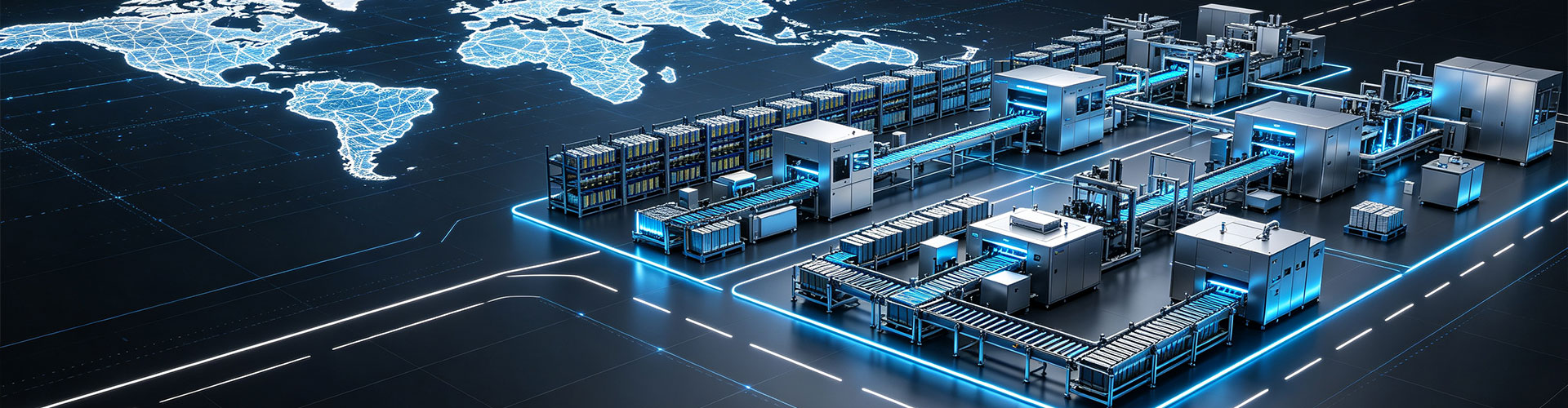
Integration into a turnkey production line
Purchasing the curing chamber as a separate unit often creates integration problems. The modern approach, implemented by Nanjing Qiantan Energy Accumulation Technologies LLC, involves considering the chamber as part of a single technological flow.
Logistics inside the workshop should be seamless:
- After filling with electrolyte, the batteries are supplied to the input roller conveyor line.
- The automatic loading system places batteries in the chamber according to a predetermined matrix (to ensure uniform gaps).
- Connection of chargers occurs automatically or semi-automatically through busbars protected from corrosion.
- After the formation cycle is completed, the chambers are automatically opened and the batteries are transferred to the washing and drying area.
This integration minimizes manual labor, reduces the risk of damage to battery cases and eliminates the human factor when connecting charging currents. The company has the competence to design such lines, taking into account its experience of working with leading Chinese and international corporations in the field of new energy.
Economic aspects: price from the manufacturer and wholesale purchase
Pricing for curing chambers depends on several factors that the buyer must consider when requesting a quote:
- Chamber volume and capacity:The number of simultaneously formed batteries determines the dimensions and power of the heaters.
- Execution materials:The use of AISI 316L stainless steel instead of AISI 304 or galvanizing increases the cost, but greatly extends the service life in an acidic environment.
- Control system:Availability of PLC controllers of well-known brands, the possibility of remote monitoring and integration into the MES plant.
- Energy efficiency:The presence of heat recovery systems and high-quality insulation reduces operating costs, which is important when calculating the total cost of ownership (TCO).
Purchasing in bulk from a manufacturer such as Nanjing Qiantan Energy Storage Technology LLC allows you to avoid intermediary markups. In addition, the manufacturer can adapt the camera design to the customer’s specific battery sizes (for example, for non-standard traction batteries or specific OPzV configurations). The geography of the company's presence (China, Russia, Vietnam, Türkiye) provides logistics flexibility and the possibility of prompt service.
Engineering council for supplier selection
When evaluating offers, don't focus only on the price of the hardware. It is critical to evaluate the vendor's ability to provide forming process control algorithms for your specific battery types. An incorrectly configured charging program in even the most expensive camera will lead to defects. A company with its own experience in battery production (as is the case with Nanjing Qiantan Energy Storage Technology LLC, which has more than 30 years of expertise) understands the physics of the process from the inside and can offer optimal modes, and not just a “box with heaters.”
Frequently asked questions (FAQ)
What is the average cycle time in the curing chamber?
The duration of the cycle depends on the technology and type of battery. For regular lead-acid batteries, the process can take 24 to 48 hours. For OPzV and AGM gel batteries, cycles can be longer, up to 72 hours, due to the need for careful formation of the gel or glass fiber structure. The exact time is determined by the technological map of a specific product.
Is it possible to retrofit an old curing chamber?
Yes, in many cases an upgrade is possible. Replacing the control system with a modern PLC controller, installing new temperature and humidity sensors, and improving thermal insulation can significantly improve the efficiency of an old chamber. However, if the housing is severely corroded due to acid exposure, it is better to replace the entire equipment.
How is safety ensured during hydrogen evolution?
The chambers are equipped with a forced ventilation system, which is designed to provide air exchange sufficient to reduce the hydrogen concentration below the explosive threshold (usually below 1% of the chamber volume). Gas sensors are also installed that emergencyly turn off chargers and increase ventilation when threshold values are exceeded.
What is the difference between a curing room and a forming room?
The curing chamber is usually an isolated module with its own climate control, allowing precise control of parameters regardless of the environment. The forming room is a room in the entire workshop where the general temperature regime is maintained. The cameras provide higher accuracy and energy efficiency, since there is no need to heat the entire workshop volume.
Does the manufacturer provide staff training?
Yes, when implementing turnkey projects, Nanjing Qiantan Energy Storage Technologies LLC includes training for the customer’s personnel in the contract. This includes learning how the equipment works, setting up shaping modes, maintenance, and safety precautions. This approach is especially important for new production facilities in Russia, Iran and other countries where the company operates.
Conclusion and recommendations for purchasing
The choice of curing chamber is a strategic decision that affects the quality of the entire product. For lead-acid battery manufacturers seeking to provide reliable solutions for the energy and transportation markets, equipment that provides precise temperature control and safe gas management is critical.
When planning a purchase, it is recommended:
- Clearly define the range of batteries and the required line performance.
- Take into account the climatic operating conditions of the plant itself (required heating/cooling power).
- Give preference to suppliers with their own engineering expertise in the field of battery technology, who can offer not just equipment, but a technological solution.
- Check the availability of references and experience in implementing projects in similar climatic and regulatory conditions.
Nanjing Qiantan Energy Storage Technologies LLC offers an integrated approach to equipping battery production facilities. Thanks to the many years of experience of the team, which has worked with industry leaders, and its own production, the company guarantees that the equipment meets high quality standards. Integration of curing chambers into a common line allows optimizing costs and ensuring consistently high quality of produced batteries of the EV, OPzV, HFS, CT and other series.
To receive detailed technical specifications, calculate the cost of equipment for your tasks and advice on integration into an existing or new line, contact our engineers. We are ready to provide solutions tailored to the specifics of your market and production needs.
Find out more about ourintegrated solutions for battery productionand the possibility of supplying turnkey equipment.