
High temperature batteries from the manufacturer: prices and characteristics
2026-10-05
- High temperature batteries: technical requirements and specific application in industry
- Design features of high-temperature batteries
- Specifications and selection options
- Technology Comparison: AGM vs Gel (OPzV) in Hot Climates
- Real industrial application scenarios
- Factors affecting the price of high temperature batteries
- How to choose a supplier: reliability criteria
- Frequently asked questions (FAQ)
- Conclusion and recommendations for implementation
High temperature batteries: technical requirements and specific application in industry
Operating backup power systems and traction drives at elevated temperatures represents one of the most challenging engineering challenges in modern power engineering. Standard lead-acid batteries, designed to operate at 20-25°C, when heated above 30°C exhibit accelerated electrolyte degradation and cell corrosion, which reduces their service life by half for every 8-10°C exceeding the norm.High temperature batteriessolve this problem through a modified chemical composition, reinforced structural materials and optimized heat transfer. For industrial plants where equipment is located in unconditioned rooms, machine rooms or regions with hot climates, the choice of specialized power sources is not a matter of economy, but a requirement for process reliability.
In 2026, demand for such solutions is growing steadily, especially in the oil and gas, metallurgy and telecommunications sectors. A key purchasing factor is not only the initial cost, but also the total cost of ownership (TCO), which directly depends on the battery's ability to maintain capacity under thermal loads. Nanjing Qiantan Energy Storage Technologies LLC, having more than 30 years of experience in the industry and implementing projects in countries with extreme climates (Iran, Pakistan, Vietnam), offers a line of batteries adapted to operate in a wide temperature range. Their approach is based on a deep understanding of the physical and chemical processes occurring inside the element when heated, which allows minimizing the risks of equipment failure.
Why do standard batteries fail at high temperatures?
To understand the value of customized solutions, it is necessary to consider the degradation mechanisms of conventional lead-acid batteries. As the ambient temperature rises, the rate of chemical reactions inside the battery increases. This has several critical consequences:
- Accelerated corrosion of positive plates:High temperature accelerates the oxidation of the lead alloy of the grid, which leads to its destruction and loss of electrical contact with the active mass.
- Electrolyte drying:In maintenance-free (VRLA) batteries, increased heat causes intense gas formation and water loss through the valves. Even a small loss of moisture irreversibly reduces capacity.
- Thermal runaway:When charging, the battery's internal resistance generates heat. If the ambient temperature is high, heat dissipation is difficult, leading to further temperature increases and potential housing failure.
- Sulfation:Paradoxically, high temperatures can promote the formation of coarse crystalline lead sulfate if the battery is not fully charged, blocking the active surface of the plates.
Engineering practice shows that the use of standard batteries in environments where temperatures regularly exceed 35°C is not economically justified. Frequent replacement of cheap batteries is more expensive than the initial investment in specializedhigh temperature batteries, capable of serving up to 5–7 years in similar conditions.
Design features of high-temperature batteries
Specialized batteries, such as those presented in the assortment of Nanjing Qiantan Energy Storage Technologies LLC (in particular, the OPzV, CG series and specialized modifications), are distinguished by a number of design and technological solutions aimed at thermal stability.
1. Alloy composition and lattice structure
High-temperature models use lead alloys with additions of calcium, tin and sometimes silver, which have increased resistance to corrosion when heated. Tubular plates (as in the OPzV and CL 2V series) provide better mechanical stability of the active mass compared to flat grids. This prevents the material from fraying even during prolonged exposure to temperatures above 40°C.
2. Separators and electrolyte
Absorbent glass fiber (AGM) or high-density gel electrolyte separators are used to better retain moisture and prevent acid separation. Gel technologies (OPzV, CG) are especially effective in hot climates, since the gel is less susceptible to evaporation and provides a more even distribution of heat inside the element.
3. Heat-resistant housing and valve system
The cases are made of ABS plastic with increased heat resistance, capable of withstanding internal pressure without deformation. Pressure relief valves are adjusted to operate more accurately to prevent electrolyte loss during short-term temperature peaks during charging.
Specifications and selection options
When developing technical specifications for the supply of power supplies for hot conditions, it is necessary to take into account not only the rated capacity, but also temperature coefficients. Below are key parameters that engineers and buyers should pay attention to.
| Parameter | Standard batteries (VRLA AGM) | High temperature batteries (Gel/OPzV/Special AGM) | Engineer's comment |
|---|---|---|---|
| Operating temperature range | -15°C … +40°C | -20°C … +55°C (short-term up to +60°C) | For continuous loads above 40°C special models are required. |
| Optimal operating temperature | 20°C … 25°C | 25°C … 35°C | Shifting the optimal range reduces air conditioning costs. |
| Service life at 40°C | 1.5 – 2 years | 4 – 6 years | Depends on the cycling mode and discharge depth. |
| Capacitance temperature coefficient | ~0.8% per 1°C above 25°C | ~0.5% per 1°C above 25°C | Less loss of capacity due to heat means greater reliability. |
| Electrolyte type | Liquid (AGM) | Gel or hybrid AGM with additives | Gel structures (OPzV) resist drying out better. |
| Self-discharge current at 40°C | High (up to 3-5% per month) | Reduced (up to 1-2% per month) | Critical for backup systems that are rarely used. |
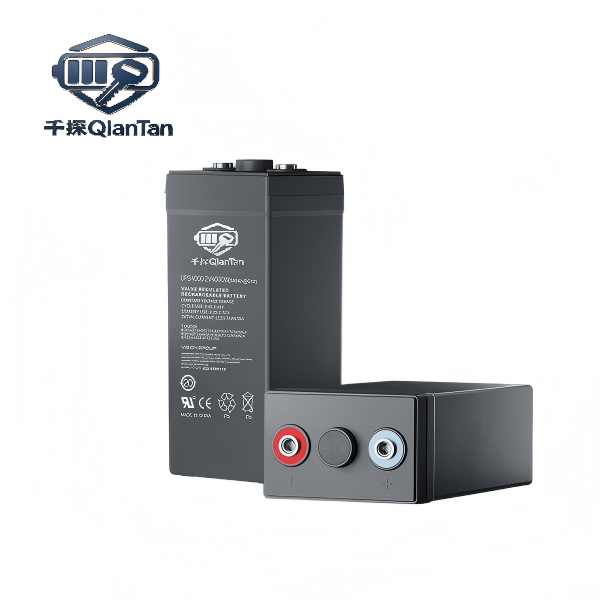
It is important to note that specific options vary by model and configuration. For example, Nanjing Qiantan Energy Storage Technology Co., Ltd.'s CL 2V series tubular monoblocks demonstrate superior performance in stationary applications thanks to a vertical plate design that minimizes the risk of short-circuiting due to thermal expansion.
Technology Comparison: AGM vs Gel (OPzV) in Hot Climates
The choice between AGM and Gel technologies often raises questions among designers. For high temperature applications this comparison is critical.
| Criterion | AGM (Absorbent Glass Mat) | Gel (OPzV/Tubular Gel) | Recommendation |
|---|---|---|---|
| Heat resistance | Average. Risk of drying out at >40°C. | High. The gel retains moisture better. | For rooms without air conditioning, choose Gel/OPzV. |
| Internal resistance | Low. Good for high discharge currents. | A little higher. Better for long discharges. | For UPS with short autonomy - AGM Special. |
| Cost of ownership | Lower starting price, but frequent replacement. | Higher initial price but long service life. | For projects with a duration of 5 years or more, Gel is more profitable. |
| Charge sensitivity | Requires precise voltage control. | More tolerant of overcharging. | Gel forgives errors in the operation of chargers. |
From engineering experience it follows: if the budget allows, and operating conditions require constant temperatures above 35°C, the OPzV (tubular gel) technology is preferable. It combines the durability of tubular plates with the stability of gel electrolyte. Nanjing Qiantan Energy Storage Technologies LLC is actively promoting precisely such solutions for the markets of the Middle East and South Asia, where climatic conditions are the most severe.
Real industrial application scenarios
Understanding howhigh temperature batteriesbehave in real conditions, helps to avoid mistakes when designing energy supply systems.
Scenario 1: Outdoor telecommunications cabinets
Conditions:Communication cabinets installed on the roofs of buildings or along highways in regions with summer temperatures up to +45°C. Temperatures inside the cabinet can reach +55°C due to heating of the electronics and solar radiation.
Problem:Standard batteries fail within 12–18 months, requiring constant maintenance and replacement.
Solution:Use of compact gel batteries of the CG series or specialized AGM with heat-stabilized separators. It is important to ensure vertical installation for proper convection.
Engineering advice:Even with heat-resistant batteries, it is recommended to use cabinet insulation and solar screens. This reduces the thermal load by 10-15°C, doubling the life of any battery.
Scenario 2: Emergency lighting and fire alarm systems in boiler rooms
Conditions:Rooms with a constant background heat from pipelines and boilers. The air temperature remains stable at 35–40°C.
Problem:Risk of thermal runaway when recharging from a wall charger.
Solution:Use of stationary batteries of the CP or CL 2V series with low self-discharge current. It is mandatory to install temperature sensors on the terminals to compensate for the charging voltage (temperature compensation -3 mV/°C/element).
Engineering advice:Do not install batteries close to hot surfaces. Leave a gap of at least 10 cm for air circulation. Use front terminal batteries (HFS/CT Series) to simplify installation and monitoring of connections in tight spaces.
Factors affecting the price of high temperature batteries
The query “high temperature batteries prices” often leads to misunderstanding of the cost difference. The price of specialized batteries is 20–40% higher than standard ones. This is due to the following factors:
- Cost of materials:The use of purified lead, alloying additives (tin, calcium) and high-quality fiberglass or gelling agents increases the cost.
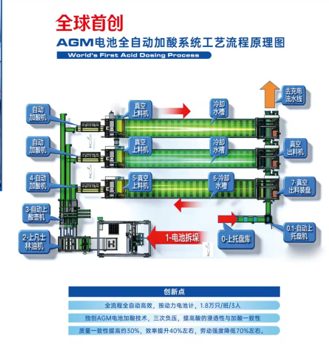
- Production complexity:The process of forming plates and assembling tubular elements (OPzV) is more labor-intensive and requires strict quality control, which Nanjing Qiantan Energy Storage Technology Co., Ltd. provides on its automated lines.
- Certification and testing:Each batch undergoes stress tests at elevated temperatures, which requires additional energy and time.
- Logistics:The weight and hazard class of cargo affect the final delivery cost, especially for international projects.
However, if you calculate the cost per year of service, high temperature batteries are often cheaper. A standard $100 battery that lasts 1.5 years costs $66 per year. A $140 dedicated battery that lasts 5 years costs $28 per year. The savings are obvious for large installations.
How to choose a supplier: reliability criteria
The market is saturated with offers, but not all manufacturers honestly declare temperature characteristics. When choosing a partner for deliveryhigh temperature batteriesPlease pay attention to the following aspects:
- Transparency of technical data:The supplier must provide graphs of service life versus temperature. If the datasheet only lists capacity at 25°C, there is cause for caution.
- Availability of own production and R&D:Companies such as Nanjing Qiantan Energy Storage Technology Co., Ltd., which control the entire cycle from grating casting to assembly, can guarantee batch-to-batch consistency.
- Experience in target regions:The presence of completed projects in countries with hot climates (Russia, Iran, Türkiye, Southeast Asia) confirms the suitability of the products.
- Technical support:Possibility of obtaining consultations on system calculations and selection of chargers. The company's engineers are ready to adapt solutions to local operating conditions.
- Environmental responsibility:Availability of recycling and disposal programs. The closed production cycle implemented by the company indicates a serious approach to the quality of raw materials (use of highly purified recycled lead).
Frequently asked questions (FAQ)
Is it possible to use regular air conditioners to cool standard batteries instead of buying high-temperature ones?
Yes, this is technically possible and is often used in data centers. However, in remote telecom closets or industrial facilities, air conditioning maintenance is difficult and expensive. If the room temperature may exceed 30°C for more than 50% of the year, use specializedhigh temperature batteriesmore economically feasible than installing and maintaining climate control systems.
How does high temperature affect battery capacity?
Paradoxically, at high temperatures, the instantaneous delivered capacity may increase slightly due to a decrease in the viscosity of the electrolyte. However, this is a short-term effect. Long-term exposure to heat irreversibly destroys the active mass and lattice, leading to rapid loss of capacity over several months. Therefore, focusing on a “temporary increase” in power is dangerous.
Which Nanjing Qiantan Energy Storage Technology Co., Ltd. series batteries are best suited for hot climates?
For stationary applications (UPS, telecom), gel batteries of the OPzV and CG series, as well as tubular monoblocks CL 2V are recommended. For traction applications (forklifts, special equipment), special versions of EV series traction batteries with a reinforced grille are suitable. High power front terminal batteries (HFS, CT) also have improved heat dissipation properties.
Do I need to adjust the charge voltage for high temperature batteries?
Necessarily. All modern chargers must have a temperature compensation function. It is generally recommended to reduce the charge voltage by 3mV for every degree Celsius above 25°C per cell (for a 12V battery this is -18mV/°C). This prevents overcharging and drying out of the electrolyte.
Is it possible to mix old and new batteries in one system?
No, this is strictly prohibited, especially in high temperature conditions. Different internal resistance will lead to uneven distribution of currents and overheating of older elements, which can cause thermal runaway of the entire chain.
Conclusion and recommendations for implementation
Selecting a power source for elevated temperature environments requires a balance between performance and cost-effectiveness.High temperature batteriesis not just a marketing term, but an engineering solution to ensure uninterrupted operation of critical systems in difficult climatic zones.
To achieve maximum reliability, it is recommended:
- Conduct a thorough thermal audit of the battery installation site.
- Choose Gel technology (OPzV) for long-term stationary applications in hot weather.
- Be sure to use chargers with temperature compensation.
- Regularly monitor the condition of the batteries by measuring the voltage and temperature at the terminals.
- Cooperate with manufacturers who have proven experience in similar climatic conditions.
Nanjing Qiantan Energy Storage Technology LLC is ready to provide detailed technical consultations, system calculations and product samples for testing under your specific conditions. Our specialists will help you choose the optimal configuration from the OPzV, CG, HFS or CL 2V lines, taking into account the specifics of your project and budget constraints.
For detailed specifications, price lists and engineering support, go toproducts and technical solutionson our website.