
Continuous casting plant: prices from the manufacturer
2026-09-13
- Continuous casting installation: prices from the manufacturer and cost factors
- Design and operating principle of a continuous casting plant
- Factors affecting the price of a continuous casting plant
- Technical parameters and equipment specifications
- Technology Comparison: Continuous Casting vs. Traditional Mold Casting
- Integration of UNL into the full battery production cycle
- How to choose a continuous casting machine supplier: practical recommendations
- Frequently asked questions (FAQ)
- Conclusion and next steps
Continuous casting installation: prices from the manufacturer and cost factors
Costcontinuous casting plants(UNL) for the production of lead plates is one of the key parameters when planning the modernization or launch of a new plant for the production of lead-acid batteries. In 2026, the industrial equipment market shows a clear trend towards the integration of automated lines, where the price is determined not only by mechanical components, but also by the introduction of intelligent quality control and energy efficiency systems. For battery manufacturers, the choice of a UCL supplier determines not only capital expenditures (CAPEX), but also operating expenses (OPEX) throughout the plant's life cycle.
Nanjing Qiantan Energy Storage Technologies LLC offers an integrated approach to equipping production facilities. As a full-service operator, we provide solutions that cover the entire process spectrum, from mesh casting and paste coating to battery assembly and environmentally friendly recycling. Understanding the pricing structure of continuous casting plants allows purchasers and chief engineers to avoid hidden costs and select equipment that meets real production needs, not just marketing promises.
Design and operating principle of a continuous casting plant
The continuous casting plant is a complex unit designed for the production of lead strips or finished lattice plates from a lead alloy. Unlike traditional methods, where gratings are cast individually in molds, continuous casting ensures high production speed and geometric stability of the product. The process is based on feeding molten lead alloy into cooled rolls or molds where the metal crystallizes, followed by rolling or mesh cutting.
Key components of modern UNL include:
- Melting furnace and dosing system:Ensures that the alloy temperature is maintained at an accurate temperature (usually in the range of 350–450°C) and a continuous supply of metal to the casting zone. Temperature stability is critical to prevent structural defects.
- Casting module (rolls or drum):The main element that determines the thickness and width of the lead tape. Made from special alloys with high thermal conductivity and wear resistance.
- Cooling system:Controls the rate of crystallization. Improper cooling conditions can lead to a coarse lead structure, which reduces the mechanical strength of the gratings.
- Expansion module:If the line produces a grid rather than a tape, this is where the lead tape is punched and stretched to form the grid cells.
- Automatic control system (SCADA):Monitors web thickness, weight and integrity in real time, allowing the operator to instantly adjust parameters.
It is important to note that the quality of the resulting grid directly affects the battery life. Microcracks or uneven thickness that arise due to errors in the setting of the UNL become centers of corrosion during battery operation. Nanjing Qiantan Energy Storage Technologies LLC specialists, with more than 30 years of experience in the industry, pay special attention to setting these parameters when launching equipment for clients in Russia, Iran, Turkey and other countries.
Factors affecting the price of a continuous casting plant
The query “continuous casting installation price” often results in values ranging from several hundred thousand to millions of dollars. This variability is due to many technical and commercial factors. Understanding these cost drivers helps create a realistic project budget.
1. Capacity and belt width
Line productivity is measured in kilograms or tons of lead per hour. Low capacity lines (up to 500 kg/h) are suitable for small specialized production, while large plants require units with a capacity of 2 to 5 tons per hour. The higher the productivity, the more complex the cooling and dosing system, which increases the cost. Also, the width of the cast strip determines the dimensions of the rolls and the overall metal consumption of the structure.
2. Type of product produced: strip or finished grid
There are two main types of installations:
- Lead tape casting lines:A continuous strip is produced, which is then sent to a separate expansion machine. This is a more flexible configuration that allows you to change grill types on different machines.
- Continuous casting and expansion lines (Cast & Expand):Integrated systems that produce a finished lead grid at the output. Such installations are more expensive due to the complexity of synchronizing the casting and machining processes, but they save production space and reduce metal losses.
3. Level of automation and quality control
Basic models may have manual adjustment of clearances and temperatures. Premium segments are equipped with laser thickness sensors, machine vision systems for defect detection and integrated software for data acquisition. The implementation of such systems, which Nanjing Qiantan Energy Storage Technologies LLC offers as part of its turnkey projects, significantly increases the initial cost, but reduces the defect rate and personnel costs in the long term.
4. Materials of execution and durability of components
The use of heat-resistant steels for rolls and molds, as well as high-quality heating elements made of stainless alloys increases the service life of the equipment. Cheap analogues often use materials that are subject to rapid degradation in the aggressive environment of molten lead, which leads to frequent shutdowns for repairs.
Technical parameters and equipment specifications
When choosing a continuous casting machine, you must rely on the specific technical requirements of your production. The following are typical settings that vary by model and configuration.
| Parameter | Value Range / Description | Impact on the process |
|---|---|---|
| Productivity | 300 – 5000 kg/hour | Determines the volume of output and the size of the melting furnace. |
| Belt/Grid Width | 50 – 1200 mm | Must correspond to the format of manufactured batteries (starter, traction, stationary). |
| Tape thickness | 0.8 – 3.5 mm | Affects the weight of the grate and the capacity of the active mass. Requires precise roll calibration. |
| Thickness Accuracy | ± 0.05 mm | A critical parameter to ensure uniform spread of the paste. |
| Heating power | Depends on furnace volume (kW) | Ensures alloy temperature stability. Modern systems use energy efficient heaters. |
| Cooling water flow | Individual calculation | Necessary for effective heat removal from the rolls. Water quality must meet standards to avoid scale. |
| Lead alloy | Pb-Ca, Pb-Sb, Pb-Se | The equipment must be adapted to the specific type of alloy, since they have different viscosity and crystallization temperatures. |
It is important to understand that specific parameters depend on the selected model and customer requirements. Engineers at Nanjing Qiantan Energy Storage Technology LLC conduct a detailed audit of production tasks before selecting equipment to ensure that the line performance meets the expected results.
Technology Comparison: Continuous Casting vs. Traditional Mold Casting
To make an informed investment decision, it is necessary to compare continuous casting technology with the classical method of casting individual gratings in molds.
| Criterion | Continuous casting unit (UNL) | Traditional mold casting |
|---|---|---|
| Production speed | High. Continuous process without cyclic stops. | Low/Medium. Depends on the time of the form opening/closing cycle. |
| Energy efficiency | Above. Constantly maintaining the melt temperature, less heat loss. | Below. Frequent cycles of heating and cooling of molds, large heat losses. |
| Metal structure quality | Fine-grain structure due to rapid cooling in the rolls. High strength. | A coarse-grained structure is possible with slow cooling of thick sections. Risk of shells. |
| Product change flexibility | Requires roll replacement or expander adjustment. Changeover time is average. | Quick change of molds. High flexibility for small series of different types of gratings. |
| Capital Expenditure (CAPEX) | Tall. Complex equipment requiring precise installation. | Low/Mid. Simpler design, lower entry cost. |
| Operating Expenses (OPEX) | Lower per unit production due to automation and less energy consumption. | Higher due to more staff and energy consumption. |
| Applicability | Large-scale production of starter, traction and stationary batteries. | Small-scale production, specialized batteries, repair shops. |
Engineering opinion:For mass production of batteries, especially in the segments of EV (traction batteries) and stationary energy storage systems (CP and OPzV series offered by our company), a continuous casting machine is the only choice. It provides quality consistency that cannot be achieved with cyclic casting. However, for niche products with very low production volumes, traditional presses may still make economic sense.
Integration of UNL into the full battery production cycle
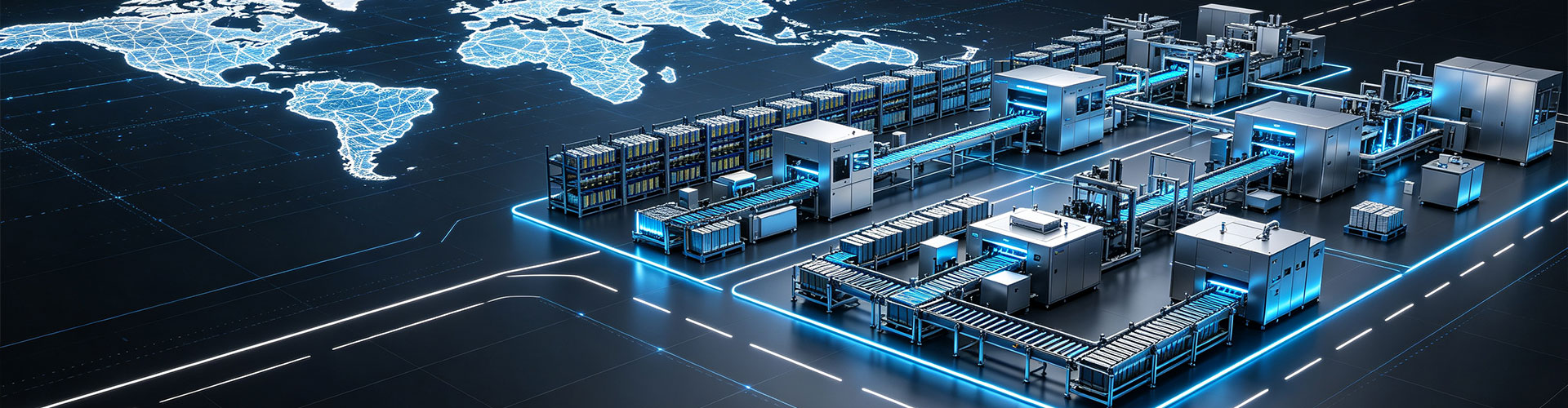
Purchasing a continuous casting machine is just the first step. Its effectiveness depends on its integration into the overall production line. Nanjing Qiantan Energy Accumulation Technologies LLC specializes in creating integrated solutions where the UNL seamlessly interacts with other stages of production.
Scenario 1: Production of traction batteries (EV series)
Traction batteries require thick grids with high resistance to cyclic loads. In this case, UNL is configured to produce tape of increased thickness. The resulting tape is fed to an expander, where a reinforced mesh is formed. The key here is control of the alloy: the addition of antimony or calcium must be strictly dosed. Our company provides the supply of not only casting equipment, but also alloy preparation technologies, as well as paste spreading lines, which guarantees the compatibility of all stages.
Scenario 2: Production of OPzV gel batteries and CL 2V tubular batteries
For tubular plates (CL 2V series), continuous casting is used to create down conductors or special profiles. The highest precision of geometry is required here, since deviations affect the assembly of the tubular element. The equipment must have a precision calibration system. The experience of our specialists, who have worked with leading Chinese and international corporations, allows us to customize lines for such specific tasks, ensuring a minimum percentage of defects.
Environmental aspect and recycling
Modern production is unthinkable without taking into account environmental standards. Nanjing Qiantan Energy Storage Technologies LLC includes in its projects specialized workshops for environmentally friendly processing of used lead-acid batteries. The scrap lead is melted down, cleaned and returned to the continuous casting plant. This creates a closed loop, reducing dependence on virgin raw materials and reducing the carbon footprint of production, which is in line with the company's mission to shape a low-carbon future.
How to choose a continuous casting machine supplier: practical recommendations
The equipment market is saturated with offers, but not all suppliers have the necessary expertise. When choosing a partner for the supply of UNL, pay attention to the following aspects:
- Technical support and service:The equipment requires regular maintenance. Make sure the supplier has local engineering support or guarantees quick on-site service. Nanjing Qiantan Energy Storage Technologies LLC provides service support in Russia, Iran, Vietnam and other countries of presence.
- Project implementation experience:Request a reference list. The presence of successful cases in similar climatic and regulatory conditions (for example, Asia or Eastern Europe) is a good indicator of reliability.
- Possibility of customization:Standard solutions are rarely ideal for specific tasks. The supplier should be willing to tailor the belt width, cooling system or control interface to your needs.
- Comprehensive approach:Preference should be given to companies that can offer not just a machine, but the entire line: from melting furnaces to assembly. This simplifies integration and responsibility for the result.
- Pricing transparency:The price should include not only the cost of the equipment, but also the costs of installation, commissioning, personnel training and the supply of spare parts for the first year of operation.
Frequently asked questions (FAQ)
What is the average payback for a continuous casting plant?
The payback period depends on production volume and lead prices. On average, for a medium-sized starter battery plant, switching to continuous casting can reduce grid costs by 15–20% due to energy savings and reduced scrap. When the line is fully loaded, the payback can range from 1.5 to 3 years.
Can a continuous casting machine be used for different types of alloys?
Yes, most modern UNLs allow you to work with various alloys (lead-calcium, lead-antimony). However, switching from one type of alloy to another requires careful flushing of the system and adjustment of temperature conditions, since different alloys have different fluidity and crystallization temperatures. Our engineers develop transition regulations for each specific case.
Does the quality of cooling water affect the operation of the unit?
Critically influences. The roll cooling system must operate without interruptions and scale formation. Contaminated water reduces heat dissipation, which leads to overheating of the rolls, changes in the lead structure and premature wear of equipment. It is recommended to use water treatment systems and closed cooling circuits.
Does Nanjing Qiantan Energy Storage Technology Co.,Ltd provide personnel training?
Yes, within the framework of turnkey projects we provide full training of the customer’s technical and operator personnel. The program includes theoretical lessons on the principles of equipment operation and practical training in management, configuration and troubleshooting skills on the line.
What warranties are provided for the equipment?
Warranty conditions are discussed individually and are fixed in the contract. Typically, the warranty covers the main components (rolls, motors, control system) and ranges from 12 to 24 months. We also offer post-warranty service and supply of original spare parts, which ensures long-term production reliability.
Conclusion and next steps
Investments incontinuous casting plantis a strategic decision that determines the competitiveness of the battery plant for years to come. The correct choice of equipment, its integration into the production cycle and qualified service allow us to achieve high productivity and stable product quality. Nanjing Qiantan Energy Storage Technology LLC is ready to become your reliable partner in this process, offering proven technological solutions, global experience and full support at all stages of the project.
Regardless of whether you are planning to launch a new production facility or modernize an existing one, our specialists are ready to conduct a technical audit and prepare a commercial proposal that takes into account all your requirements. Contact us to receive detailed advice and calculate the cost of equipment for your needs.
To view the full range of our solutions and products, visitproducts and technological solutionson our website.