
Top uninterruptible power supplies 2026: ratings and prices
2026-09-14
- Criteria for choosing a UPS in 2026: from technical characteristics to real reliability
- Architecture of modern UPS: Online, Line-Interactive and Offline
- The heart of the system: choice of battery technology
- Top uninterruptible power supplies 2026: classification by application
- Engineering Analysis: Why Battery Capacity Doesn't Equal Runtime
- UPS Pricing and Cost Factors in 2026
- Comparison table: Lead-acid vs Lithium-ion batteries for UPS
- Practical recommendations for installation and maintenance
- FAQ: Frequently asked questions about choosing a UPS
- Conclusion and procurement strategy
Criteria for choosing a UPS in 2026: from technical characteristics to real reliability
Formation of the listtop uninterruptible power suppliesin 2026 requires abandoning marketing slogans in favor of rigorous engineering analysis. The market for backup power supply systems has undergone significant changes: the share of hybrid solutions has increased, requirements for energy efficiency and adaptability of battery packs to extreme temperature conditions have become more stringent. For industrial buyers and technical directors, the key consideration is not just the inverter's power rating, but the total cost of ownership (TCO), battery assembly life, and the system's ability to handle the inrush currents of critical equipment.
In this review, we will look at the architecture of modern UPSs, compare energy storage technologies and determine which parameters really affect the continuity of production processes. Particular attention is paid to the role of high-quality lead-acid batteries, as they remain the most cost-effective and predictable solution for most stationary applications, striking a balance between cost and reliability.
Architecture of modern UPS: Online, Line-Interactive and Offline
When compiling a rating of uninterruptible power supplies, the primary criterion is the topology of energy conversion. Failure to understand the differences between UPS types often leads to equipment selection errors when sensitive electronics are connected to devices with insufficient output signal quality.
Online UPS (Double Conversion)
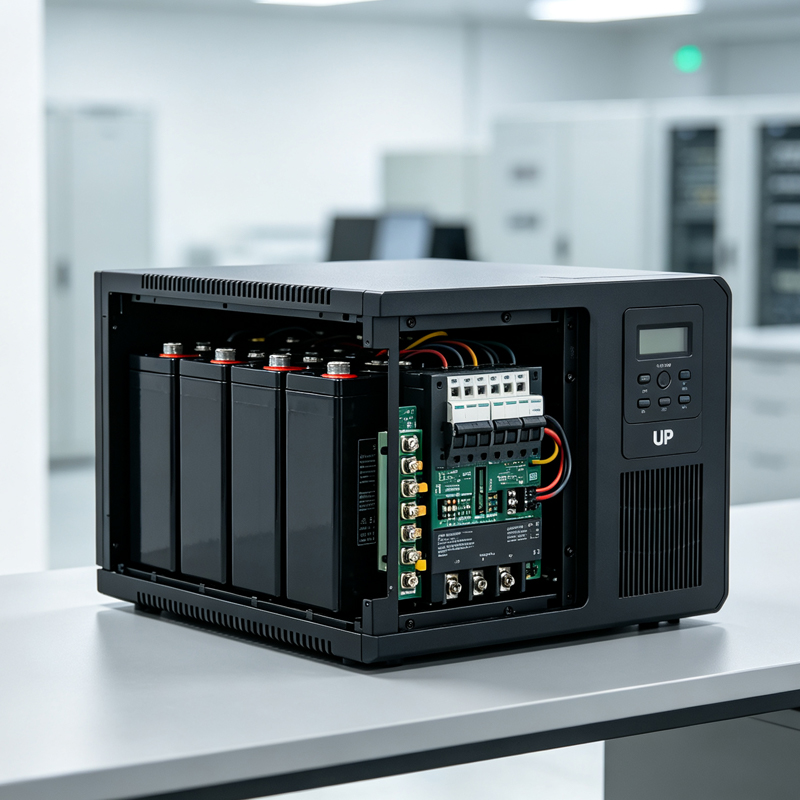
Double voltage conversion devices are the standard for mission-critical loads such as server rooms, medical equipment, CNC machines and automation systems. The principle of operation is to constantly convert the input AC current to DC (to charge the batteries and power the inverter), and then back to AC. This provides:
- An ideal sinusoid at the output, regardless of network distortions.
- Zero switching time to batteries (0 ms).
- Complete galvanic isolation of the load from the network.
The disadvantage of this architecture is lower efficiency (typically 90-94%) due to double conversion and increased heat generation, which requires efficient cooling.
Line-Interactive UPS
This type of device uses an autotransformer to stabilize the voltage without switching to batteries for small network deviations. Switching to the battery occurs only when there is a complete loss of power or the voltage goes beyond acceptable limits. Switching time is 4-10 ms. Such UPSs are suitable for office equipment, entry-level network equipment and non-critical production lines. They are cheaper than online models and have higher efficiency.
Backup UPS (Offline / Standby)
The simplest and cheapest option. The inverter turns on only when there is a network failure. Due to the presence of switching time and the lack of voltage stabilization in normal mode, such devices are rarely used in industry, with the exception of the simplest household appliances.
The heart of the system: choice of battery technology
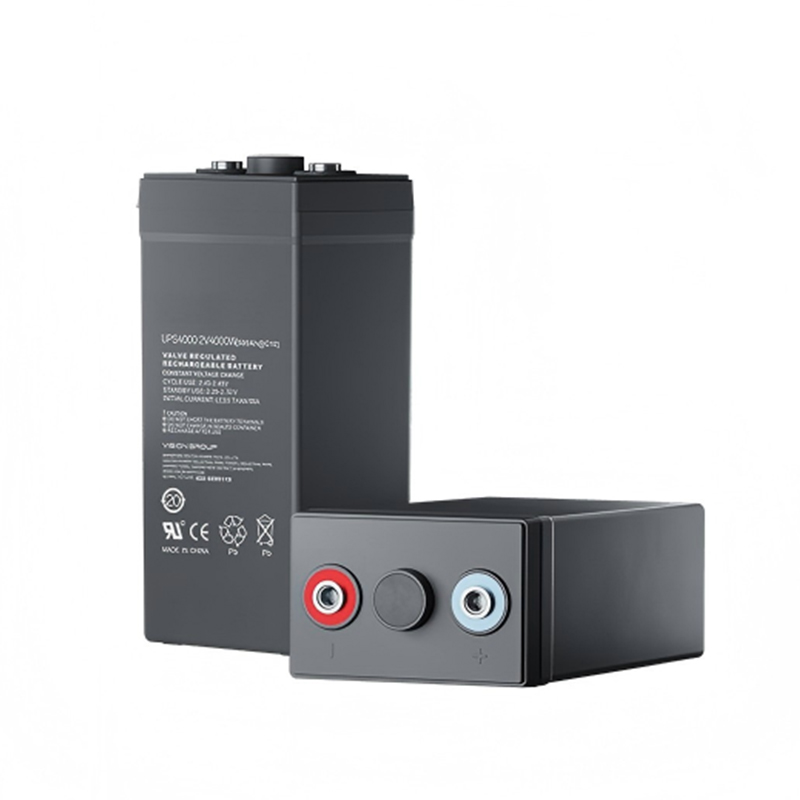
The inverter part of the UPS is responsible for converting the current, but it is the battery that determines the autonomy and reliability of the entire system. In 2026, despite the development of lithium-ion technologies, lead-acid batteries retain a dominant position in the stationary backup segment due to proven technology, predictable degradation and high safety.
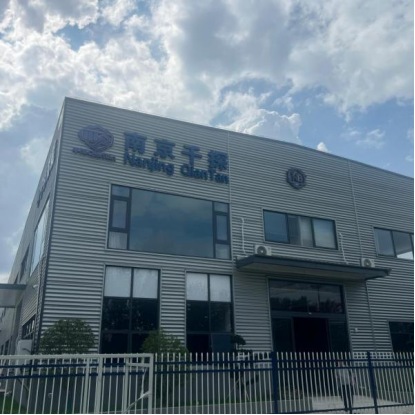
CompanyNanjing Qiantan Energy Storage Technology LLC, being a full-cycle operator in the field of battery technology, emphasizes the importance of correctly selecting the type of battery for specific UPS tasks. An error in choosing the chemical composition or design of the battery can reduce the service life of the system by 2-3 times.
Comparison of lead-acid battery types for UPS
| Parameter | AGM (Absorbent Glass Mat) | GEL (Gel OPzV/CG) | Tubular OPzS |
|---|---|---|---|
| Service life (cycles) | 300-500 (deep discharge) | 1200-1500 | 1500-2000+ |
| Temperature sensitivity | High (degradation above +25°C) | Medium (tolerate heat better) | Low (resistant to overheating) |
| Cost | Low | Medium/High | High |
| Application in UPS | Short-term reservation (up to 1 hour) | Long-term backup, cyclic mode | Large data centers, telecom, long-term autonomy |
| Service | Maintenance-free | Maintenance-free | Requires electrolyte level monitoring |
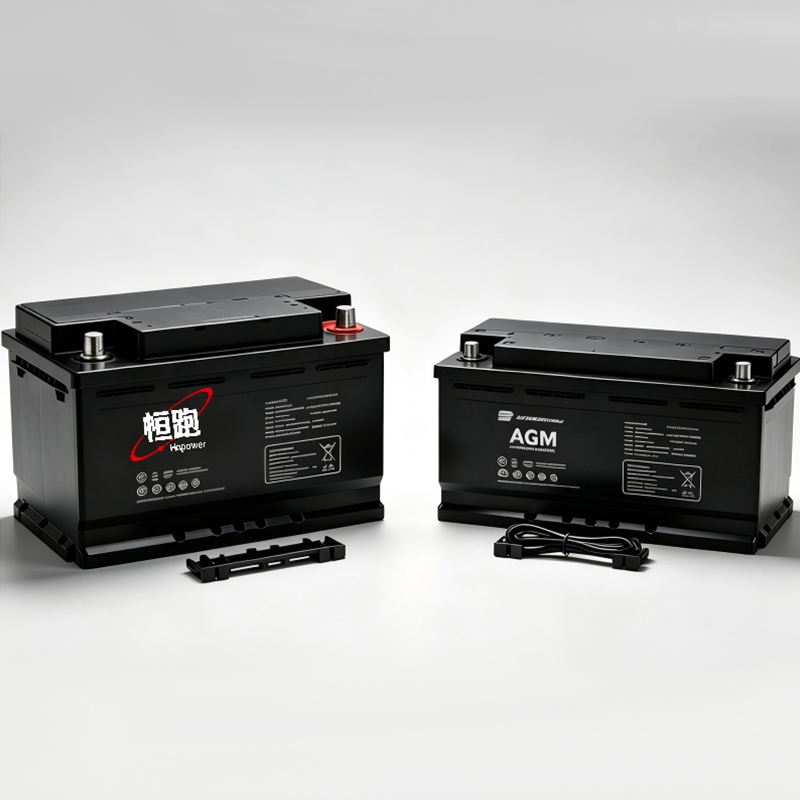
For standard office and light industrial UPSs, AGM batteries are most often used. However, in conditions of unstable power supply, where frequent outages occur, gel batteries of the OPzV and CG series offered byNanjing Qiantan Energy Storage Technology LLC. Their immobilized electrolyte design prevents acid separation and grid corrosion, which is critical to long battery life in buffer mode.
Top uninterruptible power supplies 2026: classification by application
Instead of an abstract ranking of brands, it makes more sense to divide the best solutions by use case. This allows the engineer to select a tool that is adequate to the task.
1. For server and telecommunication cabinets (Power 1-10 kVA)
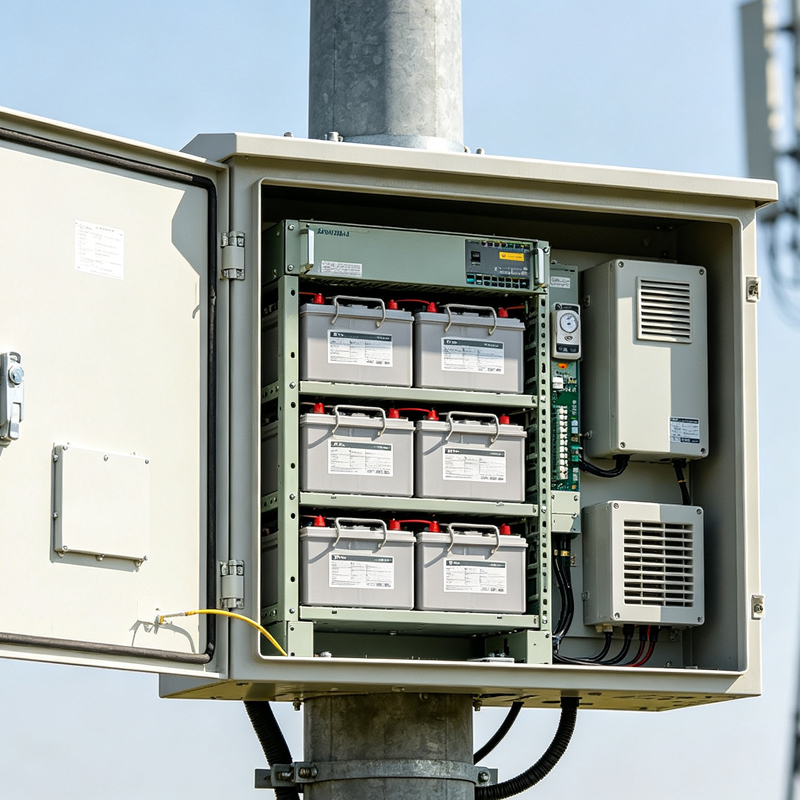
This requires compact online UPSs with the ability to scale autonomy time. Key requirements: pure sine wave, cold start capability and integration with monitoring systems via SNMP/Modbus.
Battery recommendation:High-power, maintenance-free batteries with front terminals (HFS and CT series). The front pin arrangement simplifies installation in 19" racks and reduces connection resistance, which is important for high discharge currents.
2. For industrial automation and CNC machines (Power 10-100 kVA)
Industrial networks are characterized by the presence of harmonics and impulse noise from welding machines and motors. The UPS must have a high overload capacity (ability to handle crest factor > 3:1).
Battery recommendation:Long-life stationary batteries of the CP series or tubular monoblocks of the CL 2V series. These solutions are designed to meet the requirements of reliability and consistent performance. The company's specialists, who have more than 30 years of experience in the industry, note that the use of 2-volt elements allows you to flexibly dial up the voltage of the DC bus and replace only defective cells, and the entire bank.
3. For medical infrastructure and laboratories
The critical requirement is absolute silence and no hydrogen emissions. UPSs must operate in Online mode with an efficiency in economy mode of at least 98%.
Battery recommendation:Gel batteries OPzV. They are completely sealed, prevent leakage of electrolyte even if the housing is damaged, and have low gas emission, which allows them to be installed directly in residential or work areas without special hoods.
Engineering Analysis: Why Battery Capacity Doesn't Equal Runtime
One of the most common mistakes when purchasing UPS is the linear calculation of autonomy time. Buyers often believe that if a 100 Ah battery holds a load for 1 hour, then two such batteries will hold for 2 hours. This is not true.
The Peckert effect and the dependence of capacitance on the discharge current lead to the fact that when the current is doubled, the operating time is reduced by more than half. Additionally, ambient temperature has a dramatic effect on lead-acid batteries. The Arrhenius Rule states that for every 10°C increase in temperature above the nominal 20-25°C, the battery life is halved.
That's why the companyNanjing Qiantan Energy Storage Technology LLCpays special attention to the production of high-temperature batteries and the implementation of technological solutions adapted to local operating conditions. In regions with a hot climate (for example, the countries of the Middle East, Southeast Asia, southern regions of Russia), the use of standard AGM batteries without powerful air conditioning leads to system failure after 1.5-2 years instead of the stated 5 years. The use of gel technologies or special heat-stable separators makes it possible to mitigate this risk.
UPS Pricing and Cost Factors in 2026
The price of an uninterruptible power supply is formed not only from the cost of the inverter, but also from the cost of the battery cabinet, cables, control and installation systems. The following components should be considered when evaluating supplier proposals:
- Inverter topology:Online systems are 30-50% more expensive than linear interactive ones.
- Battery type:Lithium-ion assemblies can be 2-3 times more expensive than their lead-acid counterparts, although they take up less space. Among lead solutions, gel OPzV is 20-40% more expensive than AGM, but pays off due to a greater number of cycles.
- Scalability:Modular UPSs allow hot-swappable power expansion, which increases the initial cost but reduces the risk of downtime as the load expands.
- Service and warranty:Having a local service center and spare parts warehouse is critical. The company implements projects in Russia, Iran, Turkey and other countries, providing local engineering support, which reduces hidden logistics costs in warranty cases.
Comparison table: Lead-acid vs Lithium-ion batteries for UPS
| Criterion | Lead-acid (AGM/Gel) | Lithium-ion (LiFePO4) |
|---|---|---|
| Initial cost | Low | High (2-3 times higher) |
| Service life (years) | 3-5 (AGM), 8-12 (Gel/OPzV) | 10-15 |
| Weight and dimensions | Big and heavy | Compact and lightweight (space saving up to 70%) |
| Cooling Requirements | Standard air conditioners | Less heat generation, but demanding on BMS |
| Security | High, proven over decades | Requires a sophisticated control system (BMS) to prevent fire |
| Disposal | Developed recycling infrastructure (up to 98% of materials) | Difficult and expensive processing |
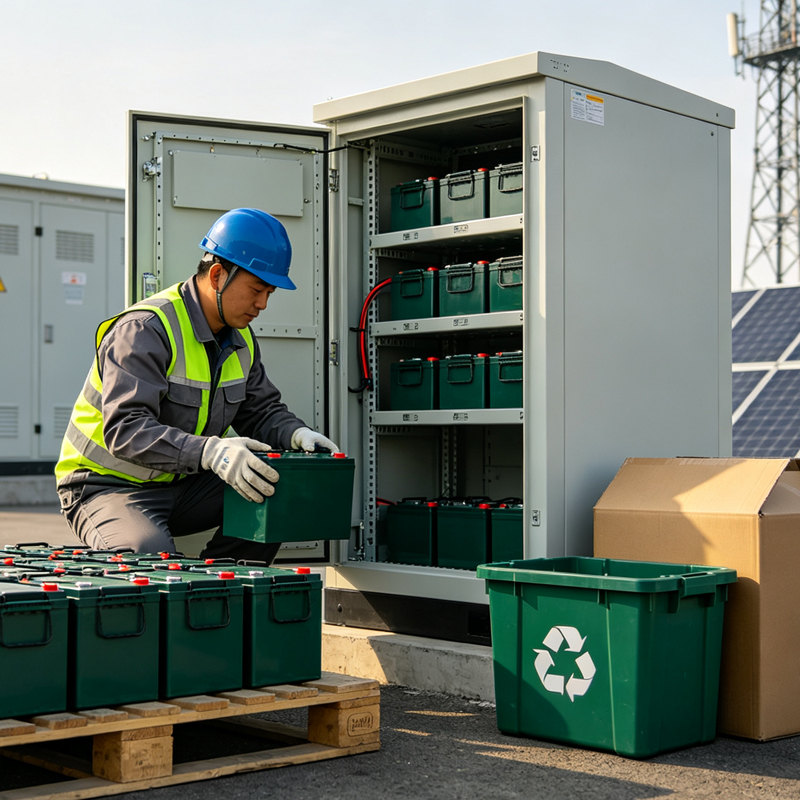
The table shows that for most industrial applications, where there are no strict restrictions on weight and area, lead-acid technologies remain economically more feasible. Especially considering thatNanjing Qiantan Energy Storage Technology LLCincludes environmentally friendly recycling of used batteries in its activities, closing the cycle and reducing environmental risks for the enterprise.
Practical recommendations for installation and maintenance
Even the most expensive top-rated UPS will not provide protection if the operating rules of the battery pack are violated. Engineering practice shows that 80% of UPS failures are associated precisely with battery degradation, and not with inverter failure.
- Terminal tightening torque:Use a torque wrench. Undertightening leads to sparking and heating, overtightening leads to destruction of threads and cracks in the pole terminals.
- Air gaps:There must be space between the batteries (usually 10 mm) to allow air circulation and compensation for thermal expansion.
- Equalizing charge:Flooded (wet) and some gel batteries require periodic equalization to prevent sulfation and electrolyte separation.
- Internal resistance monitoring:Regularly testing the impedance of each cell can identify a degrading battery before it fails during a power outage.
FAQ: Frequently asked questions about choosing a UPS
How to correctly calculate the required battery capacity for a UPS?
It is necessary to determine the total load power in VA (Volt-Amps) and the desired autonomy time. Then, using the battery manufacturer’s discharge tables, find the capacity that will provide the given discharge current for the required time, taking into account the final inverter shutdown voltage. Always add a margin of 20-30% for battery aging.
Is it possible to mix old and new batteries in the same battery cabinet?
Strongly not recommended. Different internal resistances of old and new batteries will lead to uneven distribution of charge and discharge currents. The new battery will be overloaded, and the old one will be undercharged, which will quickly destroy the entire assembly.
Which batteries are best for a UPS in an unheated room?
For cold rooms, special low-temperature AGM series or gel batteries are better suited, but it is worth remembering that at low temperatures the capacity of lead-acid batteries drops sharply. At -15°C, the available capacity may be only 50-60% of the nominal capacity. An increase in installed capacity or the use of thermal cabinets is required.
Does the UPS brand affect the choice of battery?
Yes, each inverter has its own charging voltage settings and battery testing algorithms. It is important that the battery characteristics (absorption voltage, float voltage) meet the requirements of the UPS. Universal solutions such as OPzV and CG gel batteries fromNanjing Qiantan Energy Storage Technology LLC, are compatible with most modern industrial UPSs due to a wide range of permissible charge voltages.
Conclusion and procurement strategy
Choosing an uninterruptible power supply in 2026 is a complex engineering task that requires taking into account not only electrical parameters, but also operating conditions, logistics and long-term economics. The top best solutions are always individual for a specific object. However, it is safe to say that the combination of a quality online UPS and reliable lead-acid batteries of the right type (AGM for short-term reserve, Gel/OPzV for long-term reserve) remains the gold standard of the industry.
When forming the budget and technical specifications, pay attention to suppliers who can offer not just a product, but an integrated solution. The experience of a team of specialists with 30 years of experience, the presence of a full production cycle and global experience in implementing projects in various climatic zones guarantee that the backup power system will perform its function at a critical moment.
To receive technical advice, select batteries for a specific UPS model, or develop a turnkey uninterruptible power supply system project, we recommend contacting expertsNanjing Qiantan Energy Storage Technology LLC. A professional approach to the design and use of certified products will help you avoid emergency downtime and optimize the costs of your enterprise’s energy infrastructure.