
Heat sealing machine: prices from the manufacturer, catalog 2026
2026-09-12
Heat sealing machine: technical selection criteria and price analysis in 2026
The selection of industrial equipment for sealing polymer materials requires a deep understanding of the physics of the process and the specifics of the production line.Heat sealing machineis not just a heating element, but a complex electromechanical complex that ensures the formation of a monolithic seam due to local melting of thermoplastics followed by crystallization under pressure. In 2026, the industrial packaging equipment market shows a clear trend towards the integration of precision temperature control systems and automated diagnostics of seam quality, which directly affects the reduction of defect rates and material consumption.
For process engineers and production managers, the key factor is not only the initial cost of the device, but also its ability to maintain stable parameters under continuous cycle conditions. Temperature instability of even 2-3°C can lead to polymer destruction or insufficient bond strength, especially when working with multilayer films and technical fabrics. This article examines the architectural features of heat-welding equipment, methods for calculating the required power and criteria for evaluating suppliers, based on engineering practice and current market conditions.
Operating principle and classification of heat welding equipment
The technology is based on the ability of thermoplastic polymers to transform into a viscous flow state upon reaching a certain melting temperature. The welding process consists of three phases: heating the contact surfaces, holding under pressure for the diffusion of macromolecules and cooling to fix the structure of the weld. Depending on the method of transferring thermal energy and the design of the working body, heat sealing machines are divided into several main classes, each of which has its own areas of application and limitations.
Pulse welding machinesuse nichrome tape, which is heated by a short-term passage of electric current. The advantage is the ability to work with materials containing polyethylene or polypropylene, without the risk of overheating of the contact area after turning off the current. Such machines are ideal for packaging finished products, where the aesthetics of the seam and the absence of deformation of thin films are important. However, they are not suitable for a continuous conveyor line with high material flow rates.
Belt (conveyor) machinesequipped with an endless Teflon tape, which constantly moves and heats up from the internal heating element. This solution provides high productivity and allows you to weld materials of various thicknesses by adjusting the belt speed and heating temperature. Belt units are the standard for filling lines in the food industry, chemical production and in the manufacture of building materials such as geomembranes.
Rotary and disc installationsused to create continuous sealed seams on rolled materials. They are often integrated into extrusion lines or bag making machines. The key feature is the constant contact of the heating element with the material, which requires_precise_ control of the tension of the web to avoid it breaking or stretching.
Key technical parameters when selecting equipment
When developing technical specifications for the purchase of a heat sealing machine, it is necessary to take into account a number of interrelated parameters. An error in the calculation of any of them leads to either underheating of the seam (risk of depressurization) or burning of the material (loss of raw materials). Below is a table of basic technical characteristics that are subject to mandatory verification.
| Parameter | Description and impact on the process | Typical values |
|---|---|---|
| Temperature range | Determines compatibility with polymer type. HDPE requires up to 140°C, PP - up to 180°C, and PET - over 200°C. | 0–300°C in 1°C increments |
| Seam width | Affects the strength of the connection. A narrow seam (2-5 mm) is suitable for light packages, a wide seam (10-20 mm) is suitable for heavy loads and geomaterials. | 2–20 mm |
| Welding speed | Line performance. Depends on the power of the heater and the thermal conductivity of the material. | 0–30 m/min (for conveyor types) |
| Thickness of welded material | Maximum total thickness of layers. Exceeding the limit leads to lack of penetration in the center of the seam. | Up to 0.5 mm (films), up to 5 mm (technical fabrics) |
| Cooling system | Critical for high-speed lines. Provides instant seam fixation. | Air or water cooling of rollers |
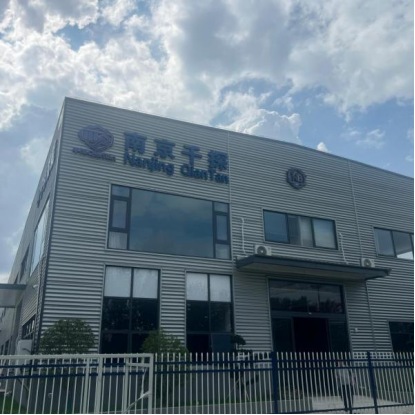
It is important to note that the maximum speed stated by the manufacturer is often achieved only on ideal laboratory samples. In real conditions, in the presence of dust, moisture or unstable voltage in the network, the operating speed should be 70-80% of the rated speed. Engineers of Nanjing Qiantan Energy Accumulation Technologies LLC, with more than 30 years of experience in the industry, recommend adding a power reserve of heating elements of at least 15-20% to compensate for heat loss in winter or when working in unheated workshops.
Integration into production lines and industry specifics
Heat sealing equipment rarely operates in isolation. It is part of a complex production line ecosystem where synchronization of speeds and tension of materials plays a critical role. Let's look at two typical industrial use cases.
Scenario 1: Production of geosynthetics and agrotextiles.
In this case, thick polypropylene fabrics and geomembranes are used. The main problem is ensuring uniform heating across the entire width of the roll, which can reach several meters. uneven heating leads to the occurrence of internal stresses, which manifest themselves during operation under load. Here, rotary machines with forced air cooling are used immediately after the welding zone. Strict control of the pressure of the pressure rollers is required: excessive pressure squeezes the molten polymer out of the seam, weakening it, and insufficient pressure does not ensure proper diffusion.
Scenario 2: Packaging of bulk chemical products and fertilizers.
Speed and tightness are priorities. Vertical bunching machines with pulse or tape welding units are used. A critical factor is the presence of dust in the welding area. Product particles entering the seam disrupt its integrity. Modern machines are equipped with air purging systems for the welding zone before the heating pulse. In addition, the chemical resistance of Teflon coatings on heating elements is important for aggressive environments.
Nanjing Qiantan Energy Storage Technology Co., Ltd., which specializes in complete solutions for the production of lead-acid batteries, also faces the challenges of reliable packaging of components and finished products. As part of turnkey projects for plants in Russia, Iran and Turkey, the company implements quality control standards that also apply to packaging equipment. Experience with high-precision assembly lines shows that the stability of temperature conditions at all stages of production, including packaging, directly correlates with the overall level of defects in the enterprise.
Price formation factors and economics of ownership
The query “heat sealing machine price” often results in a comparison of only the starting cost of the equipment. However, for an industrial enterprise, a more relevant indicator is TCO (Total Cost of Ownership) - the total cost of ownership. The price of a heat sealing machine in 2026 is determined by the following factors:
- Type of heating element and control system.Devices with analog thermostats are cheaper, but have greater inertia and error. Models with PID controllers and solid state relays provide +/- 1°C accuracy, which reduces film consumption by allowing the use of thinner materials without the risk of waste.
- Material of frame and components.AISI 304 stainless steel is required for food and chemical industries due to hygiene and corrosion resistance requirements. Painted steel reduces the cost of construction, but is unacceptable in aggressive environments.
- Level of automation.The presence of servo drives for tension adjustment, automatic pressure calibration and integration with the line PLC controller increases the cost, but reduces changeover time and the number of operators.
- Service support and spare parts availability.Cheap equipment is often equipped with non-standard heaters, which take weeks to replace. Brands that have a spare parts warehouse in the region where they operate (as is implemented in the logistics network of partners of Nanjing Qiantan LLC) allow minimizing downtime.
Engineering practice shows that savings on a cooling system or temperature controller pays off negatively within the first six months of operation due to excess consumption of packaging materials and costs for repackaging defective products.
Comparative analysis of welding technologies for various tasks
The choice between different types of machines should be based on specific production tasks. Below is a comparison of the main technologies to help you make your decision.
| Criterion | Pulse welding | Belt (conveyor) welding | Ultrasonic welding (alternative) |
|---|---|---|---|
| Productivity | Low/Medium (cyclic mode) | High (continuous mode) | Very high |
| Material thickness | Thin films (up to 0.3 mm) | Medium and thick (up to 3-5 mm) | Rigid plastics, nonwovens |
| Energy consumption | Low (heating only at the moment of impulse) | High (constant heating of the tape) | Average |
| Sensitivity to pollution | High (requires cleanliness of the seam area) | Medium (purge possible) | Low (self-cleaning due to vibration) |
| Maintenance cost | Low (replacement of nichrome) | Medium (replacing Teflon tape) | High (replacement of sonotrodes and generators) |
For lines that require welding of dissimilar materials or materials with a metallized layer, traditional heat sealing may not be effective. In such cases, alternatives are considered, but for most bulk and liquid packaging applications, heat sealing remains the most cost-effective method.
Common problems and solutions
Even the most modern equipment requires proper configuration and maintenance. Listed below are typical weld defects and their causes, based on the experience of service engineers.
Weak seam (delamination).
Reasons: insufficient temperature, too high belt speed, low pressure of the pressure rollers, presence of moisture or dust on the surface of the material.
Solution: Increase the temperature by 5-10°C, reduce the speed, check the pressure of the pneumatic system, install a pre-drying or blowing system for the material.
Burnt material (violation of integrity).
Causes: Excessive temperature, too slow speed, delay in cooling flow.
Solution: Reduce the temperature, increase the speed, check the operation of the cooling fans. It is important to remember that different batches of film from the same supplier may have different thicknesses and additives that may require recalibration.
Uneven, wavy seam.
Reasons: uneven tension of the material, wear of the Teflon tape, runout of the shafts.
Solution: Adjust the tension system (dance shafts), replace the Teflon tape, check the shaft bearing units for play.
Recommendations for choosing a supplier and integrating solutions
When choosing a supplier of heat sealing equipment, you need to pay attention not only to the product catalog, but also to the company’s technological expertise. The supplier should be able to provide recommendations for customizing equipment for the specific type of polymer your production uses. Having our own service department and spare parts warehouse in the operating region is a critical factor for business continuity.
Nanjing Qiantan Energy Storage Technology Co., Ltd. demonstrates a full-cycle approach that is also applicable to related production tasks. The company, implementing projects for the construction of battery factories in Russia, Vietnam and other countries, provides not only the supply of basic technological equipment, but also engineering support, personnel training and adaptation of solutions to local conditions. This integrated approach ensures that all elements of the production chain, including auxiliary equipment, operate in a coordinated and efficient manner.
Global experience in implementing projects in various climatic zones allows the company to offer solutions that are resistant to temperature changes and instability of energy networks, which is especially important for industrial enterprises in developing regions. The principles of technological transparency and long-term support embedded in the company's strategy provide customers with confidence in the reliability of the solutions supplied.
Frequently asked questions (FAQ)
How to choose a heat sealing machine for plastic bags?
Pulse welders are suitable for PE bags up to 100 microns thick. For bags over 100 microns and kraft bags with a PE liner, it is recommended to use belt conveyor machines with a seam width of at least 8-10 mm and a heating temperature of 140-160°C.
Why does Teflon tape wear out quickly?
The main reasons: the use of abrasive materials without protective coatings, overheating of the belt above the permissible 260-280°C, mechanical damage from sharp edges of the material. It is recommended to use fiberglass reinforced tapes and monitor the temperature using a pyrometer.
Is it possible to weld contaminated surfaces?
Heat sealing is sensitive to contamination. Oil, dust or product in the weld area will dramatically reduce its strength. It is necessary to install air cleaning systems or use ultrasonic welding, which is less sensitive to surface contamination.
What machine power is optimal for a small workshop?
For small volumes (up to 500 cycles per shift), a desktop pulse device with a power of 300-500 W is sufficient. For continuous operation during a shift, you will need a belt machine with a power of 1.5 kW or more with an active cooling system.
Does air humidity affect welding quality?
Yes, high humidity can lead to the formation of micropores in the seam due to the evaporation of moisture inside the polymer. In rooms with humidity above 70%, it is recommended to use dehumidifiers or equipment with enhanced pressure and cooling systems.
Conclusion and practical steps
Selecting a heat sealing machine in 2026 is an engineering challenge that requires taking into account material properties, operating conditions and economics. There is no universal device suitable for all tasks. The key to success lies in the precise determination of process parameters and the selection of equipment with a margin of reliability and the ability to fine-tune.
Engineers are advised to conduct test welds on each new roll of material, recording the optimal temperature and speed parameters. Regular maintenance, including cleaning heating elements and checking sensor calibration, extends equipment life and maintains consistent product quality.
For advice on equipment selection, integration into existing production lines or implementation of industrial-scale projects, contact specialists with deep experience in the field of production technology.Technical solutions and equipment for production