
Battery for forklifts from the manufacturer: prices and catalog
2026-09-14
Forklift battery from the manufacturer: selection criteria and impact on TCO
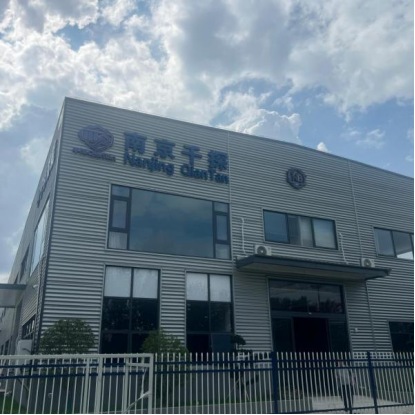
The choice of traction battery is one of the key decisions when operating warehouse equipment.Forklift Batterydetermines not only the length of a work shift, but also the total cost of ownership (TCO). In 2026, the market offers a wide range of solutions: from classic lead-acid systems with liquid electrolyte to modern gel and AGM technologies. Direct deliveries from manufacturers such as Nanjing Qiantan Energy Storage Technology LLC allow optimization of purchase prices without loss of quality, providing access to certified products designed to meet the rigors of intensive logistics.
The main purpose of this article is to provide a technically sound guide to battery selection, examine the impact of design features on battery life, and explain how charge and discharge parameters affect actual forklift performance. We'll look at the technical nuances that are often missed in standard commercial comparisons and make recommendations for integrating reliable power supplies into your fleet.
Typology of traction batteries: an engineering view
To understand whatbattery for forkliftsuits your enterprise, you need to understand the physical and chemical processes occurring inside the housing. Two main approaches dominate the market: traditional liquid electrolyte technologies and maintenance-free systems (GEL/AGM).
The classic EV series lead-acid batteries offered in the Nanjing Qiantan LLC catalog represent a time-tested solution. Their design includes tubular positive plates, which significantly improves resistance to cyclic loads. The main advantage of such systems is the predictability of degradation and the ability to visually monitor the condition of the electrolyte. However, they require regular maintenance: adding distilled water and monitoring the acid level.
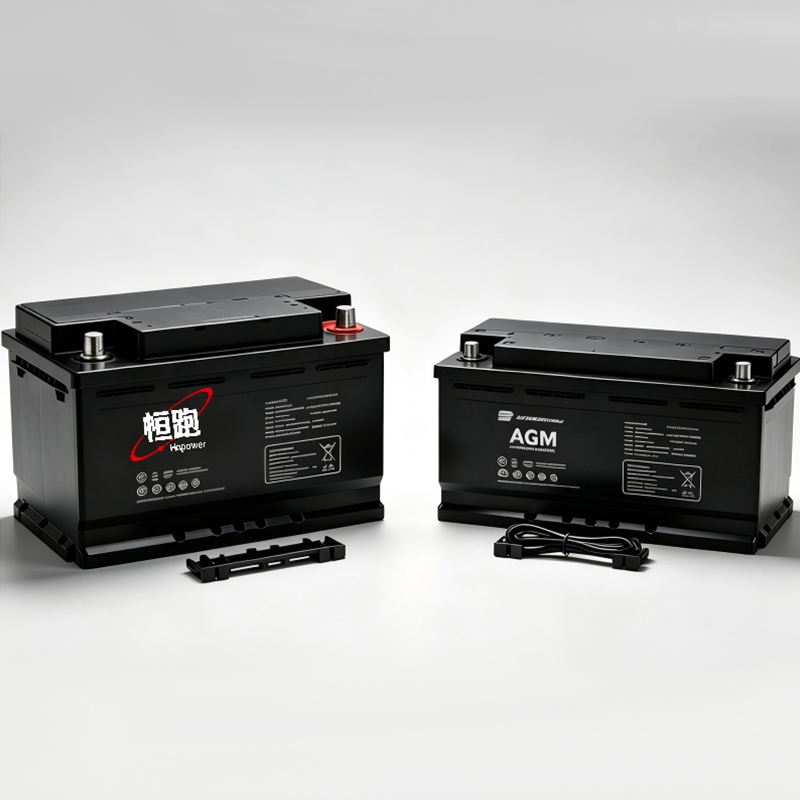
Gel batteries (OPzV and CG) and absorbed electrolyte solutions represent the next evolutionary step. In them, the electrolyte is thickened or bound in fiberglass mats. This eliminates the release of gases during normal operation and allows batteries to be installed in rooms without strong ventilation. For companies seeking to minimize maintenance downtime, such solutions may be preferable, despite the higher initial cost.
Key technical parameters when selecting a battery
When creating a purchase request, process engineers must look beyond voltage and capacitance ratings. There are a number of hidden parameters that directly affect the compatibility of the battery with the charger and the forklift itself.
| Parameter | Meaning and impact on operation |
|---|---|
| Nominal Capacity (C5/C6) | The capacity of traction batteries is usually indicated for a 5- or 6-hour discharge mode. It is important to understand that with forced operation (discharge in 3 hours), the actual available energy will decrease by 15-20% due to Peukert's law. |
| Starting current and current output | For electric forklifts, the battery's ability to deliver high currents when lifting a load is critical. HFS and CT series front terminal batteries provide improved current performance by reducing internal resistance. |
| Cyclic resource | The number of charge-discharge cycles until the capacity drops to 80%. High-quality tubular batteries (CL 2V series) can withstand more than 1500 cycles at a discharge depth of 80%, while cheap analogues may fail after 500-600 cycles. |
| Self-discharge | Important for seasonal equipment. OPzV gel batteries have an extremely low level of self-discharge, which allows you to store equipment without recharging longer than when using liquid analogues. |
| Temperature range | Standard batteries operate efficiently from -20°C to +40°C. Cold storage warehouses require special thermal insulation solutions or systems, as cold increases internal resistance and reduces available capacity. |
Engineering Experience: Why Plates and Cages Matter
Experience shows that the durability of a traction battery is determined by the quality of the active mass and the structure of the grids. The production of Nanjing Qiantan Energy Storage Technology LLC uses a full cycle of plate manufacturing. This allows you to control the thickness of the active mass and the density of the block assembly.
Engineering supervision:In conditions of long-term work in several shifts, the most common cause of battery failure is not sulfation, but mechanical shedding of the active mass from the positive plates due to vibrations and deep discharges. The tubular plate design used in the EV and CL series physically retains the active material, preventing premature loss of capacity. Therefore, for intensive use (more than 4-5 hours of continuous work per day), the choice should fall on tubular or reinforced armored elements, and not on flat plates.
Comparison of technologies: what to choose for your warehouse?
To make your decision easier, below is a comparison of the main battery types available in the manufacturer's lineup. The choice depends on the specifics of your operational processes.
| Characteristics | Liquid (EV/CL) | Gel (OPzV/CG) | High power (HFS/CT) |
|---|---|---|---|
| Cost of Ownership (CAPEX) | Low / Medium | High | Medium/High |
| Service | Requires regular addition of water | Virtually not required | Minimum |
| Deep discharge resistance | High | Very high | High |
| Charge speed | Standard (8-10 hours) | Slow (requires precise voltage control) | Accelerated (possibility of intermediate recharging) |
| Application | Single-shift work, availability of maintenance personnel | Clean rooms, food industry, difficult access | Intensive multi-shift work, high peak load |
Real-life application scenarios and hardware requirements
Understanding the context of use helps to avoid procurement mistakes. Let's look at two typical scenarios.
Scenario 1: Cold storage (-25°C)
At low temperatures, chemical reactions slow down. Standardforklift batterymay lose up to 40% of capacity. In addition, there is a risk of electrolyte freezing in a deeply discharged state.
- Technical solution:Using batteries with an increased volume of electrolyte or special gel cells that are less sensitive to cold. Installation of thermal insulating covers is required.
- Recommendation:Charging should only be done in a warm room. If this is not possible, chargers with temperature compensation are required to avoid overcharging or undercharging.
Scenario 2: High-intensity logistics hub (3 shifts)
Downtime is critical here. The forklift cannot wait 8 hours for a full charge.
- Technical solution:The use of high-power batteries of the HFS or CT series, which allow partial recharging (opportunity charging) during operator breaks without significant damage to service life.
- Recommendation:It is necessary to install appropriate pulse charging stations capable of quickly restoring charge during the absorption phase. Nanjing Qiantan LLC provides consultations on the selection of such “battery-charger” pairs.
Factors determining the price of batteries
Price forbattery for forkliftis not a static value and depends on many factors. Understanding these mechanisms helps buyers negotiate with suppliers in a reasoned manner.
- Cost of raw materials:Prices for lead and sulfuric acid fluctuate on world exchanges. Manufacturers with their own recycling cycles, such as Nanjing Qiantan LLC, have an advantage in stabilizing prices because they use high-quality recycled lead from their own environmentally friendly recycling workshop.
- Production technology:Automated wafer assembly and forming lines reduce scrap rates and ensure consistency of performance from batch to batch. Manual assembly is cheaper, but carries the risk of uneven distribution of the active mass.
- Logistics and geography:Delivery of heavy cargo significantly affects the final cost. The presence of localized warehouses or partner networks in Russia, like the manufacturer in question, allows us to reduce transportation costs and delivery times.
- Certification and Standards:Compliance with international safety and environmental standards requires testing and auditing costs. However, this guarantees the absence of hidden defects and safe operation at the enterprise.
How to check the quality of the battery upon acceptance?
Even when buying from a reputable manufacturer, it is important to carry out incoming inspection. Here is a checklist for technical specialists:
- Visual inspection:The housing must not have cracks, electrolyte leaks or traces of impacts. The terminals must be clean, free of oxides.
- Voltage check:The open circuit voltage (OCV) of each cell should be between 2.10 and 2.13 V for new batteries. Significant deviations may indicate internal defects.
- Production date:Lead-acid batteries lose capacity during storage. It is advisable that no more than 3-6 months have passed since production. If the battery has been stored longer, it must be fully charged before being put into use.
- Completeness of documentation:A passport, operating instructions and warranty card are required.
Nanjing Qiantan Energy Storage Technologies LLC: an integrated approach
In a market saturated with offers, companies that are able to offer not just a product, but a technological partnership stand out. Nanjing Qiantan Energy Storage Technology LLC positions itself as a full-cycle operator. This means that the customer receives a product that is built with quality control at every stage: from the design of the mesh grids to the final testing of the finished battery.
The company's key specialists have more than 30 years of experience in the industry, which allows them to adapt standard solutions to the specific needs of Russian and foreign clients. Whether it is the robust EV series for standard warehouse trucks or the specialized high-temperature batteries for harsh environments, the product line is with reliability in mind.
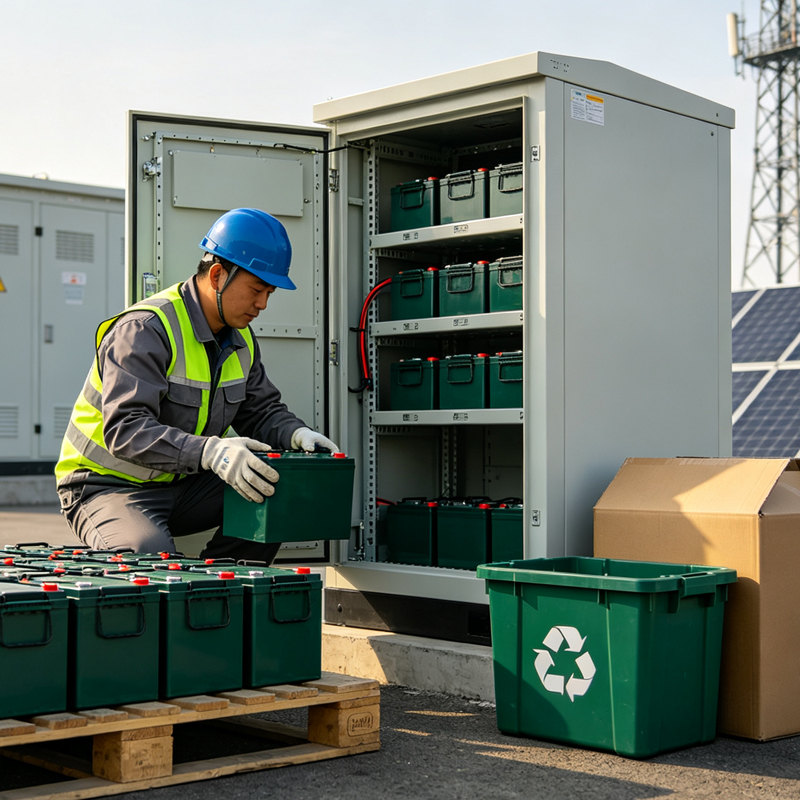
The company's geographical presence, including Russia, China, Iran, Turkey and other countries, confirms the ability to adapt to various climatic and regulatory requirements. Having your own waste battery recycling facility closes the environmental loop, which is especially important for businesses implementing sustainability principles (ESG).
Frequently asked questions (FAQ)
Can a regular car battery be used for a forklift?
Strongly not recommended. Starter batteries are designed to provide short-term high current and then quickly restore charge. Tractionforklift batteriesdesigned for long-term discharge at low currents. Using a starter battery in a forklift will result in battery failure within a few weeks due to sulfation and plate shedding.
How to extend the life of a lead-acid battery?
Basic rules: do not allow deep discharge below 20% of residual capacity regularly; Charge the battery only after it has completely cooled down (if it got hot during operation); Maintain correct electrolyte levels by using only distilled water; Keep the battery charged.
What is the difference between C5 and C6 batteries?
The difference lies in the discharge mode in which the capacitance is measured. C5 means that the battery is discharged in 5 hours, C6 - in 6 hours. When choosing a battery, it is important to compare this parameter with the actual operating conditions of your forklift. If the forklift works intensively and discharges the battery in 5 hours, you should focus on the C5 capacity.
Does the manufacturer provide a warranty on batteries?
Yes, Nanjing Qiantan Energy Storage Technology Co., Ltd. provides a warranty for its products. Warranty conditions depend on the specific battery series and operating conditions. It is important to follow the manufacturer's charging and maintenance recommendations to ensure your warranty remains valid.
Is it possible to mix old and new batteries in one unit?
No. Installing a new battery and an old one in the same compartment of the forklift will result in uneven load distribution. The new battery will work with overload, trying to compensate for the weak old one, which will quickly destroy both. Always replace the entire block.
Conclusion and recommendations on procurement
Choosing a power source for warehouse equipment is an investment in the continuity of business processes. Savings on initial cost often result in increased operating costs due to frequent replacements and downtime.Forklift Batteryfrom a trusted manufacturer such as Nanjing Qiantan Energy Storage Technology Co.,Ltd., provides a balance between price, reliability and technology support.
When planning purchases, we recommend:
- Conduct an audit of the current fleet of equipment and operating modes.
- Calculate the required capacity with a margin of 15-20% for degradation during the service life.
- Contact the manufacturer's technical specialists to select the optimal series (EV, OPzV, HFS, etc.).
- Clarify logistics conditions and service support opportunities in your region.
To receive a detailed catalogue, technical data sheets and an individual commercial offer, please check out ourproduct solutions and technical specifications. Our experts are ready to help you choose the optimal battery pack configuration based on the specific needs of your enterprise.