
Industrial battery for energy storage: price from the manufacturer
2026-09-28
- Industrial battery for energy storage: pricing factors and choosing a reliable supplier
- Industrial Battery Cost Architecture
- Technical parameters defining the equipment class
- Comparison of lead acid and lithium solutions for industry
- Real-life application scenarios and hardware requirements
- How the price is determined from the manufacturer: transparency and logistics
- Risks when buying cheap industrial batteries
- Frequently asked questions (FAQ)
- Engineering recommendations and conclusion
Industrial battery for energy storage: pricing factors and choosing a reliable supplier
Choiceindustrial battery for energy storageis not just a purchase of equipment, but a strategic investment decision that determines the reliability of the enterprise’s energy supply for decades. In 2026, the energy storage system (ESS) market will experience high price volatility due to fluctuations in raw material costs, supply chains and stricter environmental regulations. For design engineers and buyers, the key challenge is no longer finding the lowest price, but calculating the total cost of ownership (TCO). Industrial lead-acid batteries, despite the development of lithium technologies, remain the only solution for many stationary applications due to predictable characteristics, high safety and developed recycling infrastructure.
The price from the manufacturer is determined by many technical parameters: type of electrolyte (liquid, gel, AGM), plate design (armored tubular or lattice), capacity and discharge mode. Understanding these relationships allows you to avoid overpayments for redundant characteristics or, conversely, the risks of premature system failure. Nanjing Qiantan Energy Storage Technology LLC, with more than 30 years of experience in the industry and a full production cycle, offers a transparent pricing model, where the cost directly correlates with the technical performance and service life of the product.
Industrial Battery Cost Architecture
The cost of an industrial battery depends on more than just the weight of the lead. In the industrial segment, a significant part of the price is made up of technological solutions that ensure durability in harsh operating conditions. Let's consider the main components that form the final price of the product.
Type of technology and design of electrodes
The type of plate design has the most significant impact on price. For long-term backup and cyclic operation tasks, two types are predominantly used in energy storage systems:
- Armored (tubular) batteries of the OPzV and CL 2V series.The active mass is located inside protective tubular separators, which prevents its shedding even during deep discharges. This is the most expensive, but also the most durable option, capable of serving up to 20–25 years. The price of such batteries is higher due to the complexity of tube casting and assembly.
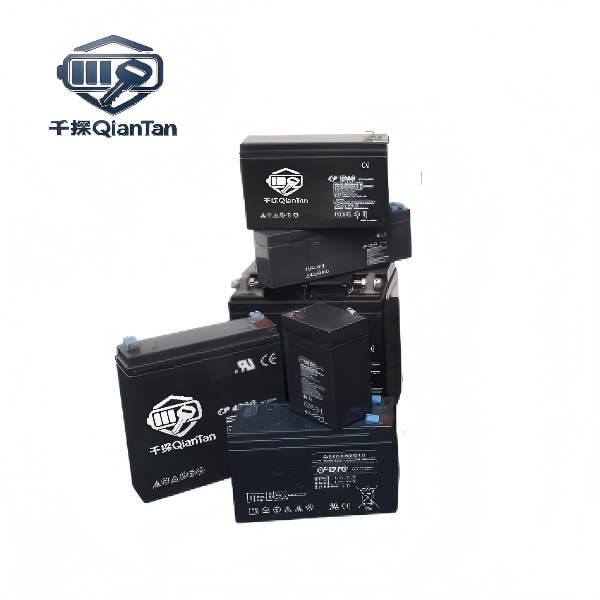
- Lattice batteries (CP, HFS series).Reinforced gratings with the addition of alloying elements (calcium, tin) are used. They are cheaper to produce, but have a shorter service life during deep cyclic discharges. Optimal for buffer mode (UPS, telecommunications).
The engineering rule is that for systems where regular deep discharges are expected (for example, off-grid solar power plants), the savings in converting from a lattice to a shell design are multiplied by the cost of replacing the batteries after 3-5 years.
Quality of raw materials and alloying additives
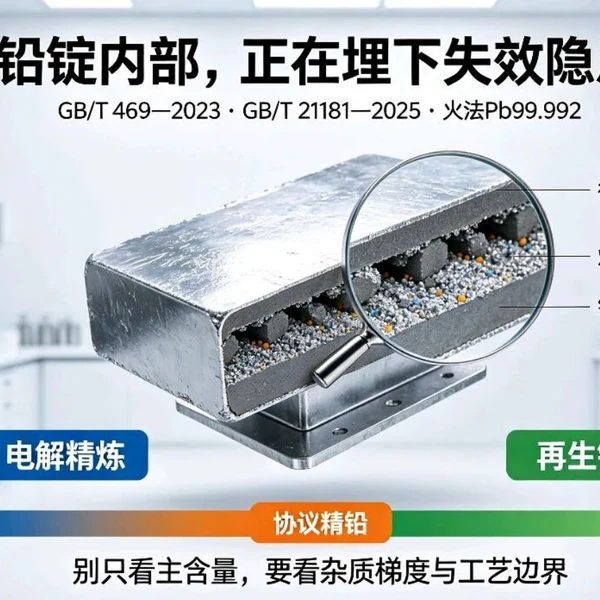
The purity of the lead and the alloy composition of the gratings are critical. Cheap analogues often use secondary lead with a high content of impurities, which leads to accelerated corrosion of current leads and self-discharge. Nanjing Qiantan LLC products are manufactured using high-purity virgin lead and proprietary alloys that reduce outgassing. This allows the creation of maintenance free (VRLA) systems, which reduces the customer's operating costs, although it increases the initial cost of the material.
Separators and electrolyte
Gel batteries (OPzV, CG) use silica gel to fix the electrolyte. The quality of the gel determines its resistance to thermal runaway and electrolyte separation. Low-end manufacturers often skimp on imported fiberglass cages (AGM) by using cheaper alternatives with less porosity. This limits current output and service life. The Nanjing Qiantan line uses premium multi-layer separators that provide low internal resistance.
Technical parameters defining the equipment class
When requesting a quote, it is important to indicate not only the capacity (Ah), but also the discharge mode. The capacity of the same battery with a 10-hour (C10) and 1-hour (C1) discharge will differ significantly. Below is a table comparing the key series of industrial batteries offered by the company to illustrate the dependence of price on technical characteristics.
| Series/Type | Construction | Main Application | Life expectancy (buffer) | Price segment |
|---|---|---|---|---|
| CL 2V (OPzS/OPzV) | Tubular plates, 2V elements | Large SHE, CHP, railway transport | 20–25 years | Premium |
| OPzV/CG (GEL) | Gel electrolyte, monoblocks 12V | Solar energy, remote sites | 12–15 years | High |
| CP (Stationary) | Reinforced grilles, AGM/VRLA | UPS, telecommunications, power backup | 10–12 years | Medium |
| HFS/CT (High Power) | Front terminals, high current output | Short-term peak loads, starter systems | 8–10 years | Specialized |
| EV (Traction) | Traction, reinforced housings | Electric forklifts, warehouse equipment | Depends on cycles (up to 1500) | Medium/High |
It is important to note that the price per amp-hour of the CL 2V series batteries will be higher than that of the 12V CP series monoblocks, however, the unit cost of stored energy over the entire life cycle of tubular batteries is significantly lower due to their ability to withstand thousands of charge-discharge cycles without degradation.
Comparison of lead acid and lithium solutions for industry
In 2026, the question of choosing between lead-acid and lithium-ion (LiFePO4) batteries remains relevant. Despite marketing pressure towards lithium, lead technologies retain leadership in a number of industrial niches.
| Criterion | Lead-acid (OPzV/AGM) | Lithium-ion (LiFePO4) | Engineer's recommendation |
|---|---|---|---|
| Initial cost | Low / Medium | High (2–3 times higher) | For projects with limited CAPEX, choose lead. |
| Security | High (non-flammable electrolyte in gel) | Requires complex BMS and fire suppression systems | For rooms without special protection, lead is safer. |
| Recycling | 98% of materials are recyclable | Difficult and expensive disposal | Lead is consistent with the principles of the circular economy. |
| Temperature | Wide range, cold resistance | Sharp drop in capacity at sub-zero temperatures | For unheated objects - only lead (GEL/OPzV). |
| Energy Density | Low (requires more space) | High | If there is a shortage of space - lithium, otherwise lead. |
Nanjing Qiantan Energy Storage Technologies LLC specializes in lead-acid solutions, as it considers them the most balanced in terms of price/reliability/environmental friendliness for stationary applications in the energy sector and transport. OPzV gel batteries, for example, operate ideally in the temperature range from -40°C to +50°C, which makes them indispensable for Russian conditions.
Real-life application scenarios and hardware requirements
The choice of battery should be dictated by specific operating conditions. Abstract capacity indicators say little without reference to the load profile.
Scenario 1: Autonomous power supply to a telecommunications tower in the northern region
Conditions:Lack of centralized power supply, winter temperatures down to -45°C, the need for round-the-clock operation of equipment.
Requirements:The battery must remain operational at extremely low temperatures and withstand frequent charge cycles from a diesel generator or solar panels.
Solution:Use of gel batteries of the OPzV or CG series. The liquid electrolyte can freeze or separate under such conditions, and AGM batteries quickly lose capacity in the cold. The gel does not freeze and ensures a stable chemical process. The company's engineers recommend installing batteries in thermally insulated heated cabinets, but even without it, gel technologies show better survival.
Scenario 2: Uninterruptible power supply (UPS) for a data center
Conditions:Stable room temperature (20–25°C), rare discharges (only during network failures), requirement for instantaneous high current output.
Requirements:Maximum reliability in buffer mode, long service life without maintenance, compactness.
Solution:Stationary batteries from the CP series or high power front terminal solutions (HFS). Front terminals simplify rack mounting and reduce the risk of short circuits during servicing. There is no need for expensive traction characteristics, so optimization goes towards reducing internal resistance to deliver high currents in a short time.
How the price is determined from the manufacturer: transparency and logistics
Purchasing directly from a manufacturer, such as Nanjing Qiantan Energy Storage Technology LLC, eliminates the markups of intermediaries. However, the ex-factory price is not a fixed figure in the price list, but the result of calculation for a specific project.
Factors influencing the final estimate:
- Batch size.Large projects (for example, equipping a new plant complex) make it possible to optimize production lines and reduce the unit cost of production.
- Logistics and packaging.Industrial batteries are classified as dangerous goods (Class 8). Delivery to Russia, Iran, Turkey or CIS countries requires special packaging certification and compliance with transport regulations. The company undertakes the preparation of all export documents, which is included in the price.
- Customization.The ability to manufacture batteries with custom terminals, modified dimensions, or special housing requirements (such as flame retardant plastic) adds cost but solves unique integration challenges.
- Service support.The price may include installation supervision, training of customer personnel and the development of individual maintenance regulations.
The geography of the company's presence, covering China, Russia, Iran, Bangladesh, Vietnam and other countries, speaks of an established logistics infrastructure. The implementation of projects together with partners such as Tianneng and Chaowei confirms the company's ability to fulfill large contractual obligations on time.
Risks when buying cheap industrial batteries
An attempt to save money at the procurement stage often leads to critical losses during operation. The market is filled with products manufactured in violation of technology. Here are the main risks faced by buyers of ultra-cheap analogues:
- Underestimated actual capacity.Laboratory tests show that some budget batteries provide only 70-80% of their advertised capacity. In a critical situation, this will lead to equipment shutdown earlier than the estimated time.
- Memory effect and sulfation.Poor-quality grating alloy accelerates sulfation of the plates. The battery may fail in 2-3 years instead of the stated 10 years.
- Depressurization and electrolyte leakage.Cheap housings and pressure relief valves cannot withstand the internal pressure during charging, which leads to drying out of the electrolyte and corrosion of surrounding structures.
- Lack of technical support.Manufacturers of “no-name” products do not provide engineering consulting. If problems arise, the customer is left alone with the problem.
Nanjing Qiantan LLC counters these risks with strict quality control at all stages: from incoming inspection of raw materials to final testing of finished products. Having a dedicated environmentally friendly recycling facility closes the loop and ensures that the manufacturer is responsible for the entire life product.
Frequently asked questions (FAQ)
What is the service life of an industrial gel battery?
The service life depends on the operating mode. In buffer mode (constant recharging, like in a UPS), high-quality gel batteries of the OPzV series last 12–15 years. In cyclic mode (regular discharges, as in solar stations), the service life is 3–5 years at a discharge depth of 50–70%. Maintaining temperature conditions (optimally 20–25°C) is critical to achieve maximum service life.
Is it possible to mix batteries from different manufacturers in one circuit?
Strongly not recommended. Batteries from different manufacturers, as well as from different production batches, have different internal resistance and capacity. This leads to uneven distribution of charge and discharge currents, overheating of individual elements and rapid failure of the entire battery. If replacement is necessary, the entire circuit should be replaced or batteries of strictly identical characteristics from the same manufacturer should be used.
Does room temperature affect the cost of operation?
Yes, and significantly. Every 10°C increase in temperature above the rated temperature (25°C) reduces the life of a lead-acid battery by half. Therefore, the cost of conditioning a battery room is often comparable to the cost of the batteries themselves. Using heat-resistant gel batteries can mitigate this effect somewhat, but does not eliminate the need for climate control for long-term investments.
How to properly dispose of industrial batteries?
Lead-acid batteries are subject to mandatory recycling. Nanjing Qiantan Energy Storage Technology LLC has its own environmentally friendly recycling workshop, which allows it to offer customers recycling services for used batteries in accordance with international environmental standards. This is not only a legal requirement, but also the possibility of returning part of the cost of raw materials.
Why is it worth choosing the products of your company?
Our key advantage is an integrated approach and deep expertise. A team of specialists with 30 years of experience works not just as a seller, but as a technology partner. We offer a full cycle: from designing an energy storage system for your needs to delivery of certified products (EV, OPzV, CP, HFS, CL 2V series) and subsequent service. Our experience in implementing projects in Russia, Iran, Turkey and other countries confirms the adaptability of our solutions to local conditions.
Engineering recommendations and conclusion
When choosingindustrial battery for energy storageThe price from the manufacturer is an important, but not the only criterion. Engineering practice shows that the compliance of technical characteristics with actual operating conditions is crucial. An attempt to universalize a solution often leads to either excessive costs or unreliability of the system.
Practical advice for buyers and engineers:
- Always ask for discharge charts for specific currents and temperatures, not just the nameplate C10 or C20 capacity.
- Consider installation and maintenance costs. Batteries with Front Terminals are more expensive, but save dozens of man-hours when assembling large racks.
- Check for certificates of conformity (GOST, IEC, CE) and independent test reports.
- Consider your supplier as a long-term partner. The opportunity to receive technical advice and prompt replacement of defective elements is more important than a one-time discount.
Nanjing Qiantan Energy Storage Technologies LLC is ready to provide detailed technical calculations, product samples and commercial proposals tailored to the specifics of your project. Our mission is to create reliable, green and smart energy storage systems that last for decades.
To receive advice on the selection of equipment, calculate the cost of a batch, or discuss the terms of cooperation, go to the pageproduct solutions and technical services, where you can view the full catalog and contact our engineers.