
Accessories for batteries from the manufacturer: prices and catalog
2026-09-11
- Battery accessories: selection criteria and impact on product quality
- Classification and purpose of production equipment
- Technical parameters and quality requirements for equipment
- An engineering perspective: why is geometry more important than material?
- Comparison of tooling types for different production technologies
- Real industrial application scenarios
- How to choose an equipment supplier: checklist for buyers
- The impact of tooling on production economics
- Frequently asked questions (FAQ)
- Conclusion and recommendations
Battery accessories: selection criteria and impact on product quality
The quality of a lead-acid battery is determined not only by the chemical composition of the electrolyte or the purity of the lead, but also by the accuracy of the geometric parameters of the components provided by the productionaccessories for batteries. In modern industrial production, where requirements for energy efficiency and service life of power supplies are constantly growing, the role of process equipment comes to the fore. Tooling is a complex of molds, dies, casting matrices and assembly devices that form the lattice structure of the plates, monoblock housings and inter-element connections.
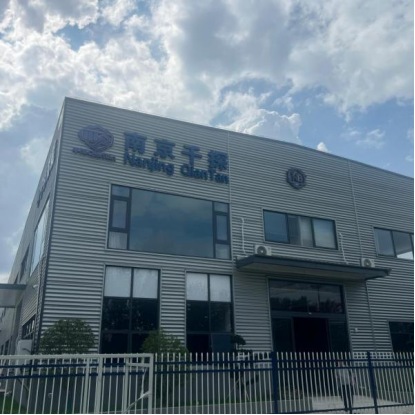
For battery manufacturers, choosing a tooling supplier is a strategic decision. Errors in the design of molds lead to casting defects, uneven distribution of the active mass and, as a consequence, to a decrease in capacity and premature failure of the battery. With more than 30 years of industry experience and turnkey projects in Russia, Asia and the Middle East, Nanjing Qiantan Energy Storage Technology LLC integrates advanced instrumentation solutions directly into the design process of production lines. This approach allows us to ensure the stability of the characteristics of the products, be it traction batteries of the EV series or stationary systems of the CP series.
Classification and purpose of production equipment
The production cycle for lead-acid batteries includes several stages, each of which requires specialized tooling. Correct classification of equipment helps engineers and buyers accurately determine plant needs and avoid unnecessary costs.
Foundry equipment for gratings and plates
The heart of any lead-acid battery is the plate. The quality of its lattice structure directly affects current efficiency and corrosion resistance. Casting molds (matrices) for gratings are made of high-alloy cast iron or steel alloys with high heat resistance. Key elements of this equipment group:
- Dies for injection molding:are used to create thin arrays with complex cell geometries, which is typical for modern maintenance-free batteries.
- Molds for expander metal:used in the production of gratings by rolling and stretching lead tape.
- Stamping tool:necessary for trimming cast frames and forming lugs (slippers) to tight flatness tolerances.
Engineers at Nanjing Qiantan Energy Storage Technology LLC pay special attention to the mold cooling system. Uniform heat dissipation prevents the occurrence of internal stresses in the lead alloy, which is critical for the durability of HFS and CT series batteries operating in high discharge current modes.
Equipment for assembling and forming blocks
After applying the active mass and drying, the plates are assembled into blocks. At this stage, assembly fixtures are used to ensure precise positioning of the plates relative to the cages and housings. An important element is the equipment for group welding or soldering of busbars. Modern automated lines require precision clamps that prevent the plates from moving when exposed to heat. For tubular monoblocks of the CL 2V series, specialized equipment is used for pressing tubular plates into shells, where control of the pressing force is a determining factor in the integrity of the active mass.
Molds for casting bodies and covers
The tightness of the battery depends on the quality of the casting of polypropylene or ABS cases. Injection molding machines use multi-strand molds, which must ensure equal shrinkage of the material at all points of the product. Casting defects, such as holes or leaks, lead to electrolyte leaks. Equipment for casting cases must be adapted to the specific battery configuration: from compact 1S series car batteries to large stationary OPzV batteries.
Technical parameters and quality requirements for equipment
When purchasing or ordering design documentation for equipment, it is necessary to rely on clear technical requirements. Below are the key parameters that affect the performance of the tool and the final product.
| Snap parameter | Technical requirements | Impact on the product |
|---|---|---|
| Hardness of working surfaces | HRC 45–55 (for casting molds) | Wear resistance, preservation of the geometry of the lattice cells after thousands of casting cycles |
| Manufacturing accuracy (tolerance) | ±0.02 – ±0.05 mm | Block assembly density, absence of short circuits, uniformity of gaps |
| Heat resistance of the material | Operating temperature up to 450–500°C | No thermal cracks upon contact with molten lead |
| Surface roughness | Ra 0.4 – 0.8 µm | Easy casting removal, minimizing machining, reducing scrap |
| Cooling system | Uniform channel contour | Reducing the casting cycle, preventing lattice deformation during cooling |
Specific values may vary depending on the type of battery being manufactured and the alloy used. For example, high-temperature batteries require tooling that can handle special alloying additives in lead, which may have a different fluidity and crystallization temperature than standard lead.
An engineering perspective: why is geometry more important than material?
In the practice of designing production lines, a discussion often arises about priorities: what is more important - the grade of steel for the mold or the accuracy of its geometry? The experience of specialists from Nanjing Qiantan Energy Storage Technologies LLC, who have implemented projects in various climatic zones, shows thatgeometric accuracy and temperature control system are more critical factorsthan exotic materials.
Even the most expensive steel cannot compensate for errors in calculating the shrinkage of polypropylene when casting the body or uneven cooling of the lead grid. Uneven cooling leads to residual stresses in the metal. During battery operation, when the battery is subjected to cyclic loads (charge-discharge) and thermal expansion, these stresses cause microcracks in the lattice. This breaks the electrical contact with the active mass, and the battery loses capacity long before the end of its design life. Therefore, when choosing equipment, you should pay attention not only to passport materials, but also to the results of computer modeling of casting and cooling processes, which are provided by a qualified manufacturer.
Comparison of tooling types for different production technologies
The choice of production technology dictates the type of equipment required. Below is a comparison of tooling for two main grating manufacturing methods: traditional casting and the modern expander method.
| Comparison criterion | Cast Grid | Expanded Metal method |
|---|---|---|
| Capital costs for tooling | High (complex machining, cooling system) | Medium (rolls for rolling and dies for stretching) |
| Grille Design Flexibility | High (possibility of complex cell patterns) | Limited (standard diamond or rectangular cells) |
| Tool wear rate | Medium (thermal fatigue) | High (abrasive wear of rollers) |
| Application in products | Stationary batteries (OPzV, CP), traction batteries (EV), CL 2V | Automotive starter batteries (1S series), budget segments |
| Grille weight per unit power | Higher (requires more lead for strength) | Lower (thinner profiles) |
For businesses focused on producing high-power front-terminal solutions (HFS and CT series) or long-lasting stationary systems, injection molding remains the clear choice as it allows for the creation of massive current collectors and a durable structure that is resistant to corrosion for 10-15 years.
Real industrial application scenarios
Scenario 1: Production of traction batteries for warehouse equipment
Conditions:EV series batteries operate in deep discharge mode (up to 80%) and frequent charging cycles. The equipment is subject to vibration loads.
Equipment requirements:Molds for casting gratings must provide a reinforced cell structure at the bottom of the plate where sludge accumulates. The thickness of the grille ribs varies from 1.5 to 2.5 mm.
Solution:Use of casting molds with differentiated cooling. The lower part of the mold is cooled more intensively to provide a fine-grained lead structure, increasing mechanical strength. Assembly equipment must ensure rigid fixation of the block to prevent displacement of the plates due to vibration.
Risk:When using worn-out equipment, the thickness of the ribs may decrease, which will lead to rapid destruction of the grid under the weight of the active mass.
Scenario 2: Release of OPzV gel batteries for telecommunications
Conditions:Batteries must operate in buffer mode for up to 20 years at temperatures up to 25–30°C. High tightness of valves and absence of leaks are required.
Equipment requirements:Precision molds for casting tubular plates and housings. Particular attention is paid to the quality of casting of covers and pole terminals.
Solution:The use of multi-cavity molds with a hot runner casting system for housings, which eliminates the formation of sprues and reduces internal stresses in the plastic. For tubular plates, equipment with automatic supply of fiberglass is used, ensuring uniform density of the shell.
Engineering advice:Regularly check the dimensions of the seats for gas recombination valves. Even a micron deviation can compromise the internal pressure in the battery.
How to choose an equipment supplier: checklist for buyers
Purchasing production equipment is an investment in long-term business stability. To avoid the risks of line downtime and defects, when choosing a partner you should be guided by the following criteria:
- Having our own engineering office:The supplier must be able to perform CFD (Computational Fluid Dynamics) simulations of the casting processes before the mold is manufactured. This allows potential defects to be identified at the virtual stage.
- Experience with lead alloys:Lead has specific shrinkage and adhesion properties. Generalist toolmakers who work only with aluminum or plastic may not take into account the casting features of lead gratings.
- Quality control at all stages:Require the provision of coordinate measuring machine (CMM) measurement reports for finished molds. Nanjing Qiantan Energy Storage Technology Co., Ltd. implements an input and output inspection system to ensure compliance with the drawings.
- Possibility of modernization and repair:The equipment wears out. It is important that the supplier can quickly produce replacement inserts or perform welding repairs without loss of geometry.
- Integrated approach:Preference should be given to companies that offer not just forms, but technological support. Nanjing Qiantan LLC specialists help adapt the design of the equipment to the customer’s specific foundry equipment, be it Italian, Chinese or Russian-made machines.
The impact of tooling on production economics
Tooling costs make up a significant portion of the capital costs when starting a new line. However, saving on tools often leads to increased operating costs. A poor-quality mold requires more frequent cleaning, increases the percentage of defects (differences in the weight of plates, non-spills) and shortens service intervals.
Effective equipment allows you to:
- Reduce the consumption of lead alloy by strictly observing the weight tolerances of the gratings.
- Increase casting cycle speed by 15–20% thanks to an optimized cooling system.
- Reduce costs for subsequent machining of plates.
In the long term, investing in high-quality tooling pays off by reducing the cost of each battery produced and increasing its market competitiveness through consistent quality.
Frequently asked questions (FAQ)
What is the service life of battery grid molds?
The service life depends on the material of the mold, the complexity of the geometry and the intensity of use. On average, high-quality steel molds can withstand 50,000 to 100,000 casting cycles. To increase the service life, it is necessary to follow heat treatment regimes and regularly carry out preventive cleaning of surfaces from lead oxides.
Can one accessory be used for different battery models?
As a rule, no. The geometry of the grids and housings is unique for each battery model. However, some tooling elements, such as standardized guide plates or die bases, can be standardized. Changing the model usually requires replacing the working inserts or a complete change of the matrix, which must be provided for by the design of the mold.
Why is the surface roughness of molds important?
Roughness affects the adhesion of lead to the metal of the mold. A surface that is too smooth can cause a vacuum effect and make it difficult to remove the casting; a surface that is too rough will require additional machining of the grate. Optimal roughness (Ra 0.4–0.8 µm) ensures easy removal and maintains the integrity of thin grid elements.
How does tooling affect environmental friendliness of production?
Precise tooling minimizes the amount of scrap and lead scraps that need to be melted down. Remelting is an energy-intensive process that produces emissions. In addition, modern forms allow the production of lighter grids while maintaining strength, which reduces the overall lead consumption per battery, in line with the principles of sustainable development promoted by Nanjing Qiantan Energy Storage Technology LLC.
What should I do if cracks appear on the gratings after casting?
Cracks most often indicate problems with the mold cooling system or incorrect melt temperature. It is necessary to check the uniform supply of coolant to all channels of the mold and adjust the temperature regime of the casting machine. It is also possible that there may be internal stresses in the material of the mold itself due to poor quality heat treatment.
Conclusion and recommendations
Battery accessories are not just consumables, but the foundation of the technological process. The key parameters of the final product depend on its quality: capacity, service life, safety and reliability. In an increasingly competitive energy storage market, manufacturers using precision tooling and advanced design techniques have a significant advantage.
For companies planning to modernize production or launch new lines, it is critical to choose partners with deep engineering expertise. Nanjing Qiantan Energy Storage Technologies LLC offers an integrated approach: from the development of equipment drawings, taking into account all technological nuances, to the delivery of ready-made solutions for the production of EV, OPzV, HFS and other series batteries. Our experience in implementing projects in Russia and the CIS countries allows us to adapt technical solutions to local operating conditions and regulatory requirements.
Don't let tool inaccuracies compromise the quality of your products. Invest in reliable tooling that will keep your production stable for years to come.
To obtain advice on tooling design, calculate the cost of a set of tools, or discuss the terms of supply of equipment for your plant, contact our technical specialists. We are ready to provide detailedcatalog of solutions and technological documentationthat suits your production needs.