

Battery for server rooms: price from the manufacturer
2026-09-28
- Battery for server rooms: selection criteria and pricing factors from the manufacturer
- Data Center Battery Technologies: AGM vs. GEL and OPzV
- Factors Affecting Server Room Battery Price
- An Engineering View: Capacity Calculation and Battery Bank Configuration
- Examples of real application scenarios
- How to choose a supplier: checklist for the buyer
- Frequently asked questions (FAQ)
- Conclusion and recommendations for purchasing
Battery for server rooms: selection criteria and pricing factors from the manufacturer
Ensuring uninterrupted operation of data centers (DPCs) and server rooms requires not just a backup power source, but also a deep understanding of the electrochemical processes occurring in batteries.Battery for server rooms- this is a key element of the guaranteed power supply system (GPS), which must instantly take over the load when the main power is turned off or power surges. In 2026, the industrial battery market has shifted from simple price comparisons to total cost of ownership (TCO) assessments, where reliability, lifespan and temperature stability play a critical role.
When selecting battery solutions for IT infrastructure, engineers and purchasers face a dilemma: how to balance initial investment with long-term reliability? The price from the manufacturer often seems attractive, but it can vary depending on the technology (AGM, Gel, OPzV), capacity and operating conditions. Nanjing Qiantan Energy Storage Technology LLC, with more than 30 years of experience in the industry and a full production cycle of lead-acid batteries, offers an approach based on technical transparency and tailoring solutions to the specific operating conditions of server rooms.
Why are standard batteries not suitable for server rooms?
Server equipment has unique requirements for backup power supplies. Unlike alarm systems or emergency lighting, data center workloads are high power and every second of downtime is critical. Conventional starter or cheap traction batteries are not able to provide the necessary energy density and voltage stability when discharged with high currents.
Key problems encountered when using unsuitable batteries:
- Thermal runaway:Server rooms often have limited rack ventilation. Batteries not designed to operate at elevated temperatures degrade many times faster.
- Insufficient capacity at high currents:When a short circuit or abrupt switching on of the equipment occurs, a large current is required to be delivered in a fraction of a second. Cheap batteries draw voltage below the critical threshold of the UPS.
- Gas release:Using open lead acid batteries in enclosed spaces requires an expensive ventilation system, which increases the overall cost of the project.
That is why professional solutions, such as CP series stationary batteries or OPzV gel batteries from Nanjing Qiantan Energy Storage Technology LLC, are developed taking into account tightness (VRLA - Valve Regulated Lead Acid) and resistance to deep discharges.
Data Center Battery Technologies: AGM vs. GEL and OPzV
The choice of technology is a fundamental stage in the design of a redundancy system. Three main types of lead-acid batteries dominate the market, each with its own engineering features and economics.
1. AGM (Absorbent Glass Mat) technology
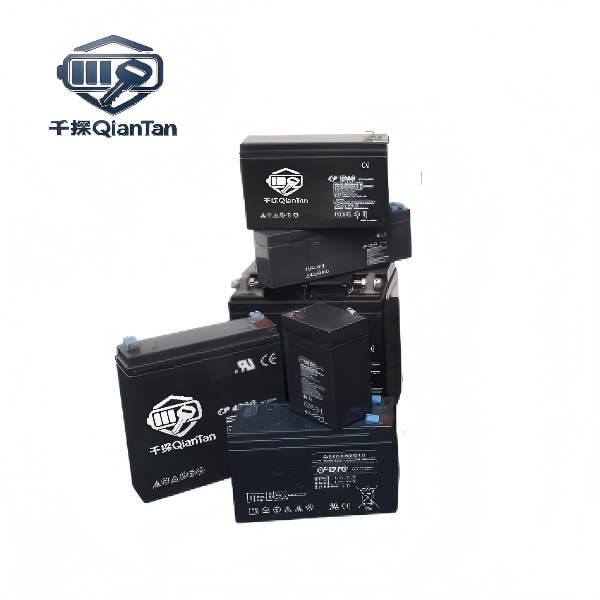
In AGM batteries, the electrolyte is absorbed in fiberglass mats. This provides low internal resistance, which allows high currents to be delivered in a short time. Our manufacturer's CP series batteries are a classic example of optimized AGM solutions for stationary applications.
Benefits:
- High power in compact dimensions.
- Relatively low production cost.
- Fast charging.
Limitations:Sensitivity to high temperatures. Above 25°C the service life is reduced exponentially. Not recommended for cyclic operating modes (frequent discharges).
2. Gel technologies (GEL) and OPzV
In gel batteries, the electrolyte is thickened to a gel state using silicon dioxide. OPzV technology (tubular plates with gel electrolyte) represents an evolution of this direction, providing maximum durability.
Benefits:
- High resistance to deep discharges.
- Better thermal stability compared to AGM.
- Service life up to 12–15 years in buffer mode.
Nanjing Qiantan Energy Storage Technology LLC produces OPzV and CG gel batteries, which are ideal for server rooms where interruptions in air conditioning are possible or where high reliability is required over a long service life without replacement.
Comparative analysis of technologies for server applications
| Parameter | AGM (CP Series) | GEL/OPzV | Lithium-ion (LiFePO4) |
|---|---|---|---|
| Implementation cost | Low | Medium/High | Very high |
| Service life (buffer mode) | 5–7 years | 10–12 years | 10+ years |
| Temperature resistance | Low | High | Medium (requires BMS) |
| Energy Density | Average | Low (more weight) | High |
| Safety (fire hazard) | High | High | Requires strict control |
| Recommended Application | Short-term reservation (up to 30 min) | Long redundancies and unstable networks | High-density data centers with stringent weight requirements |
The table shows that for most standard server rooms the choice is between AGM and GEL. Lithium-ion solutions, while popular, are often cost-prohibitive for small to mid-size projects and also require complex management systems (BMS) that add points of failure.
Factors Affecting Server Room Battery Price
The request “battery for server rooms price” often leads to a spread of values, which can reach 30–40% for models similar on paper. Understanding the pricing structure helps you avoid purchasing a low-quality product.
1. Raw material quality and plate thickness
n
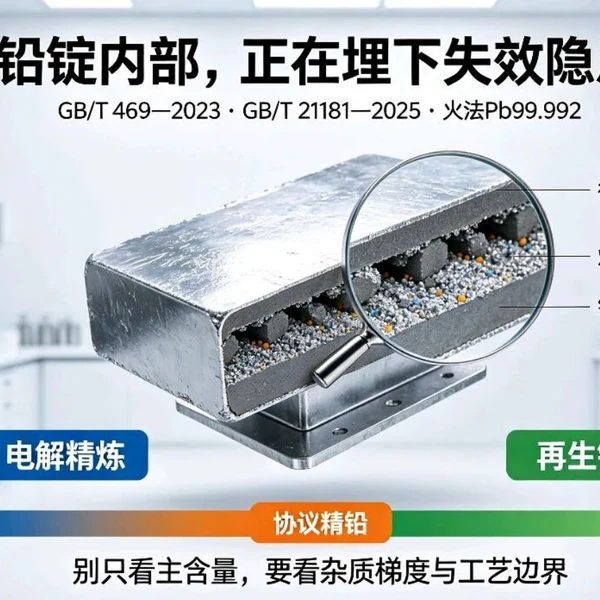
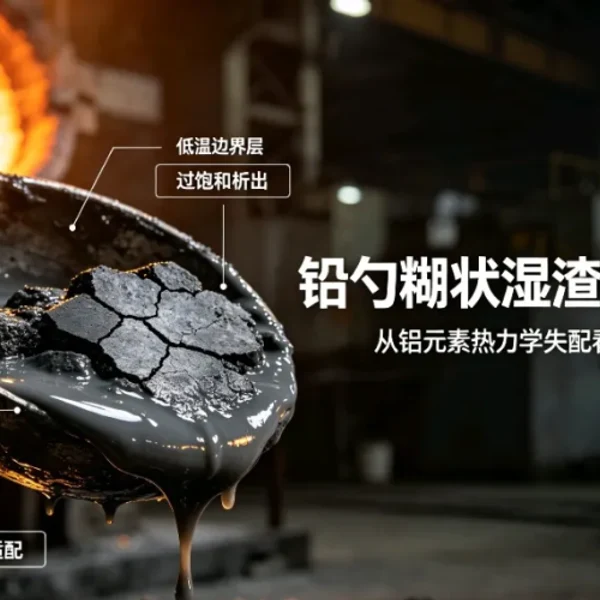
The main cost of a lead-acid battery is the lead. However, not all lead is created equal. Cheap manufacturers use recycled lead with impurities, which leads to sulfation and rapid failure. Nanjing Qiantan Energy Storage Technology LLC carries out strict incoming control of raw materials. The thickness of the positive plates directly correlates with service life: the thicker the plate, the more active mass and the slower its corrosion occurs. The CL 2V series batteries use tubular plates to ensure maximum battery life.
2. Separator technology and electrolyte purity
In AGM batteries, the quality of the glass fiber determines the ability to retain electrolyte and prevent short circuits. In gel batteries, the thickener formula is important. Impurities in the electrolyte cause self-discharge. Our production lines include automated acid filling and battery formation systems, which eliminates the human factor and guarantees batch-to-batch consistency.
3. Brand and service support
The price from a manufacturer such as Nanjing Qiantan Energy Storage Technology LLC is usually lower than that of distributors, but includes technical expertise. We provide not just a product, but a solution: assistance in calculating capacity, selecting cables and setting up UPS chargers. Having global experience in implementing projects in Russia, Iran, Turkey and other countries allows us to adapt logistics and documentation to local requirements.
An Engineering View: Capacity Calculation and Battery Bank Configuration
One of the most common mistakes when equipping server rooms is incorrect calculation of the required capacity. Engineers often focus only on the rated capacity (for example, 100 Ah), forgetting that the actual delivered capacity depends on the discharge current and temperature.
Peukert's law and discharge efficiency:
At high discharge currents (typical of powerful servers), the effective battery capacity decreases. For example, a 100 Ah battery with a 10-hour discharge may only produce 60–70 Ah with a 1-hour discharge. Therefore, for server rooms that require autonomy of at least 15–30 minutes at full load, it is necessary to provide a capacity reserve of at least 20–30%.
Temperature compensation:
The nominal capacity is specified for 20–25°C. If the temperature in the server room drops to 10°C (for example, if the air conditioner fails in winter), the capacity may drop by 15–20%. Conversely, raising the temperature to 30°C accelerates chemical reactions, cutting service life in half for every 8-10 degrees above normal. From the experience of our team: in regions with hot climates (for example, projects in Pakistan or Iran), we strongly recommend using OPzV series batteries or high-temperature specialized solutions, even if their initial price is higher.
Examples of real application scenarios
To understand which battery is right for you, consider two typical operating scenarios.
Scenario 1: Small Office Server Room (SMB)
Conditions:The temperature is stabilized (22–24°C), the load is 5–10 kW, the required battery life is 10–15 minutes (for correct shutdown of the servers).
Solution:Stationary maintenance-free batteries CP series (AGM).
Rationale:AGM technology provides the high power density required for short-term load peaks. Compact dimensions allow batteries to be placed in a small UPS cabinet. The cost of the solution is minimal, and the service life in ideal temperature conditions will be 5–7 years.
Scenario 2: Industrial data center or telecom node in a remote location
Conditions:There may be interruptions in air conditioning, the temperature can reach 30–35°C, the load is 50–100 kW, the required operating time is up to 2–4 hours.
Solution:Gel batteries OPzV or tubular monoblocks CL 2V series.
Rationale:The gel electrolyte does not dry out and is better able to withstand heat stress. The tubular design of the plates in the CL 2V series prevents the active mass from shedding during prolonged discharges. Despite their greater weight and size, these batteries provide predictable energy output under extreme conditions and last up to 12 years, reducing replacement frequency and maintenance costs.
How to choose a supplier: checklist for the buyer
The market is saturated with offers, but not all manufacturers have real expertise. When choosing a partner to supply batteries for server rooms, pay attention to the following points:
- Completeness of the production cycle:Is the manufacturer able to control quality from grill casting to assembly? Nanjing Qiantan Energy Storage Technology LLC implements turnkey projects, including the production of components, which guarantees traceable quality.
- Availability of specialized lines:Does the manufacturer have separate series for standby (reserve) modes? Universal batteries are often compromises. Our CP and OPzV series are designed specifically for stationary use.
- Technical documentation and support:Does the supplier provide datasheets with discharge curves at different temperatures? Is the engineering team available to advise on battery parallel connections?
- Environmental responsibility:Does the manufacturer have a recycling system? Our dedicated environmentally friendly recycling facility for used batteries complies with the principles of sustainable development, which is important for international companies that comply with ESG standards.
- Geography of presence and logistics:Can the supplier provide delivery and service in your region? Our experience in Russia, Vietnam, Turkey and other countries allows us to effectively solve logistics problems.
Frequently asked questions (FAQ)
What is the battery life for server rooms?
The service life depends on the technology and operating conditions. For AGM batteries (CP series) in buffer mode at 25°C it is 5–7 years. For OPzV gel batteries and CL 2V tubular batteries - 10–12 years or more. It is important to remember that for every 10°C increase in temperature above the nominal value, the service life is approximately halved.
Is it possible to mix old and new batteries in one bank?
Strongly not recommended. Different internal resistances of old and new batteries will lead to uneven distribution of charge and discharge currents. This will cause the old cells to overheat and the new ones to undercharge, which will quickly destroy the entire battery bank. When replacing, the entire set must be replaced at the same time.
Does the price from the manufacturer affect the quality?
The price from the manufacturer is usually lower than the dealer price, since intermediary markups are excluded. However, a low price should not be achieved at the expense of deteriorating the quality of raw materials. Nanjing Qiantan Energy Storage Technology Co.,Ltd maintains a competitive price by optimizing the complete production cycle rather than saving on materials. We use primary lead and high-quality separators, which is confirmed by certificates and reviews from partners such as Tianneng and Chaowei.
How to store server batteries before installation?
Batteries should be stored in a cool, dry place (preferably 15–25°C). Even when turned off, self-discharge occurs. If storage exceeds 3 months, it is necessary to carry out a control and training cycle (recharging) to compensate for capacity losses. Gel batteries have a lower self-discharge compared to AGM, but the requirement for periodic recharging is relevant for all types of VRLA.
Are car batteries suitable for UPS?
No. Car batteries (starter batteries) are designed to deliver huge current within a few seconds and then quickly charge from the generator. Their design is not designed for long-term discharge with low currents (UPS mode). Using car batteries in server rooms will lead to their rapid destruction (drainage and sulfation) within a few months.
Conclusion and recommendations for purchasing
Choosing a server room battery is an investment in business continuity. Savings at the procurement stage often result in many times larger losses during equipment downtime. The engineering approach requires taking into account not only the initial price, but also temperature conditions, load profile and expected service life.
Nanjing Qiantan Energy Storage Technology LLC offers balanced solutions that combine advanced lead-acid battery technology with deep industry expertise. Our product line, from compact CP series AGM batteries to long-lasting OPzV gel batteries, covers the needs of any facility - from a small office server to an industrial data center.
Recommendation for purchasers:Before placing an order, request a technical specification indicating the exact load power and the required autonomy time. Our specialists will help you choose the optimal configuration, taking into account the climatic characteristics of your region and the specifics of the equipment. Trust professionals with 30 years of experience and a global presence to power your business.
For detailed technical specifications, lot costing and advice on integration with your UPS systems, please review ourproducts and technical solutions.